
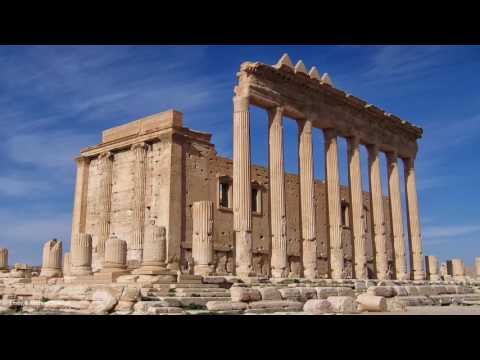
imagine for a moment that you are approaching a building this building has
approaching a building this building has
approaching a building this building has Corinthian columns rising 15 meters into
Corinthian columns rising 15 meters into
Corinthian columns rising 15 meters into the sky each of these columns is topped
the sky each of these columns is topped
the sky each of these columns is topped by winding ornate acanthus leaves
by winding ornate acanthus leaves
by winding ornate acanthus leaves unusually you approach the entrance on a
unusually you approach the entrance on a
unusually you approach the entrance on a long side of this rectangular building
long side of this rectangular building
long side of this rectangular building you see that the strong Desert Sun has
you see that the strong Desert Sun has
you see that the strong Desert Sun has turned the formerly white limestone into
turned the formerly white limestone into
turned the formerly white limestone into a rich golden yellow color to your right
a rich golden yellow color to your right
a rich golden yellow color to your right and to your left there’s an altar you
and to your left there’s an altar you
and to your left there’s an altar you look closely and you see some carved
look closely and you see some carved
look closely and you see some carved artwork it’s Arab an origin but
artwork it’s Arab an origin but
artwork it’s Arab an origin but greco-roman in an Egyptian as well in
greco-roman in an Egyptian as well in
greco-roman in an Egyptian as well in influence standing in front of this
influence standing in front of this
influence standing in front of this temple in 1902 Gertrude Bell a renowned
temple in 1902 Gertrude Bell a renowned
temple in 1902 Gertrude Bell a renowned traveler and poetry translator said that
traveler and poetry translator said that
traveler and poetry translator said that with the exception of Petra this was the
with the exception of Petra this was the
with the exception of Petra this was the most beautiful place she had ever been
most beautiful place she had ever been
most beautiful place she had ever been this as she’d photographed it in 1902 is
this as she’d photographed it in 1902 is
this as she’d photographed it in 1902 is the temple of bel in Palmyra Syria it
the temple of bel in Palmyra Syria it
the temple of bel in Palmyra Syria it stood since 32 ad if you want to visit
stood since 32 ad if you want to visit
stood since 32 ad if you want to visit it I’m afraid that’s no longer possible
it I’m afraid that’s no longer possible
it I’m afraid that’s no longer possible it was razed to the ground in August
it was razed to the ground in August
it was razed to the ground in August 2015
2015
2015 by Isis I have long wanted to visit long
by Isis I have long wanted to visit long
by Isis I have long wanted to visit long before I became a historian long before
before I became a historian long before
before I became a historian long before I took an art history course which
I took an art history course which
I took an art history course which introduced me to another way to tell
introduced me to another way to tell
introduced me to another way to tell time
time
time in fact my fascination with historical
in fact my fascination with historical
in fact my fascination with historical monuments and historical architecture
monuments and historical architecture
monuments and historical architecture goes back far longer than that I still
goes back far longer than that I still
goes back far longer than that I still work all being a child being glued to
work all being a child being glued to
work all being a child being glued to the television watching documentary
the television watching documentary
the television watching documentary films that looked at Egyptian pyramids
films that looked at Egyptian pyramids
films that looked at Egyptian pyramids that still held secrets or Sumerian
that still held secrets or Sumerian
that still held secrets or Sumerian tombs that were still sealed shut and
tombs that were still sealed shut and
tombs that were still sealed shut and the technologies that we were developing
the technologies that we were developing
the technologies that we were developing to gather more and more insights about
to gather more and more insights about
to gather more and more insights about how people lived in the past to me the
how people lived in the past to me the
how people lived in the past to me the idea that these ancient monuments that
idea that these ancient monuments that
idea that these ancient monuments that these artifacts continued to exist that
these artifacts continued to exist that
these artifacts continued to exist that they were out there for us to see was
they were out there for us to see was
they were out there for us to see was nothing short of a miracle away in fact
nothing short of a miracle away in fact
nothing short of a miracle away in fact to time travel
to time travel
to time travel during times of upheaval during times of
during times of upheaval during times of
during times of upheaval during times of revolution particular groups have made a
revolution particular groups have made a
revolution particular groups have made a point sometimes protracted point of
point sometimes protracted point of
point sometimes protracted point of deliberately destroying these particular
deliberately destroying these particular
deliberately destroying these particular cultural artifacts and these particular
cultural artifacts and these particular
cultural artifacts and these particular historical monuments so I’m not speaking
historical monuments so I’m not speaking
historical monuments so I’m not speaking of collateral damage in this case I’m
of collateral damage in this case I’m
of collateral damage in this case I’m speaking of the systemic deliberate and
speaking of the systemic deliberate and
speaking of the systemic deliberate and targeted destruction of these particular
targeted destruction of these particular
targeted destruction of these particular artifacts in this kind of destruction
artifacts in this kind of destruction
artifacts in this kind of destruction what we’re really seeing is the breaking
what we’re really seeing is the breaking
what we’re really seeing is the breaking of that tactile experience shell link
of that tactile experience shell link
of that tactile experience shell link that we can have with the past our
that we can have with the past our
that we can have with the past our ability to see it to come close to it to
ability to see it to come close to it to
ability to see it to come close to it to potentially touch it and for some of us
potentially touch it and for some of us
potentially touch it and for some of us to interpret it this kind of destruction
to interpret it this kind of destruction
to interpret it this kind of destruction I believe has a parallel disruption
I believe has a parallel disruption
I believe has a parallel disruption which is more insidious the destruction
which is more insidious the destruction
which is more insidious the destruction of cultural memory and thereby of
of cultural memory and thereby of
of cultural memory and thereby of cultural identity why does this matter
cultural identity why does this matter
cultural identity why does this matter it matters because when these historical
it matters because when these historical
it matters because when these historical objects are destroyed it makes it harder
objects are destroyed it makes it harder
objects are destroyed it makes it harder to assess and reassess history it makes
to assess and reassess history it makes
to assess and reassess history it makes it harder for us to be able to
it harder for us to be able to
it harder for us to be able to understand the place of these monuments
understand the place of these monuments
understand the place of these monuments for us to experience them directly what
for us to experience them directly what
for us to experience them directly what can we do about this I think in the
can we do about this I think in the
can we do about this I think in the first instance it’s really important for
first instance it’s really important for
first instance it’s really important for us to develop a stronger case for why we
us to develop a stronger case for why we
us to develop a stronger case for why we should preserve these monuments I think
should preserve these monuments I think
should preserve these monuments I think intuitively you know we think we like to
intuitively you know we think we like to
intuitively you know we think we like to have these objects around to me this is
have these objects around to me this is
have these objects around to me this is fundamental we do don’t we we
fundamental we do don’t we we
fundamental we do don’t we we intuitively think would be nice to keep
intuitively think would be nice to keep
intuitively think would be nice to keep these objects round it would be nice to
these objects round it would be nice to
these objects round it would be nice to have museums but I think that we should
have museums but I think that we should
have museums but I think that we should make a case a stronger case for
make a case a stronger case for
make a case a stronger case for defending and preserving these historic
defending and preserving these historic
defending and preserving these historic monuments and we should be very aware at
monuments and we should be very aware at
monuments and we should be very aware at attempts at destroying things in
attempts at destroying things in
attempts at destroying things in parallel to the destruction of buildings
parallel to the destruction of buildings
parallel to the destruction of buildings themselves because ultimately what’s
themselves because ultimately what’s
themselves because ultimately what’s being destroyed it’s not just buildings
being destroyed it’s not just buildings
being destroyed it’s not just buildings it’s collective memory it’s a
it’s collective memory it’s a
it’s collective memory it’s a multiplicity of approaches it’s the
multiplicity of approaches it’s the
multiplicity of approaches it’s the right of access to objects and the
right of access to objects and the
right of access to objects and the identities that it unlocks that it
identities that it unlocks that it
identities that it unlocks that it validates that it explains
in August of 1992 during the siege of
in August of 1992 during the siege of Sarajevo the National Library was bombed
Sarajevo the National Library was bombed
Sarajevo the National Library was bombed this library had held rare manuscripts
this library had held rare manuscripts
this library had held rare manuscripts rare volumes that detailed the
rare volumes that detailed the
rare volumes that detailed the flourishing of a multicultural life of
flourishing of a multicultural life of
flourishing of a multicultural life of the region under the ottoman and
the region under the ottoman and
the region under the ottoman and austro-hungarian empires foreign
austro-hungarian empires foreign
austro-hungarian empires foreign journalists who were watching this
journalists who were watching this
journalists who were watching this destruction happen in front of them had
destruction happen in front of them had
destruction happen in front of them had reported that the library’s main Reading
reported that the library’s main Reading
reported that the library’s main Reading Room had these thin moorish columns
Room had these thin moorish columns
Room had these thin moorish columns which could not take the intense heat
which could not take the intense heat
which could not take the intense heat and exploded and that sections of the
and exploded and that sections of the
and exploded and that sections of the roof fell through the ceiling three
roof fell through the ceiling three
roof fell through the ceiling three months prior to this bombing Sarajevo’s
months prior to this bombing Sarajevo’s
months prior to this bombing Sarajevo’s Oriental Institute which held the
Oriental Institute which held the
Oriental Institute which held the country’s largest collection of Islamic
country’s largest collection of Islamic
country’s largest collection of Islamic and Ottoman texts likewise had been
and Ottoman texts likewise had been
and Ottoman texts likewise had been targeted for destruction in both of
targeted for destruction in both of
targeted for destruction in both of these instances and in several more
these instances and in several more
these instances and in several more across Bosnia around this time the
across Bosnia around this time the
across Bosnia around this time the targeting was deliberate the buildings
targeting was deliberate the buildings
targeting was deliberate the buildings on either side were untouched
on either side were untouched
on either side were untouched so in this destruction of of archives of
so in this destruction of of archives of
so in this destruction of of archives of libraries of cultural institutions and
libraries of cultural institutions and
libraries of cultural institutions and therefore all of these documents it
therefore all of these documents it
therefore all of these documents it seemed to be about breaking that
seemed to be about breaking that
seemed to be about breaking that material link that we have that
material link that we have that
material link that we have that experience all link of looking at
experience all link of looking at
experience all link of looking at documents of looking at books of looking
documents of looking at books of looking
documents of looking at books of looking at works of art that can show a future
at works of art that can show a future
at works of art that can show a future generation that in fact people of
generation that in fact people of
generation that in fact people of different ethnic backgrounds people of
different ethnic backgrounds people of
different ethnic backgrounds people of different religious traditions had once
different religious traditions had once
different religious traditions had once shared a common ancestry in this
shared a common ancestry in this
shared a common ancestry in this particular region people had volunteered
particular region people had volunteered
particular region people had volunteered along with the librarians to form a
along with the librarians to form a
along with the librarians to form a human chain while the library was
human chain while the library was
human chain while the library was burning to get some of these manuscripts
burning to get some of these manuscripts
burning to get some of these manuscripts to safety when one of the when one of
to safety when one of the when one of
to safety when one of the when one of the volunteers was asked why he was
the volunteers was asked why he was
the volunteers was asked why he was risking his life he said pointing to the
risking his life he said pointing to the
risking his life he said pointing to the library or heritage our national
library or heritage our national
library or heritage our national identity is there when the chief fire
identity is there when the chief fire
identity is there when the chief fire brigade was asked why he was risking his
brigade was asked why he was risking his
brigade was asked why he was risking his life he said because I was born here and
life he said because I was born here and
life he said because I was born here and now they are burning a part of me
now they are burning a part of me
now they are burning a part of me in 2002 in a report to UNESCO the
in 2002 in a report to UNESCO the
in 2002 in a report to UNESCO the library director took pains to explain
library director took pains to explain
library director took pains to explain that the reconstruction of this building
that the reconstruction of this building
that the reconstruction of this building was at the same time the reconstruction
was at the same time the reconstruction
was at the same time the reconstruction of memory from April of 2012 to
of memory from April of 2012 to
of memory from April of 2012 to September of 2013
September of 2013
September of 2013 members of Ansar Dean destroyed most of
members of Ansar Dean destroyed most of
members of Ansar Dean destroyed most of Molly’s mausoleums and shrines in a
Molly’s mausoleums and shrines in a
Molly’s mausoleums and shrines in a landmark ruling the International
landmark ruling the International
landmark ruling the International Criminal Court found formal several
Criminal Court found formal several
Criminal Court found formal several servant Ahmadi guilty of warm of war
servant Ahmadi guilty of warm of war
servant Ahmadi guilty of warm of war crimes in a case that was solely focused
crimes in a case that was solely focused
crimes in a case that was solely focused on cultural destruction in recorded
on cultural destruction in recorded
on cultural destruction in recorded videos Almaty had said we must remove
videos Almaty had said we must remove
videos Almaty had said we must remove from the landscape everything which does
from the landscape everything which does
from the landscape everything which does not belong but to answer dean members it
not belong but to answer dean members it
not belong but to answer dean members it was not merely the the ancient
was not merely the the ancient
was not merely the the ancient mausoleums and shrines which did not
mausoleums and shrines which did not
mausoleums and shrines which did not belong which they found idolatrous it
belong which they found idolatrous it
belong which they found idolatrous it was the activities that took place
was the activities that took place
was the activities that took place alongside them for prior to their
alongside them for prior to their
alongside them for prior to their destruction these sites had been used by
destruction these sites had been used by
destruction these sites had been used by members of the community for a number of
members of the community for a number of
members of the community for a number of diverse religious and diverse cultural
diverse religious and diverse cultural
diverse religious and diverse cultural ceremonies so for instance they held
ceremonies so for instance they held
ceremonies so for instance they held music festivals there they’re held oral
music festivals there they’re held oral
music festivals there they’re held oral literature festivals but they were also
literature festivals but they were also
literature festivals but they were also the sites of community conflict
the sites of community conflict
the sites of community conflict resolution in community building these
resolution in community building these
resolution in community building these shrines were built in the 15th and 16th
shrines were built in the 15th and 16th
shrines were built in the 15th and 16th century when Timbuktu was in fact the
century when Timbuktu was in fact the
century when Timbuktu was in fact the the center of this particular region it
the center of this particular region it
the center of this particular region it was the center economically of the
was the center economically of the
was the center economically of the center intellectually and it was the
center intellectually and it was the
center intellectually and it was the center spiritually in current day
center spiritually in current day
center spiritually in current day molly’s diversity you know comes from
molly’s diversity you know comes from
molly’s diversity you know comes from this culmination of years of
this culmination of years of
this culmination of years of interweaving of different groups in that
interweaving of different groups in that
interweaving of different groups in that area in August 2015
area in August 2015
area in August 2015 Isis completed the destruction of the
Isis completed the destruction of the
Isis completed the destruction of the temple of bel which they had started two
temple of bel which they had started two
temple of bel which they had started two years prior until its destruction it was
years prior until its destruction it was
years prior until its destruction it was one of the most complete structures to
one of the most complete structures to
one of the most complete structures to have survived from this time the temple
have survived from this time the temple
have survived from this time the temple was consecrated in 32 AD and it was a
was consecrated in 32 AD and it was a
was consecrated in 32 AD and it was a long a major trade route
long a major trade route
long a major trade route and as a result of this the area grew
and as a result of this the area grew
and as a result of this the area grew prosperous and it was also heavily
prosperous and it was also heavily
prosperous and it was also heavily influenced by the cultures east and west
influenced by the cultures east and west
influenced by the cultures east and west of it in the architectural heritage in
of it in the architectural heritage in
of it in the architectural heritage in the temple of bow we have evidence of
the temple of bow we have evidence of
the temple of bow we have evidence of cultures coming together creatively
cultures coming together creatively
cultures coming together creatively through the passage of time with the the
through the passage of time with the the
through the passage of time with the the rise of Christianity the temple became
rise of Christianity the temple became
rise of Christianity the temple became converted to a Byzantine church and then
converted to a Byzantine church and then
converted to a Byzantine church and then with the coming of Islam it became a
with the coming of Islam it became a
with the coming of Islam it became a mosque in the early 1900’s the the site
mosque in the early 1900’s the the site
mosque in the early 1900’s the the site of ancient Palmyra had long been in
of ancient Palmyra had long been in
of ancient Palmyra had long been in ruins but in fact it was still being
ruins but in fact it was still being
ruins but in fact it was still being used it was still being inhabited in
used it was still being inhabited in
used it was still being inhabited in parts so the the surrounding areas were
parts so the the surrounding areas were
parts so the the surrounding areas were used as shelter by nomads and herders
used as shelter by nomads and herders
used as shelter by nomads and herders and the temple itself had a little
and the temple itself had a little
and the temple itself had a little thriving village in it a microcosm a
thriving village in it a microcosm a
thriving village in it a microcosm a tribute in fact to the different groups
tribute in fact to the different groups
tribute in fact to the different groups that had traded together that I’d live
that had traded together that I’d live
that had traded together that I’d live together harmoniously for large periods
together harmoniously for large periods
together harmoniously for large periods of time prior a number of social
of time prior a number of social
of time prior a number of social psychologists now argue that identities
psychologists now argue that identities
psychologists now argue that identities are not composed of narratives and
are not composed of narratives and
are not composed of narratives and stories but in fact identities are
stories but in fact identities are
stories but in fact identities are narratives and stories so where do these
narratives and stories so where do these
narratives and stories so where do these stories come from how do we believe the
stories come from how do we believe the
stories come from how do we believe the things we believe about ourselves and
things we believe about ourselves and
things we believe about ourselves and our past so this is a complicated
our past so this is a complicated
our past so this is a complicated question but at least part of the answer
question but at least part of the answer
question but at least part of the answer is found in first-hand experiences so
is found in first-hand experiences so
is found in first-hand experiences so educational psychologists will tell you
educational psychologists will tell you
educational psychologists will tell you that first-hand experience is better
that first-hand experience is better
that first-hand experience is better than second because that experiential
than second because that experiential
than second because that experiential learning can fundamentally shift your
learning can fundamentally shift your
learning can fundamentally shift your mindset so what happens then in the
mindset so what happens then in the
mindset so what happens then in the absence of these first-hand experiences
absence of these first-hand experiences
absence of these first-hand experiences or the absence of what historians call
or the absence of what historians call
or the absence of what historians call primary sources that the base material
primary sources that the base material
primary sources that the base material for which we’ve we understand in
for which we’ve we understand in
for which we’ve we understand in interpret history we all know that
interpret history we all know that
interpret history we all know that there’s a distance between what we are
there’s a distance between what we are
there’s a distance between what we are told and what we believe but in fact you
told and what we believe but in fact you
told and what we believe but in fact you can shorten this distance you can even
can shorten this distance you can even
can shorten this distance you can even overcome this distance with well-crafted
overcome this distance with well-crafted
overcome this distance with well-crafted well-constructed even if
well-constructed even if
well-constructed even if not necessarily always well-meaning
not necessarily always well-meaning
not necessarily always well-meaning narratives researchers at the University
narratives researchers at the University
narratives researchers at the University of Waterloo found that narratives were
of Waterloo found that narratives were
of Waterloo found that narratives were particularly effective at overcoming
particularly effective at overcoming
particularly effective at overcoming strong resistance to persuasion and that
strong resistance to persuasion and that
strong resistance to persuasion and that a couple of reasons that they found for
a couple of reasons that they found for
a couple of reasons that they found for that one of these reasons was that
that one of these reasons was that
that one of these reasons was that people don’t expect narratives to shift
people don’t expect narratives to shift
people don’t expect narratives to shift their beliefs they don’t expect
their beliefs they don’t expect
their beliefs they don’t expect narratives to challenge the things that
narratives to challenge the things that
narratives to challenge the things that they believe and their attitudes and so
they believe and their attitudes and so
they believe and their attitudes and so therefore their resistance to what a
therefore their resistance to what a
therefore their resistance to what a narrative brought to them was lower
narrative brought to them was lower
narrative brought to them was lower secondly narratives inspired a kind of
secondly narratives inspired a kind of
secondly narratives inspired a kind of close attention to detail in listening
close attention to detail in listening
close attention to detail in listening for how the story proceeds
for how the story proceeds
for how the story proceeds that’s not inspired by say rhetoric or
that’s not inspired by say rhetoric or
that’s not inspired by say rhetoric or direct targeted messages which we tend
direct targeted messages which we tend
direct targeted messages which we tend to ignore if it doesn’t line up with our
to ignore if it doesn’t line up with our
to ignore if it doesn’t line up with our previously held attitudes or previous
previously held attitudes or previous
previously held attitudes or previous experiences but the researchers
experiences but the researchers
experiences but the researchers concluded that these narratives were
concluded that these narratives were
concluded that these narratives were particularly good at conveying
particularly good at conveying
particularly good at conveying under-the-radar
under-the-radar
under-the-radar certain messages so for instance you can
certain messages so for instance you can
certain messages so for instance you can think of any number of advertising and
think of any number of advertising and
think of any number of advertising and marketing campaigns now that use a
marketing campaigns now that use a
marketing campaigns now that use a social media story to envelop you so
social media story to envelop you so
social media story to envelop you so further to this psychologists Alice idli
further to this psychologists Alice idli
further to this psychologists Alice idli and Shelley chagan also demonstrated
and Shelley chagan also demonstrated
and Shelley chagan also demonstrated that the timing and the delivery of a
that the timing and the delivery of a
that the timing and the delivery of a message is particularly crucial to how
message is particularly crucial to how
message is particularly crucial to how we accept it and to whether or not we
we accept it and to whether or not we
we accept it and to whether or not we believe it they discovered that when the
believe it they discovered that when the
believe it they discovered that when the timing in the delivery of a message is
timing in the delivery of a message is
timing in the delivery of a message is forced that you’re more likely to be
forced that you’re more likely to be
forced that you’re more likely to be persuaded by it then if you have a
persuaded by it then if you have a
persuaded by it then if you have a message which are exposed to in a
message which are exposed to in a
message which are exposed to in a self-paced way that is to say if you
self-paced way that is to say if you
self-paced way that is to say if you have time to think about the message if
have time to think about the message if
have time to think about the message if you have time to reflect on it and have
you have time to reflect on it and have
you have time to reflect on it and have that space for critical thinking in
that space for critical thinking in
that space for critical thinking in relation to what you’re what you’re
relation to what you’re what you’re
relation to what you’re what you’re actually listening to or being exposed
actually listening to or being exposed
actually listening to or being exposed to so what is the purpose of history in
to so what is the purpose of history in
to so what is the purpose of history in light of all of this a rich and complex
light of all of this a rich and complex
light of all of this a rich and complex history is a bulwark and a threat to
history is a bulwark and a threat to
history is a bulwark and a threat to simple one-dimensional particularly
simple one-dimensional particularly
simple one-dimensional particularly motivated but potentially nevertheless
motivated but potentially nevertheless
motivated but potentially nevertheless convincing narratives about the path
convincing narratives about the path
convincing narratives about the path a few years ago I was at a history
a few years ago I was at a history
a few years ago I was at a history conference and I heard historian and
conference and I heard historian and
conference and I heard historian and journalist Timothy Garton ash make the
journalist Timothy Garton ash make the
journalist Timothy Garton ash make the case that historians and non historians
case that historians and non historians
case that historians and non historians alike ought to defend the frontier of
alike ought to defend the frontier of
alike ought to defend the frontier of fact despite the inherent complexity and
fact despite the inherent complexity and
fact despite the inherent complexity and subjectivity of studying identity and
subjectivity of studying identity and
subjectivity of studying identity and memory we must still be clear about what
memory we must still be clear about what
memory we must still be clear about what the base facts the primary sources the
the base facts the primary sources the
the base facts the primary sources the raw material on which we build these
raw material on which we build these
raw material on which we build these stories and narratives are it seems to
stories and narratives are it seems to
stories and narratives are it seems to me it’s precisely because of this
me it’s precisely because of this
me it’s precisely because of this complex interweaving of memory of
complex interweaving of memory of
complex interweaving of memory of identity of history of
identity of history of
identity of history of self-identification that we must defend
self-identification that we must defend
self-identification that we must defend the right of the past to speak to us and
the right of the past to speak to us and
the right of the past to speak to us and to future generations directly our
to future generations directly our
to future generations directly our resultant interpretations may not always
resultant interpretations may not always
resultant interpretations may not always be equally valid or equally compelling
be equally valid or equally compelling
be equally valid or equally compelling but we must guard against the erasure of
but we must guard against the erasure of
but we must guard against the erasure of these objects when in doing so that
these objects when in doing so that
these objects when in doing so that erasure might attempt to limit us to one
erasure might attempt to limit us to one
erasure might attempt to limit us to one or a few interpretations so in defense
or a few interpretations so in defense
or a few interpretations so in defense in defending historical objects we are
in defending historical objects we are
in defending historical objects we are allowing a multiplicity of
allowing a multiplicity of
allowing a multiplicity of interpretations a multiplicity of
interpretations a multiplicity of
interpretations a multiplicity of meanings even ones that we don’t like or
meanings even ones that we don’t like or
meanings even ones that we don’t like or that we don’t agree with to flourish in
that we don’t agree with to flourish in
that we don’t agree with to flourish in ensuring that the objects of inquiry
ensuring that the objects of inquiry
ensuring that the objects of inquiry themselves remain thank you
themselves remain thank you
themselves remain thank you [Applause]
”
Be First to Comment