
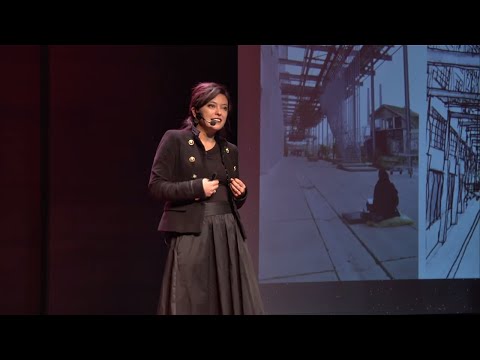
we live in smart cities we have
intelligent garbage we have transports
smart we have parking lots
smart we have smart homes
smart buildings and in addition to everything
we have smart energy networks
even when we want to know how much
noise in our cities
we have smart systems to measure
the noise and to handle it
in fact now we can know many
things about our cities we have
a lot of information about
our cities our cities are
they have returned great collectors of
open data information and these
data allow us to know for example
how full to our garbage
for example when we put
our smart card we can
deposit our garbage know how
full is our garbage and our
city can clearly act and can
collect garbage intelligently
we can also find parking lots
in smart ways we have a
application we know that parking
is free and we can pay even for
smart way our parking
we also have mobility
smart we know how many minutes it
will delay our bus and clearly
our buses are electric because
we are in a society of the future
we also come to our homes with
an intelligent key and we open the
doors to the door of our house to
after entering our apartment
where we can know the temperature and the
real-time humidity of our house
there are even more modern systems that
they do not regulate temperature and humidity
so that we are accurate
mind in the perfect conditions without
But it’s all this about the city
surely that is, is doing our
life much more effective practice we can
go from one place to another quickly
everything is very agile we know that this is not
all
that is, our cities are
composed of something that is much more
strong and much bigger than this
we know and I as a person as
architect as a woman
I know that on the one hand there’s that data
that are visible that clear come back
our life much more practical and
better but on the other hand there is a part
that does not describe how I perceive the
city as my emotions are made
that most intimate part more personal
most special in the city and I know very
Well also because I’m an architect
because I am a woman and because I am a foreigner
that all this does not write my city is
as an architect that I like to draw that
the drawing can represent something much
deepest environment in which
We are living when I can draw
remember exactly that place and that
moment of my life and he could translate it into
a paper
in fact for example
that day I was not going from one side
the other trying to get from a place
to the other and in the run he runs from all
days
I was not trying to dodge
bicycles and the madness of people who
Sometimes he spends on that place on Sundays
there was me and the church and the church in
that moment I was having a dialogue
personnel and is the place that is part
of my environment I was trying to
decipher those perspectives those
lines that story that was
behind the architect who was that
he built that is the church that icon
from that city
and I was trying to translate it into a paper
that unique moment in which I
I felt happy but not that happiness of
craving or that happiness if not a
happiness that is a stable happiness
to belong and to be in a place in
which I identify myself
[Music]
the question now is how can we
translate that kind of emotions and
perceptions that I know not
they are simply mine and that I know that
there are simply many and many people
and many types of perceptions that
they need to be counted and they are part of
of the life of the city and of
daily dynamics and how
woman
I know very well that there are several dimensions
there are invisible places and there are places and
there are invisible dynamics that are
there in the city
I know I do not understand the whole story
but I know that summation of stories
are those that make the life of the
city and I wonder as a researcher
What can I do? What is my role?
to be able to map like those emotions those
perceptions have an impact on the
city
this project was the first opportunity
to work on this subject is called
permach by electron cars has been
part of a collaboration with the school
andorrana from andorra la vella for
work on the subject emotions and
perceptions a year ago more or less
two colleagues of mine maytin
they developed the sensors called
ex terma
these sensors were installed throughout
the school can measure the presence to
the proximity the temperature the light
however when they will be installed
sensors in a school is difficult
connect that educational experience to
this kind of data visualization to
which we are used to and with
which we work practically all
days how to carry one more dimension
human
vision of children of this kind of
information how to connect your
individual perception your emotions with
something that is so objective and so clear
as a sensor we started to explore and
the drawing was the first key for that
because we started to understand that if
we wanted to tell a story and that
has been very related we have to leave
of the day-to-day experience of
how children perceived in space
how they felt about the
space and we think that emotions
as well as another type of
things like the noise or the amount of
movement could somehow of
relate very easily to everything
that was marking the sensors and
we started thinking about a platform in
which information was connected
clear objectives with something that was so
subjective as the perception of a
child but up to here
as a good architect we had everything in
black and white there was already need
put a little color
so we started thinking about how
could relate that image to the
climate and with the environment with which
children were and that’s why we started
look for colors and we start to see how
we could return dynamic that
experience and connect something so intimate
your emotional perception well the idea is
that with a family atmosphere that is a
drawing of their space they go
counting every day how he perceives
in the space that emotion feel that
energy have what temperature
they perceive that it is the temperature is one of
the most subjective parameters there are
each person press a mode
different that there is so much noise but not
only here can you see the children
working on the subject and doing it
the questionnaire every day without
But there was another part more than the
part of showing the children how
the sensors work and therefore the
sensors had to have personality
they had to have a character
we thought that the movement had to
move we thought that presence should
be a ghost
that appeared and disappeared in each
place
we try to give it character even
natural elements such as curtains
the doors and the windows and then
the idea is that children go
visualizing your information
environment which humidity or what is the
temperature and little by little go
understanding how it relates in those
two factors
we want them to be like
as scientists and that at the same time
go understand how your perception
Staff can be connected to something so
objective like the information of a
sensor
[Music]
On the other hand we are missing something very
important that is an identity issue
the theme of culture the city of some
reflective form and not just the landscape
reflects the identity of a people like
person who comes a lot andorra
He has always asked me what is the
perception of the people of the
places and I asked what are those
objects
those places and how they perceive the
space
I personally as an architect I
a vision of everything has brought me closer
spaces and places but for me it is
fundamental to understand how the people of
andorra and how the people who have
different from different
different characteristics can
understand the same space
we had this opportunity to collaborate
with the school of canillo the school of
canillo gave us the opportunity to do
one of the several series of workshops
about the topic of data mining
I am very interesting because it is
connect something that is objective with a
completely subjective view of
space
in fact it was the beginning was quite
simple because we started with art
they were working with the
artists and perceptions and what
we did essentially it was
develop an application that gives them
let them turn around the
city
and connect a blue emotion image
here we did a very simple one in which
the children could go around and
map their emotions and we did the
first part of this collaboration and has
been a very interesting job because
has been part of a very collaborative
big between andorra the Haitian motto and
other actors to try to understand and
to be able to find a common language
[Music]
here you can see the children
around canillo they are hitting
your space and they are taking pictures
around the places that for them
they have emotional violence
This is a very important point because
when they leave around space
and map your space we can understand
what are the places that for them
they have a value and they have a memory
hidden behind
[Music]
Here we can see some of the
images that the children collected and
for me it was a great joy to see
how they recreated their landscape and how
those traditional elements of the
Romanesque architecture of andorra do
part of their identity in space
It was also very interesting to see that
during the restoration of the church that
is in front of the school of san
shank of canillo they felt
different things for example it
they felt sad because they saw that
the whole church was full of scaffolding
and that is very curious because of some
form a symbol that changed for them
we also saw that the main street
it has a very strong impact on them
all the traffic and all the confusion of
somehow that they do not perceive it from a
Positive way
we also saw that they feel anger and we saw
that the works and the changes do not
they like it a lot as also obviously the
how the spaces are closed or even
someone go
live in a place like the rolling
park that they use here we can see the
next step that we will do that is them
they will take all the photos and see which
is that complex of photos that are
related to each of the emotions
and finally the idea is that they
learn through mining
data to express your perception already
have a general picture of what the
identity of what is the identity and
how with which spaces does it relate
here we can see some of the maps
general about emotions
we have the happiness and sadness that
it’s funny that the same places that
They give a lot of happiness, it gives a lot of sadness and
sometimes they can be very angry and
Rage
as you can see the main road has
quite angry as there are also some
alleys and the garbage places that
they have a lot of accumulated anger and I
good to work with children is a
first part but as a woman as
foreign
exp extracommunity and as an architect
I know it’s important not only to understand
the dimension of children like them
they perceive space is also what is
fundamental to understand the other visions
as other people perceive the
space
I as a woman know very well that there
invisible barriers that are not always
a physical space is connected
but many times they are connected to the
culture to an emotion
oab rules that nobody is said to sometimes
not even men themselves know that
exists
I know I can not have a sun bar to take a
drink
I know you can not go to a disco
just like that I do not have to go at least
with a large group of women and this
change from country to country
but always exists as a foreigner
I know that when I’m not in my house there
a place full of boxes of prejudices
when I know very well what
Many times you can not rent a
apartment when you are foreigner no
your story matters to you what
you have done that many times I have
scared when I see a lot of white people or
without hair and I do not feel safe in the
city as an architect and as
researcher instead I know that I have a
power and that I can contribute my granite
sand not on improving and not being visible
all this that is invisible and in trying
of giving it a dimension not for
that cities are smart but
so that they are emotional and can be
tailored to the wishes of dreams
of people and this is why I
very interested in this topic and how
researcher to go ahead giving my
granite to collect all those
experiences and make cities
can design in a more human way
more perceptive and more emotion ag
thank you very much
[Music]
me
”
Be First to Comment