
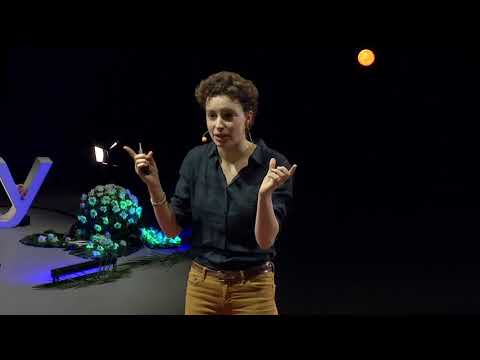
tonight is this winged butterfly
transparent which I come to talk to you
I film them and this summer during a
field mission in south america
we went to watch them maybe
would you say it’s a funny idea of
cross half of the globe for a
same reason but if I come to share
this project with you is that I think
that it contains some data
essential on our relationship to the living
so settle in deep inside
your seat for a trip to
extended perceptions on the wings of these
transparent butterflies it’s true the
legitimate question how do we
comes to work on a subject too
specific for me I think it
was a happy mixture of curiosity
a lot of chances also that started
three years ago in engineering school not
Very far from here
the first year to tell the truth
first a break on music
to the cello just to work
butterfly of gabriel fauré obviously and
then a first year of school and
then the repetition of this first
year so that’s true the course has been
a bit bumpy but I think
it’s when we start to wonder
really why we’re here we
want to give meaning to what we do
good the link with the butterflies one
optical that I studied in this school
so the optics is not necessarily
that of glasses but it is necessary
see it more generally as the
physical light of his
interaction with the material it’s in
this area that I was first
trainee then apprentice in a
history museum laboratory
natural called the center of
conservation research
collections and in this context there is a
great cooperation between
researcher in biology and physics
museum that embarked me in this project
on the transparent butterflies or my
optical skills was to enable
to understand characterize the messages
visuals carried by these membranes of her
transparent
so I did say visual message of a
transparent surface it may seem a
little paradoxical at first glance but in
does not you see well a window you
can not pass your hand through
then a butterfly wing no longer even
if it’s not recommended then how
is what we do then what is this
that it is made this transparency and
how can we characterize her well
it’s using fig tools
state-of-the-art
labs that we will start this
Butterfly Wing Teen Route
at first the idea is going to be
to explore the surface and to
bring closer
and to have the relief and the asperities
For the little story
maybe you know that the name
learned of butterflies these lepidoptera in
Latin it means she to scales because
in fact if you ever touch it
there is a powder that settles on your
fingers which is actually far from
anodyne since this powder is
thousands of cays that you actually have
snatch from the surface and what are they
which usually forms and colorful patterns
we know them well then you go
tell me yes but knew we saw there it is
transparent okay exactly we went
said it’s this membrane it exists
she is well made of something and
that’s where we started to wonder
how were we going to be able to watch them
so first step we were in the center
Research on the Conservation of
collections we have a binocular loupe
binocular pardon it’s actually just
a big magnifying glass under which we put
the butterfly here it is so this wing of
butterfly it was observed with a magnifying glass
here there is a magnification not yet
huge one goes up fish is actually
well here is the renounce Lepidoptera which
mean she to peel were expecting
maybe to find scales in
its transparent surface but we have
discovered a species of forest of hairs
good why not we thought that when
even that seemed to be declining according to
species so it was really worth it
to go a little closer to agree
in this case we went to the institute
from physics of the globe to paris see
stéphane bernstein who is a specialist
Scanning electron microscope
does the electron microscope to
michael sweep his barbaric name this is
just a microscope that allows images
a surface very precisely and
very happy with him thanks to a beam
of electrons went there and we
found this forest of hair at the
surface of the membrane that we see here
horizontally then sailing a little
further or by going to
other species
this time we found the scales
who has in the name of Lepidoptera with
hair a little hybrid finally it’s
was declining and the device it is so
powerful that in fact we can zoom
to the insertion zone of one of his
wholesale scales it’s still a little on
looks like it’s a huge leaf in
does not it’s a shell on the
membrane and we see that this surface
so just this transparent surface
is not at all flat it is
consisting of irregular patterns and
bumpy and that if you read me had them
parrot images above greenhouse on some
species we even observe a mosaic
surprisingly belmont I find of these
nanostructures dented then for himself
to give an account since it is not very
obvious to realize what is
mean these magnifications if we are
from
if we are drawn this butterfly wing
on the width of France that is to say
a good strasbourg brest we put 10
hours by car to do when it rolls
and only one of these rings
structure the forest precisely the size
of this carpet that’s all
the infant infinitely small is
difficult to conceive but does not prevent
that it exists that’s why the
transparency is not empty and that
the more she is infinitely complex good
certainly we saw all that existed but
what can it do for
if it’s here on cl today it’s
although there is a reason then there we
arrives in the second stage of our
exploratory trip on his wings of
butterfly and it’s now about
understand what all these are used for
structures that makes it stand at
they all accumulated the visual effect
global of the ale ie what we
see when we look at it with our eyes
so for example the mosaic of our
structures for to take some
thing we opticians know this
are actually pretty patterns
characteristic of anti – reflective surfaces
and do that in terms a little
finalists that allows low butterflies
not to twinkle in the air at
less flapping wing and therefore no
not pass for an easy teacher for
their predators
birds by the way if it’s them
predators of taste buds but have in
indeed it must be said that what
we are interested here it is the eye of the
predator and their due and the eye of
butterfly because our eyes of
scientists they are conditioned by
their vision ie by the
photoreceptors present on our
gold retina butterflies do not have the
even he in ourselves some who
allows access to east lengths
wave that we do not see being
human with our eyes by watching them
in the forest for that so it was
necessary to equip another type
camera
if this time it’s an ultra camera
purple that allows to see his
rays that burns us politeness on
the beach and so here is the arrival ya not
a long time and I’m trying to
bleed so the lamp works and we
see well that we get to check meaning
and brush your teeth properly on
morning so let’s say more scientific
our hypothesis would be with this camera
to succeed at images and surfaces
in the transparent areas that do not
were not very homogeneous were doing too much
emotional something in any case who
allow us to understand including
how butterflies recognize each other
and how they are not mistaken
sexual partners
what is the risk of an offspring
heaps and then more descendants of the
quite actually
we now come to a stage of this
itinerary where we begin to understand
what types of what do a structure do
that and what it is made of
and how to observe it then it’s true
I have not spoken to you of
iridescence polarization extraction of
the charline sequencing DNA tati
on air of chrysalis dissection or
still thermoregulation test but
it is not very serious
it will be another time you promise me he
there is one thing however it really takes
mentioned when we talk about optics and we
do not want to ignore that it’s
what implies the light interaction
matter then the matter yes we have it
used it’s that from the beginning
so how do we look under all
its seams from the forests of the cays
electron microscope up to the
vision uv but on the other hand the light
she is the one who touches her scales
and these butterfly wing membranes in
the real life ie in america
south in the forest and without it is missing
the me is the information as
scientist
so it’s time for what I have
lost with the physics of donning a
pair of boots and follow me on the
field in south america
that’s where I left this summer
field mission with a team of
history museum researcher
natural so with various questions
of physics and biology in mind so
we went to areas in
Ecuador and Peru
what they are actually at the limit between
the Andes cordillera and the forest
Amazonian and these are places
really very famous for their
diversity of species since
meet the species that was
usually at low altitude detects a
little bit higher so we started first
in equator at 1000 meters altitude
in the biological station of Gannat
yacou we this is a pretty place
extraordinary at 1000 meters altitude
so in paint set in the middle of the forest
tropical and it’s a meeting place
between researchers since we are
really in the middle of the field
and then there are machetes nearby
so we can do a little bit what our
research implies that one does like
gait
in the forest so we for example
complete for transparent papers
but also a couple of researchers who
work on leaves must
only there and then a third
who is this the spiders to
atomizer
finally really a universe completely
atypical than ever before I would have
thought to discover before putting the
feet while talking about feet
I think rubber boots
it’s the best investment of all
this trip since indeed in these
forests it’s as wet as cold and
yes I think the whole team we have
simultaneously in son and all
t-shirts our suitcase to try to
survive the cold we lived there
it’s the kind of things you learn
on the ground meaning to be really
waited before like tidying up
his boots upside down because
otherwise the next day we find
frogs inside So here we
laughed all that night at the
candle when sometimes in
electricity was coming over to the station
because a landslide had
taken away an electric pole
more concretely anyway my mission
there was doing a study
physics of ambient light
that is to say, I had to go
in all micro habitats in
which quickly has butterflies in the
forest is physically characterized
this light with objective tools
so to hiking in the woods and
sometimes it’s up to 20 meters from
height in the canopy since that makes
part of the places where we find these
transparent pavilions and with me in
all and in all these places I have
brought me a radio spectrum m of sweet
gety name that’s with me for
therefore characterize the ambient light and
who made me a specter of this
light ie the distribution in
intensity of light at different
wavelengths so we see on
the software interface the rainbow of the
visible with on the left the ultraviolet
I spoke to you right now
and right legally and infrared
so in fact these data there they vary
enormously depending on the time of day or the
place where you are so the altitude and
then there is also a lot of weather
so in a month of field I have a
absolutely scary collection of
give to lend because yes
in this photo of the field I looked
happy but often I can tell you
that we really drooled anything
either to climb trees or sometimes
set a big diameter in a
measuring laboratory
they often stumble I got a little
requested
oh yes what I was doing there and why
we all did that maybe you
during this presentation you are a little laid
the question also will do all that is
do basic research that
serves to understand the balances of the
alive that is around us it’s a
purpose in itself
of course and then more
apply it can serve as a
base to the bure inspiration so that’s
all these innovations that are resting
on examples of adaptation to
the environment so that are sorted out
the shutter by millennia of
natural selection
maybe one day who knows how to create
anti-reflective surfaces
self-cleaning and thanks to its wings
butterfly me I must say
personally what touches me there
in it is that the starting point of
all amassed scientists who are
are wandered to the forest that are
squatting in the east often had to watch
these butterflies by asking questions
on that then maybe you
you are neither a physicist nor a logical mantle
it is surely you would not have a
scanning electron microscope in
your bag during your next ride
in the forest but if you ever come across
butterfly this day the bar think a little
at this little presentation I assure you that with
a little patience and your curiosity
you will not need anything else
you enjoy a unique trip too
bright than poetic about the thousands
cays of these transparent butterflies
[Applause]
”
Be First to Comment