
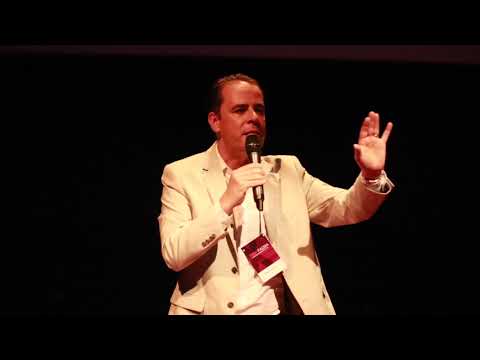
I work in the field of music education
and with sacred music and someone told me
Perhaps music is perhaps the most
practiced
but the less reflected many here I
I know you like listening to music.
many here like to sing maybe
play a musical instrument
but many times we do not reflect
about the musical language of the way
and ours is our small
This afternoon’s talk talks about
God’s conception and a style of music
throughout history
in the Christian context the music practiced
communities in the churches was changing
your style gradually so many
times generated conflicts discussions discussions
now if we look at the song we will not
non-Christian music by
example the music practiced in Africa
in the central shamanic rituals
African religions is interesting that it seems
that this type of music did not suffer
changes throughout history
they understand for example that if they
change instrumentation change style
musical perhaps entities the spirits
that manifest themselves do not manifest themselves
then Eastern music or in general not
for example the monks
Tibetans if you visit the monastery will
realize that they sing the same style
music for centuries
already in the Western context in the context of
when he said that it would be a
very broad way, not focusing on
no religious movement in the context
Christian the music was transforming
this was due to several factors of a
these factors has to do with the
people had god
the way they saw it.
divinity
if we start our brief journey
by the history of music
we started in the medieval period were
About a thousand
years in which the church
people have a vision of a very god.
far the vision we can call God
besides us people in the middle ages
they understood that God was someone to be
arbitrary one who thought he would punish
the people are the distance from man to god
was very large and this will reflect on
all medieval art not only in art
the medieval music context
we have the main example that is the
known floor singer also called
Gregorian chant the chant was a
practiced in the churches of the
medieval
it had some characteristics
example
in this period only men could
participate in the moments of worship in
Christian churches, only the clergy could
join the people to people
congregation did not have space
liturgy was a liturgy in fact.
contemplative people saw to the
church to contemplate something then you
imagine that singing of men in the
church and sounding in the acoustics of those
large Christian churches that stained
background people had a glimpse of the
heaven a god far from god beyond
of us this choir is formed by the hairs
monks by the clergy he sang songs in the
Latin language then most of the
people did not understand what was
letter or text being sung
generally this text was extracted from the
scriptures of the books of the
and this was the medieval context
another feature the medieval
musical instruments manufactured
built by men not penetrated the
church the chant was a corner to the chapel
the then medieval god conception beyond
us a distant god and the music of that
That era was more or less so you can
hear
the corner to the chapel
today our trash from the ground g20 and to be
a corner one year without so many without
tensions
people came to church and wanted to
reach out and buy them god heaven beyond
of us
time passes after more or less
thousand years we arrived from the period of reform
Protestant
a few days ago we celebrated the 500 years
reform and a new understanding of
doctrine of salvation was presented by
Luther king and this influenced
art and in the scientist and Baroque and
this influence came in sacred music and
some news that
happened that appeared at that moment
the musical instruments that before
were in the hands of the troubadours were
outside the church the musical instruments
now enter the church the songs
the liturgy the homilies the preaching
were now made in the vernacular or
simple people could understand what
is being sung and was being
preached a much closer liturgy
and this vision is no god but us
Yes, God, for us.
the vision of this period of reform
Protestant onwards it is interesting that
they took up structures of music
popular music that people liked that
the people sang outside the church and
brought to the church or worship
now it was something nice
people take pleasure in watching the
religious celebrations and a great
composer who worked for the church to
Reformist and Lutheran church was the run
sebastian bar great known master
master of music history one
Lutheran composer who had a
master of the chapel he was nothing more
less than a music director of the
churches a particular community
Germany and he every week composed
a new sacred piece
for choir and orchestra is
interesting that in that period God for
we are a second time to
aesthetic concern is important in
average age of you no worry
with the aesthetic question but in this period
God for us
concern about beauty, beauty
artistic dna enters the times the temples
christian god for us
time passes that earlier period he
corresponds to the period of rebirth
in the history of art and the Baroque period
our trip continues
We now come to God beside us
17th and 18th century
people began to understand the power
of music to be used in evangelism
the music now had a dimension
spiritual
the music was used in as a catalyst
the spiritual experience of the Christian
the believer’s experience the music now
had a more emotional load
at that time there were several large
evangelistic crusades in england
in North America and the people now
those great pietism movements
great revival sas people used
music to touch the hearts of
people
is a more immanent dimension of music
God is on our side and these
transformations
and this change of thinking
change in the conception of the divine
also influenced and influenced music
music in the churches we will now see the
example number 3 that this has to do with
God is on our side this time.
[Music]
Do you have a church now the entrance to the
lyric song, the lyric song inside the
church while in the middle ages
there is no concept of harmony was
only one voice
now we have what the bridge was
two or more voices
was a great orchestra god to our
side you see as the musical language
has been changing over the
story and as I have said many times
these changes generated conflicts
those who accepted the new
styles and people who rejected
new elements that penetrated the church
our trip continues to leave
we begin the final part of the
19th century we now have God within
we
first god besides us
after God for us in the context of
reform
then god by our side and from
from the 19th century to the present
from now on it is within us and this
movement influenced the movement
Pentecostal we know today
Pentecostal and how
a style of music of this conception of the
Divine God within us is a kind of
music that once again appeals to emotions
the liturgy of this moment is a liturgy
also that many are very sensorial
people go to the church environment
to feel good
they go to church they cry them
get excited
they want to feel good a kind of
conception that appeals
and this has a lot to do with
when you talk about music from this
period
there is a great exploitation of the element
of the repetition he realizes those girls are
They repeat the same idea is repeated over
four five six eight minutes is a type
of music that is very repetitive
addresses existentialist themes
related also to self help to god
now he is not a distant god but god
It’s inside of me, just like I said.
brought gave rise to the movement
Pentecostal is a very
also subordinated to the 6
the music is present in the
means of communication
music also has interests
commercial interests very
are behind this conception and
we have an example music example
number 4 of music of that period you
knows this style of risk well
looks
and now
[Music]
he is gaucho
[Music]
elements of popular music as well
75 are in – house
[Music]
is this who is who in Brazil the use that
it takes into account the experience of the front
with the activity
you notice the difference how music
the western sacra was transformed into
difference in the styles of
musical structures
now these reflections are important
we need to use the music of
Smart way we need to have notion
criteria in choosing the repertoire to
music is very important in education
training of young people in
adolescents and also in the context of
of the duration that we can understand
the modifications
the transformations that language
has suffered throughout history and
we can use appropriate criteria
to use the best musical language
possible way
thank you so much
[Applause]
”
Be First to Comment