
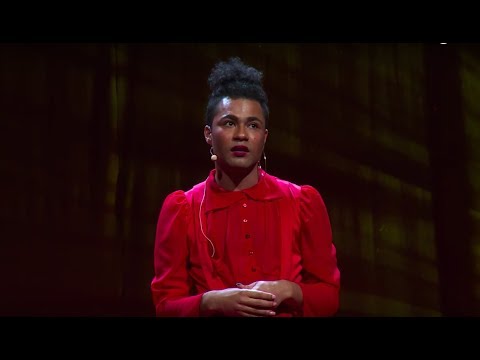
I want you to know before you step outside that you are a warrior.
You are a warrior who is allowed to be soft,
a warrior that is allowed to be scared,
a warrior that is allowed to ask for help but still a warrior.
I need you to know that when I’m writing this,
I’ve changed my outfit 17 times.
I have removed my makeup for fear of insult,
I have changed the way I walk down the street but that I am still a warrior.
I need you to know that when I’m writing this,
I have told myself it is okay to wish for something easier.
I have told myself it is okay to sometimes want to give up.
I have told myself it is okay to feel alone
but that I am still a warrior.
I want you to know before you step outside that there are others stepping here too;
that people have stepped before us, with us, and after us;
that the pavements can feel so lonely but I know I have stepped there too.
That we have existed before and exist in the present and exist in the future.
That we come from a line of warriors.
We did not asked to fight but we know how to survive.
Before you step outside, we love you.
Before you step outside, I love you.
Before you step outside, breathe.
I love you. Thank you.
(Applause)
Hi everyone. My name is Travis Alabanza.
I’m an artist, I’m a performer, and I’m a writer,
and amongst many other things, I am also trans.
And I say this to kind of, get it out the way.
As a kind of not-disclaimer disclaimer.
As a kind of thing that I feel needs to be said often in public space
so that we can move forward.
I say this not because it’s the be-all and end-all of my talk,
but I say this because I feel it is central point to my talk,
and I want us to be on the same page.
I think so often trans people in public space
have to constantly declare their trans-ness in order to move forward.
So here I am in this big scary, really big scary room declaring that I’m trans.
(Applause)
But I feel like often at the moment with trans people
all over the media calling it the ‘trans tipping point,’
that we think we all know what trans means.
But just for the sake of this talk, let me go through a really brief
101 description.
This isn’t going to be your gender theory lesson.
This is mainly the means to an end so we can move forward.
Trans in short, with this description
means that all of us at birth were made a decision without our consent.
Every day when someone is born, without their consent,
they are told they are either boy or girl.
We then go forth and are told we have to live that life,
becoming boy to man, to girl to woman.
Trans in short just means that you’re given that without your consent
and you have decided that that doesn’t fit.
In short, trans just means you were told a gender
without your consent at birth,
and now, in whatever shape or form, you’re not that gender.
There’s another word that I’m going to be using today
that I think we should get on the same page with and that is cis or cisgender.
In short, basically meaning, not trans.
Meaning that that decision without your consent at birth
that you’re a boy or a girl,
kind of still fits with you now and you’re alright with it.
So, me, I’m trans.
And so big TED talk balloons come down, confetti cannons,
and everyone twirls around and applauds.
But really all that it means, is that I was given something,
boy or manhood at birth and that is not who I am.
That I decided to declare my autonomy over my body,
and say, actually, that doesn’t fit.
I actually exist somewhere over here, over there, or over in the middle,
but it’s actually none of our business for this talk.
Trans people can exist in many different shapes, sizes, and looks or identities.
Trans people can look like me, can not look like me,
and trans people over evolution have also mastered the ability to become invisible.
That was a joke.
Trans people also have a sense of humor.
(Laughter)
So moving on from our 101 definition,
what I’m actually here to talk about?
I’m actually here to talk about something that goes beyond trans and cis.
That goes beyond these identities and into something that we all experience.
Into something that everyone of us in this room,
in order to get here, has experienced.
So I read a poem from my book today, and I did that for two main reasons.
My first reason, is because I’m a writer,
and I thought that with starting out with one of my poems would make less nervous.
Side note: it really didn’t.
But two, because from that book,
every single poem, diary entry, and essay that I have written –
I had written on public transport.
I had written outside. I had written in the public sphere.
Whether on a bus, on a tube, sometimes even on a plane.
And that is the experience that I want us talking about today.
The experience of going outside.
Two years ago, I became obsessed with this notion
of something that bonded us all or most of us altogether.
The fact that most of us all go outside.
We all go outside, we all go from A to B, we all get on tubes or buses or trains.
But what I was really interested in,
is how we were experiencing this differently.
And that’s what I want to talk with you about today.
Who is going outside?
How are we experiencing going outside
knowing that so many of us are afraid of going outside,
but in that fear, who’s fear is actually being heard?
I want to take you back to April 2016.
I was on Waterloo Bridge which is a really busy bridge in London.
And it was about 2pm, broad daylight and it was sunny for once.
And I say 2pm because that is the lunch rush hour.
For Londoners in the room, everyone knows that Waterloo Bridge is ridiculously busy.
It almost feels like a conveyor belt.
Whenever I walk on Waterloo Bridge, it’s like I’m on a movie,
but not one of those good movies, I feel like a robot.
But what I’m trying to say is that there were loads of people.
And at that moment at 2pm, I remember someone shouted the word ‘tranny’
and threw a chicken burger at my shoulder.
I will repeat: in broad daylight at 2pm on Waterloo Bridge,
around 150 people witnessed a person throw a burger at me,
whilst calling me a ‘tranny’ as it hit my shoulder.
Now I noticed some gasps or tuts or shocks.
But I’m actually not here to talk about the moment of violence
in that act of throwing the burger.
I’m not here to talk about the man that threw it
or what the burger smelled or tasted like.
I’m not here to theoritizes about who or what his intentions were.
Instead, I’m here to talk about the violence
in the surrounding moment after that attack.
I’m here to talk about some kind of violence
that I feel it’s not spoken enough.
And that is the violence in silence.
That is the violence in the fact that 150 people saw another person
(Applause)
throw a chicken burger at another human being and no one did a thing.
I didn’t want to call it bystanding.
For I feel bystander suggests something
that is so much more passive than what is happening.
Instead, I want to talk about the active choice
in the silence of protecting trans
and gender non-conforming people in public.
Some people pretended not to see and looked down.
Many people looked at me, at the burger, looked at him,
and carried on walking.
One lady even look at me in the eye
as if to say sorry but never quite saying it,
and then walked at a faster pace moving forward.
I actually had to touch the mayonnaise on my dress,
to make sure that it was real.
Because if you’d looked around moments after,
it would have looked like any other day.
And this was a real changing point for me
as a trans person existing in public space.
I am not saying this was the first type of harassment I’d received.
Anything but that.
But what I did notice in that moment is something that I felt was so absurd
as a burger being thrown at another human being
was so normalized to everyone else.
What I realized in that precise moment,
is that trans and gender non-conforming people
are not protected in public space.
We are attacked but then also not protected when we are attacked.
That there is a silence surrounding our violence
and that actually that is part of the violence.
What I realized in that moment, it is not just the attacker who is at fault.
But actually by everyone remaining silent on that bridge,
it tells the attacker that he can go the next day
and do the exact same thing and no punishment will be received.
Now I could have spoken about the violence today,
but I’m going to judge that we’re all in this liberal room
that feel like, “We’re okay with trans people
because we shared an image of Caitlyn Jenner on our Facebook.”
But actually, 150 people on that Waterloo Bridge
looked exactly like you did now. Albeit a smaller amount.
So I have to wonder, I can no longer take it,
and say that, “Yes, people will protect me
because actually evidence has shown otherwise.
And I want to give you another example,
because I really want to reinstate that this moment of the burger being thrown
is not some absurd thing out of the blue.
That this kind of violence happens to trans and gender non-conforming people
every time we step outside.
Two months ago, I was doing a gig in Nottingham,
ended around 11:30 and I was walking back home with some friends.
I saw a McDonald’s and I was just really, really hungry
and shamefully,
I want to pretend that it wasn’t the restaurant I went into but it was.
(Laughter)
And I went into the McDonald’s and it was really, really busy.
And it was about 11:30 on a Saturday night.
So it was packed and rowdy,
but I felt okay because I was with my two friends.
I walked in and instantly I heard a laughter that is all so familiar.
I’m so used to this laughter.
A laughter directed at my body.
A laughter that is telling me that I’m not human but rather an object.
What was different though is the laughter wasn’t coming from customers,
but in fact, from the staff behind the counter.
The staff could not hold in professionalism
and instead started to laugh, point, and gawk at me.
They said to the chef, “I can’t believe we have to cook for this ‘it.'”
I decided I wasn’t going to take it.
I decided that I’d already been harassed three times that day,
I was not going to stand for this.
So I retaliated, I shouted back, I said something along the lines
that probably shouldn’t be said because my mom is now watching.
And then a security guard came up to me.
And I thought, “Okay, maybe I’m about to be at ease.”
But instead, actually what happened, was the security guard asked me to leave.
He said, “Take your food and leave quietly.”
And what happened in that moment,
is not only did the busy room of restaurant people not do anything,
but also two men cheered when I left.
So not only we aren’t protected in our violence,
but we’re victim blamed for the violence we experience.
I repeat: we are victim blamed for the violence we experience.
Because of our transgression of gender.
Because we are deviant from the rules of man or woman,
we’re seen as believing / deserving of the violence we then experience.
Now, some of you may be saying, “Hold up a minute,
trans people aren’t the only people that experience harassment.”
Of course, there is many cisgender women in the room
that also worry about going home at night, that also hold their phone,
that also talk about cabs at night.
I’m not disputing that violence,
but I do think there’s a difference in how that violence is perceived
and what kind of harassment is noted.
And I’ll give a really quick illustration to demonstrate that.
On a tube, three months ago, Victoria line, Brixton up to Seven Sisters
was very very busy, and I could see a woman was sat down
and a drunk man stood up and called her a slut.
Instantly, the whole room, or the tube, erupted.
Within one stop, the man was ejected, and I even stood up and was like,
“Hey, are you okay? Do you want to take two seats?”
I thought this is a really good example of community coming together,
but I couldn’t help but admitting that I was quite jealous afterwards.
Quite angry.
Because two weeks prior on that very same tube,
I was called a ‘faggot’ by a group of men and no one did anything.
Two weeks before, a mum tutted at me,
and asked why I was making scene
and someone else laughed and continued to read their paper.
I could go on and on with experiences, but I’m well aware I’m already over time.
Instead, what I want to point out, is that what this is doing,
is showing that some people are believed in the violence they experience
and others are not.
And what this does,
is create a dangerous cycle that means that violence won’t stop.
Adverts about harassment almost never show people that look like me.
And although that woman was also protected by other privileges,
such as whiteness, no visible disability, no visible religion,
that would have meant that she was discriminated against,
I can’t help but also believe that her cis-ness, that she wasn’t trans,
was a focal point of the fact she was [able to be seen] as a victim.
This is not an option for me.
This is an epidemic of violence that faces trans and gender non-conforming people
every day.
All of the trans people that I live with
constantly say every single day that they are harassed
and that no one did anything.
So what do we do?
I don’t want to give this like neat TED wrap-up,
where I say that I’ve all these ideas about what we’re going to do
because I probably would have tried them by now.
Instead, I just wanted you to meet
a real-life actual trans person off of your screens and realize
what we are experiencing is real and killing us.
I wanted us to realize that when we step outside,
we need to stop thinking about an individual
and start thinking as a collective.
That in this current political climate,
so many of us are fearful about going outside and we need to start realizing
that we are a community rather than an individual.
We cannot look down and hope the next person will do something,
because chances are they won’t.
Ask how your trans friends are getting home.
Pay for our transportation until it is safe for us to go public.
Start acting like you’re not the only person in the room,
and instead smile at us after you look at us.
Because you’re probably the seventh person that looked at us on that journey.
Trust us and believe us when we say we are in danger and need your help.
I’ve been trying to do this on my own but I can no longer do it.
I think I also started with this book,
because it’s called, “Before I Step Outside [You Love me].”
And I think it’s as simple as that.
I wonder what it would feel like to be loved and cared for outside.
Trans and gender non-conforming people, I love you.
(Applause) (Cheers)
”
Be First to Comment