
from the beginning of the time humanity had this deep desire of being a stronger
had this deep desire of being a stronger
had this deep desire of being a stronger they’ve tried different ways if you look
they’ve tried different ways if you look
they’ve tried different ways if you look at different civilizations they have one
at different civilizations they have one
at different civilizations they have one thing in common all civilizations if you
thing in common all civilizations if you
thing in common all civilizations if you look in the path Greek Egyptian Romans
look in the path Greek Egyptian Romans
look in the path Greek Egyptian Romans Persians Chinese Indians they have
Persians Chinese Indians they have
Persians Chinese Indians they have heroes in their histories and they
heroes in their histories and they
heroes in their histories and they repeatedly talked about that talked
repeatedly talked about that talked
repeatedly talked about that talked about these heroes so it looks like it
about these heroes so it looks like it
about these heroes so it looks like it that was actual history even the modern
that was actual history even the modern
that was actual history even the modern TV shows in the movies if you look at
TV shows in the movies if you look at
TV shows in the movies if you look at the Holyrood there there are a lot of
the Holyrood there there are a lot of
the Holyrood there there are a lot of these super super humans these are the
these super super humans these are the
these super super humans these are the Superman Batman Sandman Spider Man what
Superman Batman Sandman Spider Man what
Superman Batman Sandman Spider Man what they have what they all have in common
they have what they all have in common
they have what they all have in common is they are stronger than regular people
is they are stronger than regular people
is they are stronger than regular people mentally or physically so my story
mentally or physically so my story
mentally or physically so my story starts from 2011 at the University of
starts from 2011 at the University of
starts from 2011 at the University of Louisville I wasn’t there but Susan
Louisville I wasn’t there but Susan
Louisville I wasn’t there but Susan Harkema team they had one person one
Harkema team they had one person one
Harkema team they had one person one individual who had a spinal cord injury
individual who had a spinal cord injury
individual who had a spinal cord injury spinal cord completely severed he
spinal cord completely severed he
spinal cord completely severed he couldn’t move lower extremities at all
couldn’t move lower extremities at all
couldn’t move lower extremities at all after receiving the intervention
after receiving the intervention
after receiving the intervention intervention he could start moving his
intervention he could start moving his
intervention he could start moving his legs voluntarily so paralyzed completely
legs voluntarily so paralyzed completely
legs voluntarily so paralyzed completely then intervention now voluntary movement
then intervention now voluntary movement
then intervention now voluntary movement he can’t walk but he has this movement
he can’t walk but he has this movement
he can’t walk but he has this movement he can stand up pretty big deal then
he can stand up pretty big deal then
he can stand up pretty big deal then 2014 the same story continues at may
2014 the same story continues at may
2014 the same story continues at may 2014 same teams as three more people to
2014 same teams as three more people to
2014 same teams as three more people to the same study now we have four people
the same study now we have four people
the same study now we have four people who had spinal cord injury spinal cord
who had spinal cord injury spinal cord
who had spinal cord injury spinal cord severed paralyzed now after intervention
severed paralyzed now after intervention
severed paralyzed now after intervention which I will talk about what kind of
which I will talk about what kind of
which I will talk about what kind of intervention they start being able to
intervention they start being able to
intervention they start being able to move their legs which was significant in
move their legs which was significant in
move their legs which was significant in that time because before this time we
that time because before this time we
that time because before this time we thought CNS injuries is end a time so
thought CNS injuries is end a time so
thought CNS injuries is end a time so this intervention was this little small
this intervention was this little small
this intervention was this little small lead and the back of a spinal cord small
lead and the back of a spinal cord small
lead and the back of a spinal cord small stimulator sending impulses electrical
stimulator sending impulses electrical
stimulator sending impulses electrical impulses this was something new the
impulses this was something new the
impulses this was something new the technique has been used for pain and
technique has been used for pain and
technique has been used for pain and different purposes but not for motor
different purposes but not for motor
different purposes but not for motor movement
movement
movement the small stimulator after an minimally
the small stimulator after an minimally
the small stimulator after an minimally invasive surgery could be implanted on
invasive surgery could be implanted on
invasive surgery could be implanted on the back of a spinal cord which can over
the back of a spinal cord which can over
the back of a spinal cord which can over time generate different different kind
time generate different different kind
time generate different different kind of simulations which can cause
of simulations which can cause
of simulations which can cause improvement in motor function so this
improvement in motor function so this
improvement in motor function so this gave us this idea is it possible to do
gave us this idea is it possible to do
gave us this idea is it possible to do it on more patients maybe if there are
it on more patients maybe if there are
it on more patients maybe if there are 20 people they might even improve more
20 people they might even improve more
20 people they might even improve more or it can’t be made maybe it’s not even
or it can’t be made maybe it’s not even
or it can’t be made maybe it’s not even possible on other people because for pop
possible on other people because for pop
possible on other people because for pop for 4 people is not enough to decide and
for 4 people is not enough to decide and
for 4 people is not enough to decide and generalized for the entire society so we
generalized for the entire society so we
generalized for the entire society so we thought about an alternative method
thought about an alternative method
thought about an alternative method which doesn’t need a surgery
which doesn’t need a surgery
which doesn’t need a surgery transcutaneous stimulation came to the
transcutaneous stimulation came to the
transcutaneous stimulation came to the game so there was a method in the called
game so there was a method in the called
game so there was a method in the called chance cutaneous spinal cord stimulation
chance cutaneous spinal cord stimulation
chance cutaneous spinal cord stimulation small patch small electrodes put on the
small patch small electrodes put on the
small patch small electrodes put on the same area but over the skin and the
same area but over the skin and the
same area but over the skin and the patients were located on their side and
patients were located on their side and
patients were located on their side and their leg are kind of hanging from the
their leg are kind of hanging from the
their leg are kind of hanging from the ceiling so they could freely move their
ceiling so they could freely move their
ceiling so they could freely move their legs we asked them to move their legs
legs we asked them to move their legs
legs we asked them to move their legs without stimulation at the beginning of
without stimulation at the beginning of
without stimulation at the beginning of course no movements because we chose the
course no movements because we chose the
course no movements because we chose the spinal cord injured patients who
spinal cord injured patients who
spinal cord injured patients who couldn’t move their legs after applying
couldn’t move their legs after applying
couldn’t move their legs after applying the stimulation over time and practicing
the stimulation over time and practicing
the stimulation over time and practicing over time same people could generate a
over time same people could generate a
over time same people could generate a lot of movement and this this was kind
lot of movement and this this was kind
lot of movement and this this was kind of a new thing for us will I’ll explain
of a new thing for us will I’ll explain
of a new thing for us will I’ll explain why the same paper was published in
why the same paper was published in
why the same paper was published in Journal of neuro trauma at 2015 and if
Journal of neuro trauma at 2015 and if
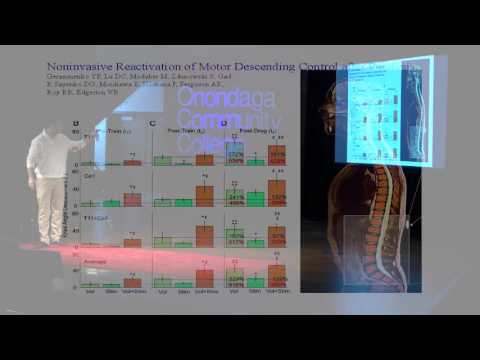
Journal of neuro trauma at 2015 and if you look at the improvement pre-training
you look at the improvement pre-training
you look at the improvement pre-training it’s almost no movement and
it’s almost no movement and
it’s almost no movement and post-training we have that change and
post-training we have that change and
post-training we have that change and that’s the angle of a joint which which
that’s the angle of a joint which which
that’s the angle of a joint which which which is the actual functionality of
which is the actual functionality of
which is the actual functionality of other muscle so the patients were moving
other muscle so the patients were moving
other muscle so the patients were moving improving 200 minimum 900 percent
improving 200 minimum 900 percent
improving 200 minimum 900 percent maximum in the force not 100% in a force
maximum in the force not 100% in a force
maximum in the force not 100% in a force so that was that was something happened
so that was that was something happened
so that was that was something happened over for five weeks we didn’t continue
over for five weeks we didn’t continue
over for five weeks we didn’t continue this study because what you decide just
this study because what you decide just
this study because what you decide just give it time limits we can’t say the
give it time limits we can’t say the
give it time limits we can’t say the study will continue forever and as the
study will continue forever and as the
study will continue forever and as the time limit was four weeks
time limit was four weeks
time limit was four weeks so we were thinking is the lower
so we were thinking is the lower
so we were thinking is the lower extremity the only organ in the body can
extremity the only organ in the body can
extremity the only organ in the body can improve in this fashion
improve in this fashion
improve in this fashion maybe heart can improve to upper
maybe heart can improve to upper
maybe heart can improve to upper extremity hands we don’t know so one
extremity hands we don’t know so one
extremity hands we don’t know so one step backwards and we change a topic we
step backwards and we change a topic we
step backwards and we change a topic we changed our proximity in the new study
changed our proximity in the new study
changed our proximity in the new study we implanted cervical spinal cord again
we implanted cervical spinal cord again
we implanted cervical spinal cord again below the level of injury
below the level of injury
below the level of injury now our patients they were paralyzed in
now our patients they were paralyzed in
now our patients they were paralyzed in upper and lower extremity cervical
upper and lower extremity cervical
upper and lower extremity cervical spinal cord innervating upper extremity
spinal cord innervating upper extremity
spinal cord innervating upper extremity you see all those small implants and we
you see all those small implants and we
you see all those small implants and we started having the patients we’re
started having the patients we’re
started having the patients we’re starting asking them to do the handgrip
starting asking them to do the handgrip
starting asking them to do the handgrip so this is this is what we are we are
so this is this is what we are we are
so this is this is what we are we are measuring now the grip force that device
measuring now the grip force that device
measuring now the grip force that device different Springs and we measure the
different Springs and we measure the
different Springs and we measure the force the patients would come here 12
force the patients would come here 12
force the patients would come here 12 weeks first week they just practice
weeks first week they just practice
weeks first week they just practice practice practice so if they can improve
practice practice so if they can improve
practice practice so if they can improve on their own they will show in the poom
on their own they will show in the poom
on their own they will show in the poom at the beginning of the study and then
at the beginning of the study and then
at the beginning of the study and then they go into the surgery the small
they go into the surgery the small
they go into the surgery the small surgery small leader starts the
surgery small leader starts the
surgery small leader starts the stimulation and you see the improvement
stimulation and you see the improvement
stimulation and you see the improvement in weekly we have kind of almost
in weekly we have kind of almost
in weekly we have kind of almost doubling the force of these patients in
doubling the force of these patients in
doubling the force of these patients in this study we have minimum of one eighty
this study we have minimum of one eighty
this study we have minimum of one eighty three percent one hundred eighty three
three percent one hundred eighty three
three percent one hundred eighty three percent and maximum three hundred fifty
percent and maximum three hundred fifty
percent and maximum three hundred fifty percent improvement now we were thinking
percent improvement now we were thinking
percent improvement now we were thinking about what’s the mechanism can be
about what’s the mechanism can be
about what’s the mechanism can be applied is on everything else the
applied is on everything else the
applied is on everything else the mechanism which we are thinking right
mechanism which we are thinking right
mechanism which we are thinking right now the hypotheses which not proved yet
now the hypotheses which not proved yet
now the hypotheses which not proved yet but that’s an interesting hypothesis is
but that’s an interesting hypothesis is
but that’s an interesting hypothesis is not what everyone thinks
not what everyone thinks
not what everyone thinks everyone thinks first time when you’re
everyone thinks first time when you’re
everyone thinks first time when you’re looking at these results okay they are
looking at these results okay they are
looking at these results okay they are regaining function so first thing you
regaining function so first thing you
regaining function so first thing you would do you’re comparing these patients
would do you’re comparing these patients
would do you’re comparing these patients to their own prior to this study or they
to their own prior to this study or they
to their own prior to this study or they own prior to the injury when you’re
own prior to the injury when you’re
own prior to the injury when you’re there can be or comparing them is like
there can be or comparing them is like
there can be or comparing them is like okay he can generate 40 Newton’s with
okay he can generate 40 Newton’s with
okay he can generate 40 Newton’s with the hand he used to be able to do 400
the hand he used to be able to do 400
the hand he used to be able to do 400 not quite there yet but what we are
not quite there yet but what we are
not quite there yet but what we are thinking this is not free enabling of
thinking this is not free enabling of
thinking this is not free enabling of the same things not regaining the same
the same things not regaining the same
the same things not regaining the same function this is a new function in the
function this is a new function in the
function this is a new function in the spinal cord there are a lot of paths
spinal cord there are a lot of paths
spinal cord there are a lot of paths days in entire CNS which are standing
days in entire CNS which are standing
days in entire CNS which are standing there doing nothing but now with the
there doing nothing but now with the
there doing nothing but now with the stimulation we are teaching the spinal
stimulation we are teaching the spinal
stimulation we are teaching the spinal cord to learn to reactivate the same
cord to learn to reactivate the same
cord to learn to reactivate the same pathways to do something new so that’s
pathways to do something new so that’s
pathways to do something new so that’s the hypothesis this is something new we
the hypothesis this is something new we
the hypothesis this is something new we are giving to the patients who are
are giving to the patients who are
are giving to the patients who are paralyzed at the moment this can apply
paralyzed at the moment this can apply
paralyzed at the moment this can apply on anyone that’s gonna fire any of us in
on anyone that’s gonna fire any of us in
on anyone that’s gonna fire any of us in the room
the room
the room our CNS in general has a lot of neurons
our CNS in general has a lot of neurons
our CNS in general has a lot of neurons they’re just standing there watching
they’re just standing there watching
they’re just standing there watching each other and that’s the reality how we
each other and that’s the reality how we
each other and that’s the reality how we can teach them can we even teach them we
can teach them can we even teach them we
can teach them can we even teach them we never knew we can teach them but now we
never knew we can teach them but now we
never knew we can teach them but now we learn that this is a new method of
learn that this is a new method of
learn that this is a new method of teaching the central nervous system was
teaching the central nervous system was
teaching the central nervous system was the old method we know we all can learn
the old method we know we all can learn
the old method we know we all can learn by looking by watching by listening by
by looking by watching by listening by
by looking by watching by listening by touching we never knew there’s a there’s
touching we never knew there’s a there’s
touching we never knew there’s a there’s something other than our own perception
something other than our own perception
something other than our own perception and this is this when the stimulation
and this is this when the stimulation
and this is this when the stimulation comes to the game it can it can go more
comes to the game it can it can go more
comes to the game it can it can go more forward just imagine that the
forward just imagine that the
forward just imagine that the possibilities okay now where we are
possibilities okay now where we are
possibilities okay now where we are that’s where we are we don’t know where
that’s where we are we don’t know where
that’s where we are we don’t know where we are going if we don’t know if the
we are going if we don’t know if the
we are going if we don’t know if the same method that we are trying to apply
same method that we are trying to apply
same method that we are trying to apply on every single organ in the body is
on every single organ in the body is
on every single organ in the body is going to happen in the future we have
going to happen in the future we have
going to happen in the future we have hypotheses we have goals not quite there
hypotheses we have goals not quite there
hypotheses we have goals not quite there yet okay but I always try to look at it
yet okay but I always try to look at it
yet okay but I always try to look at it like this the CNS system the central
like this the CNS system the central
like this the CNS system the central nervous system we are not using even 5%
nervous system we are not using even 5%
nervous system we are not using even 5% of it and we all know we are species
of it and we all know we are species
of it and we all know we are species which needs to survive on earth or outer
which needs to survive on earth or outer
which needs to survive on earth or outer space or anywhere and maybe this 5% of
space or anywhere and maybe this 5% of
space or anywhere and maybe this 5% of the brain is not enough maybe you found
the brain is not enough maybe you found
the brain is not enough maybe you found a new way to improve even more to help
a new way to improve even more to help
a new way to improve even more to help each other even more so I hope for the
each other even more so I hope for the
each other even more so I hope for the for the studies for these kinds of
for the studies for these kinds of
for the studies for these kinds of studies as well others of course to to
studies as well others of course to to
studies as well others of course to to improve in the future and give us
improve in the future and give us
improve in the future and give us something new and I wish you the best
something new and I wish you the best
something new and I wish you the best thank you
”
Be First to Comment