
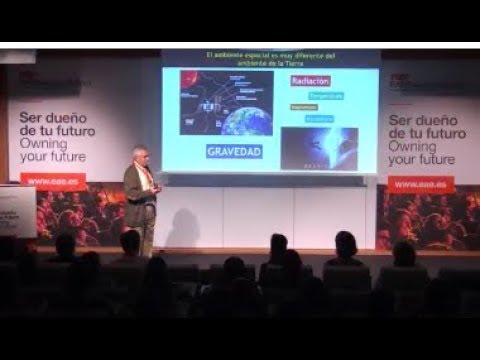
talk about the space that is going to talk about
the plants and obviously have to talk
of the future because there in that title
there is an expression of the future we need
exploring space is something that we have
started to do but still not
we do thoroughly and we need to
create space because among many others
things
we need to grow plants to talk
of all this we are going from a
really fascinating image of two
fascinating images and two images
very provocative very attractive one the
they have been seeing human beings since
that are human beings that is being
maybe unfortunately right now
our generations are seeing each
less time is a starry sky
light pollution makes us see
this image less and less or does that
fewer people are able to see this
image is another one does not make it affordable
they do not make it feasible to see resources
enormously complex if normally
sophisticated
in the image of a galaxy of a
image that can not be seen with the eye
human an image that we are closer to
sophisticated instruments of
astronomical research
but the two images are attractive and
the two images tell us that
since man is man that the
human being the human being arises has
looked up and has been planted and that
it is and that starry sky that if there is
there you could go there and you could
get out of the earth that is to say we
do these two images ask us the
Why and why do we want to go to
space I already say 100 ac ago many
centuries already the Babylonians raised this
kind of things and they started working on
that address
building these figurines figurines
by those who pretended to some
way
obviously connected with religion
but they pretended to get to interact
somehow with that the vision
let’s say artistic the imaginary vision
from Peter Bruegel the old man picked up the
Biblical myth of the Tower of Babel that
ultimately connected with all this
today it turns out that today in these
days in these same days in madrid it
is posing an exhibition a
exhibition open to the public
that is called Mars the conquest of a
dream
the conquest of the dream is that going to
Mars turns out that
dream of the human being it turns out that when
the ship biking to martí did in the year
1976 a great visionary to eat as a result of
ibor and it occurred to him to say that today
we have arrived at Mars because really
yes we know that there is life on Mars
because we have taken it because
it’s us and a few days ago
in the country in a cultural magazine
associated with the country came this
headline
the best way to know the human being
in traveling on Mars with ray bradbury
that is to say that somehow thinking
and off the ground
exploring space is a longing that
is in the depths of the human being
and for that he puts at the service of everything
it scientific resources that is what
let’s talk and let’s talk about
space biology at the service of
space exploration two forms of
space biology one trying to see
if there is fishing there is life outside the
land if there are forms of life outside the
planet earth that results in the
astrobiology other go us
we decide ourselves and carry components
from the earth the life that we
we know and from which we form
part
e to put specifically to be
human in extraterrestrial environments
by spacecraft and treat
to finally reach that dream
get that longing to colonize
planets or satellites other than the
Earth
in short life is not something else
that the realization of a series of
biological function functions
based on cellular elements and
Molecules placed in confrontation
with an environment and life has been
developed on earth by the
interaction of those living beings of the
first that originated on earth
by procedures where we are not going to
enter now but posts
continuously in confrontation with a
environment the issue is that when
we went out of the environment of the
land we are faced with the
environmental conditions essentially
different in which there is a series of
factors against which neither us nor
the other living beings of the earth
are accustomed are adapted the
most important in front of many of them
excesses of environmental factors
when we go out of the earth when
concretely the human being
or living beings of the earth come out
from her they are able to protect themselves from
defend against countering them be
Radiation screen are placed
habitats environments with temperature with
atmosphere with breathable gases that
make it possible outside the aee out of the
Earth
that life happens in a way
similar to the one on earth but
interestingly there is an environmental factor
in front of which we are not capable of
to put on and to counteract it and that
factor is the severity is to say that one
of the great challenges of exploration
spatial is that living beings have
to be able to adapt to live in
an environment that either has no seriousness or
has a different severity reader since
the earth
that process of adapting that process
of survival to those conditions
environmental differences essentially to the
lack of that gravity vector that has
strongly conditioned that there
still conditions the existence of
life on earth are realized
scientific experiments in this great
laboratory that we have been able to
build and what to put about
three hundred and fifty kilometers by
over our from our land and
what is the space station
international
this has been the final result of a
titanic project of collaboration for
peace for me to for missions
peaceful between the big countries
developed from the world of europe
united states japan russia and canada is
a unique and unprecedented tool
to be able to conduct research in
absence of gravity well and good huh
us in our laboratory
we work with plants belong
we pretend to know the secrets and the
really mysteries and mechanisms
of the headquarters of the life of the plants
then when those plants the
we place in the international station
on the international space station
what can we learn and how can we
benefit from them because there we have
two fundamental objectives in the first
place to make possible the exploration
human of space but also know
new things about the life of the
plants and the response conditions
adverse environmental conditions that are applicable
later to the quintet the
terrestrial agriculture
putting the plants in is in those
terms
place the plants for the first time
in front of an environmental challenge that they have not
known throughout the entire
evolution in the case in the course of the
evolution
the terrestrial life and specifically
the life of the plants has been
developed in constant presence of
that gravity vector in fact 400 ago
millions of years when the plants
they left the sea and colonized the land
they had to overcome a challenge
very important that was to stay in
to be able to walk and sustaining a
plant had to develop structures
woody had to develop branches had
that develop structures that made
who want to be able to overcome that
resistance to gravity because if not
I know how to say the resistance to
gravity is an absolute factor
essential from the point of view of the
space exploration plants
they contribute things that no other living being
can contribute ie the plants should
obligatorily be partners of
journey of the human being in the adventures of
the exploration because you need the
presence of their support systems
vital that they make possible the contribution of
nutrients to human life and the
removal the removal of
waste of that human life
so that in the same way that
growing plants for food was
an essential milestone in the history of the
humanity cultivate plants for the
exploration in space will be a step
significant is already being a step
significant in the exploration of
universe that is what role the
severity and what role other
environmental factors in the life of the
plants fundamentally gravity and
not only gravity but essentially
also light play a role
important in guiding the
development and growth of
plants
there you have a good scheme
global view of how the severity
the presence of gravity and
presence of light is able to guide
and direct the growth of plants
when there are both factors when
there is light and gravity
the plants grow oriented with the
stem up and the root towards
below and I remind you that the concepts of
up and down are concepts that seem
obvious that seem trivial but that
they are essential
dependent on the existence of a
gravity vector when there is light but
there is no gravity curiously the stems
and roots behave in a way
different because the stems grow towards
the light
but the roots that normally in the
soil grow on the ground grow in
absence of light are not capable of
respond to that stimulus that is called
stimulus
tropic photo when there is gravity and
there is no light the plant develops from
a very different way does not develop
green structures because he is not capable of
perform photosynthesis but if it is
capable of orienting itself does not
only with the assistance of the rector
the seriousness of guiding their growth and
when there is no seriousness
the plant does not die the plant is capable of
survive but the plant develops
in a completely chaotic way in
the study of this adaptation of
plants to the space medium the first
experiment that we did was
the experiment that was called rutten
the cervantes mission that in which
Spanish astronaut Pedro participated
duke and was held in 2003 and in
she appears in this study in this
experiment we tried to study the
effects of the space environment on
certain structures and functions of
nucleus of the cells you gave me matica
of the proliferating cells of the
plants and in that experiment and in others
which is that they followed him later
what we found were
very important alterations in
basic processes for the development of
the plants processes that occur in the
proliferating cells of the plants of
the root of the plants and they are
essentially affected in the in the
process that is called the cell cycle and
that the absence of gravity causes
very important alterations that of
persist they would be capable by themselves
of ruining the growth completely
and the development of the plant instead
subsequent experiments that have
performed on the space station
international have shown is good at
what you see in that faith in that
photograph that was broadcast by the
social networks around the world and that is
a lettuce that from a point of view
scientific
from a botanical point of view it is not
other than an adult plant it was
able to be grown was able to be
developed in conditions of absence
of gravity and even to be tasted
with olive oil and modena vinegar
by the astronauts who were in
at that time being part of the
crew of the station and
effectively york said the help
It was rich and is in the first
Saturday space had been a great
pleasure so that if we have for a
part a series of important damages to
cellular level at the level of expression
Gene at the cellular process level
essential for development but then
the plant is capable in some way that
we do not know how to develop until a
adult state that is what happens what
what happens is a mechanism of
adaptation ie the plant is capable
in some way to overcome those
problems of stressing new genes from
develop changes in their functions
cellular and molecular to be able
finally overcome that stress
environmental and finally you adapt from
way that knowledge of the mechanism
cellular and molecular adaptation of
the plants to the space medium is today one
of the most important challenges of the
space biology to solve that
challenge among other things we have
worked on this project that has been
called syncrolift that has been brought
in collaboration between European teams
in which I have been the director and
American teams led by the
Professor Kiss from the University of
north carolina this experiment is
performed on the space station
international
specifically in the columbus module that
is the module is the contribution
European to the station project
using certain facilities
located in it has been done in
three successive experiments in three
spaceflights have been
out between 2013 and 2017
the last of them was developed the
past was concluded last month of
July
these are some images of those of the
of the development of the project first the
sample preparation
the sample were actually prepared in
this type of boxes those boxes are
by cultivation chambers where
placed seeds there you have a
researcher in the laboratory
placing that powder that you see there are
the seeds of the plant that
used that it is a model plant that
called thaliana arabidopsis that does not have
no interest
economic percy but that is something like that
as the laboratory mouse
cancer research that is to say
us that a mouse heals the
cancer matters to us but what is known
in common
a cure cancer is very important
for human cancer as something
similar happens here is fast say
Italian in question
we care little but what is known
of life or if you can move the
kind of agricultural interest
these are the boxes to move the
collection of cultivation chambers that
was launched to the one that embarked on the in
the las in the spaceship and they were launched
to the international space station in
these experimental containers is the
launch in space ex ships that
are new vehicles has
replaced the ferry to chat the
american that had an importance
important historical in
first studies in the first in the
more pioneering stages of the
space research was coupled to the
station the experiment was developed
and finally he dipped in the ocean
peaceful
this is the development of the experiment in
the station itself with the astronaut
managing our cultivation chambers and
finally the preservation of
samples on the devices
that device is called phil hughes and
It was produced by a Spanish company
with which there was even not only the
Spanish science that we bring
but also technological development
Spanish at the service of this the ship
dragon finally dived was hoisted
ship and finally we went to california
james d center to house to collect
samples to prepare them so that
could then later be
transferred to our laboratory
madrid and analyzed
those are the plants that have grown in
the space in the boxes in the cellars of
cultivation is interesting to see how with light
white plants appear
perfectly set with white light
but without seriousness
the sizes appear oriented but the
roots become disoriented and with red light
a new tropism photo of the
root that is one of the discoveries
new that has been made in this
gene expression experiment we
seen that light is indeed
effectively a means of replacing the
gravity as a means of adapting
the plants
This is a result of an experiment
of gene expression in which
shows that la la la
the pattern of gene expression is
restores echo between the irradiation the
radiation with light to similar patterns
to those of the ground controls
and this is a very interesting result
that shows that the gravity of Mars that
we got it artificially in
the space station through a
centrifuge that rotates from the station
space is in zero gravity
broken the centrifuge does not simulate the
gravity of Mars and we have seen that the
behavior that the orientation of
the seedlings with the Martian gravity
is similar to the orientation of the
plants with terrestrial gravity
while in conditions of
microgravity that we found a
true chaos of orientation so
that that of the seed potatoes
the potatoes on Mars that you saw in the
film can effectively reach
be a reality and this is the team is
the team from Madrid to be a colleague
American this is a team
French that collaborates with us and the
final thanks to our at
space agencies that have done
possible is this these jobs and
obviously to all of you for your
friendly attention boxes
[Applause]
”
Be First to Comment