
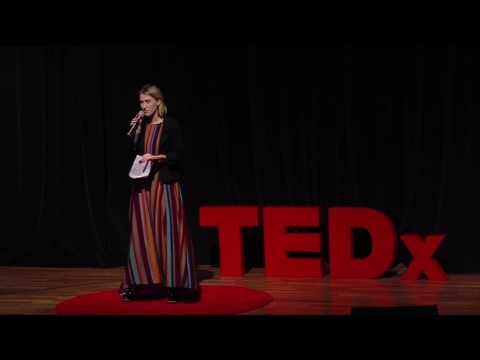
(Music)
♪ See here, my dear
I’m sorry to tell you
I found someone here
To help me pull through
This someone’s around
When you leave my life
It’s all I can see, not having you
In these arms of mine
See here, my love
Where are you now?
We are still true
But we’ve made no vows
To leave like that
To leave me with a pat
I had to find
Someone to drive the bad away
And meanwhile
I go sailing without peace
Without a port
With no resort, and no release
And I’ll never forget you, love
But the solitude
Leaves the heart skewed
And it’ll just increase
See sweetheart, apart
From these evil facts
You know, betrayals
Are much subtler acts
If I gave you up
It wasn’t to leave you burning
Love, hear me well, I’ve found for now
Someone called “yearning”
Love, hear me well, I’ve found for now
Someone called “yearning”
Love, hear me well, I’ve found for now
Someone called “yearning” ♪
(Music stops)
(Applause)
Thank you.
Thank you.
Hello!
I was born premature, in Rio de Janeiro.
My dad had travelled for his first international concert,
and he arrived in Portugal, called Brazil, and my mother was in the hospital
she’d had a placental abruption and I was almost born.
He came back the same day, the Portugal concert was cancelled,
and I was born a month later.
(Laughter)
It was the first time I took the stage.
I grew up in this family of artists, so affectionate, so sincere.
My first attempt in the art world was through ballet.
My mother put me in the school she had studied at in her youth.
It didn’t last a month.
I liked the classes, but one day the teacher said
that the uniform was compulsory and I never came back.
My second attempt was at music.
I began studying the piano… sorry, not the piano.
I began studying the flute and singing,
and soon after I joined a children’s choir.
And I spent all my afternoons at the music school,
I created strong ties to that space and those people.
And one day, there was a performance in a university hall
here in Porto Alegre, with the choir,
and I was going to be a soloist for the first time.
There was a moment I had to be the main voice by myself.
I was always very shy, so singing in a huge auditorium
didn’t feel very comfortable to me.
And music, up to then, had been just fun for me,
and suddenly I found myself with responsibilities toward the group.
Anyway, there were tons of rehearsals, I was very nervous,
but we did the presentation, everything worked out.
I was happy, a little relieved.
And so, I’m leaving the stage, happy and everything,
and I see a lady coming my way, smiling,
she stops in front of me, congratulates me and says:
“Dear! It couldn’t be any different.
It’s in your blood.”
I didn’t understand what she was telling me.
It was really weird.
What did she mean by that?
I didn’t take it as a compliment, actually.
It was weird, but deep down, it was a little frustrating.
She was refering to my dad, who was a musician,
or to my mom, who is also an artist.
Is it in my blood?
Does that mean I was born with it?
There are many studies in this area.
There’s this research that was done in Canada
by a Brazilian researcher,
with 30 babies.
And some of these babies were exposed
to a prelude by Maurice Ravel,
for ten days, three times a day.
At the end of this process, all the babies were put through a test,
and those that had heard the music at home during the week,
paid more attention to it than to the other pieces.
That is, they developed musical sensibility
due to being exposed to the music.
I was born into a very musical family.
I had a piano at home,
on every birthday there was a band in the room.
I also developed musical sensibility,
but the environment in which we are inserted
contributes to the development of our abilities,
of our competences.
And I read a research that was done in the United States,
concerning public schools when these had small budgets,
they did musical aptitude tests
to see who could attend music lessons.
That is, the idea was to select those that had an easier time
or genetic predisposition toward music.
And they applied this same test
on the musicians of the Los Angeles Phillarmonica,
which is a great orchestra.
And half of the musicians there had a below-average score.
Half of the musicians.
That is, according to these tests,
none of those people had the necessary genetic predisposition,
to work with that.
But there they were, and they were great musicians in a great orchestra,
it wasn’t blood that got them there.
We have a register, we, human beings,
have a biologic, psychologic, and imaginary register.
And one register does not prevail over the others.
We are what ties those three together.
Today I understand the discomfort and the frustration I felt,
when I was younger.
I don’t deny genetics,
I don’t deny the influence of the social environment
from even before I was born.
But none of that would have made me a singer
if it hadn’t been my choice.
It’s not just in my blood.
Thank you.
(Applause)
”
Be First to Comment