
well I want to start this talk of
about mobility and how it can
be a factor of change for the future
of cities
with this phrase the jungle where he tells us
that stops to be able to change the cities
We urgently need the
city planners and architects and I would add
the decision makers within
state local governments and
federal governments begin to reinforce
pedestrianized pedestrianization like
public policy to integrate
development
the development of habitable cities
sustainable safe and inclusive to
from 54 years ago or so
jay cocks and told us we are
making a serious mistake when designing
cities for cars
this what he did was displaced to the
people from the cities and well he brought
huge negative consequences between
they the problem of road safety
this is a huge problem that exists in
all over the world there are 1.2 million
deaths from road accidents around
of the planet and in Mexico
this sum reaches 17 thousand people at
year
this brings us to be for the seventh
country with more deaths due to accidents
vials in the world and with the first
cause of death in children from 5 to 14
years the second cause of death from 14 to
35 years and more than 860 thousand people
remain disabled in Mexico
which 75% how do you get work
and we go to economic terms to
country road accidents cost
150 billion pesos per year
along with this the mobility problems
have been accentuated in all the great
cities over Latin America
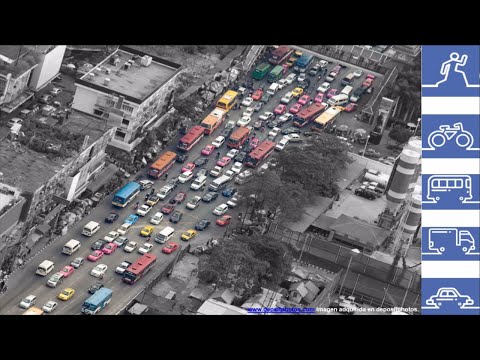
with this kind of images where the
infrastructure has accumulated towards the
car making more seconds floors
more wider road distributors
the lanes and the only thing that we’re
doing is inducing traffic and
when we induce traffic
we have hours and hours in the
cars
this translates into an economic cost
for the country of 55 billion
weights for loss of productivity and
of course then it takes us to the third
big problem of efficiency in the
mobility that is pollution
if we talk about 17,000 deaths a year in
Mexico for sinister roads the
pollution represents 20 thousand deaths
for this concept and if we are going to costs
economic ones called 150,000 million for
sinister roads over 50,000 million
55 billion for lack of
productivity due to
congestion
good pollution problems
country cost more than 530 thousand
millions of pesos per year
this sum more than 730 billion
pesos
if we add the three problems in
set and more than 37,000 deaths so
so much I only see two city futures
there are two city futures and this is something
that we have to decide and act no longer
there is more there is no more tolerance for the
2050
it is predicted that in large cities
larger cities will live more than 70%
of the population therefore the
problems will be accentuated every day
more and it is necessary to act
I had the opportunity to live those two
city futures
On the one hand we have Beijing the city of
22 million Chinese inhabitants in
general made its economic growth
exponential in the last 20 years
a lot based on the infrastructure
automotive from the plants
automotive that your population will pass
to move around on a bicycle to move around
automobile and the entire infrastructure
you can see second floors at 30 meters
of height very wide streets and sidewalks
even stools with a grate
cloistered to me the skin gets
chinita every time I see this image
because I lived that day that day
we were at 485 particle level
contaminants pm10 access an idea the
Mexico City a bad day is 120
130 then we were that day five
times over a bad day in the
City of Mexico already in the application
of the iab there are more applications of how
is going to be the aa contamination of
how will the weather be
that day the application said that neither
is even this mask that you
give the hotel as welcome kit and
I was going to serve more and recommended a
industrial mask of this is that
They have two large filters on the sides
this is a future of city delivered
completely automobile of course
exponential but to which we are going
the great cities of Latin America and
many great cities in the world
on the other side is Singapore one of
the city countries by their size more
sustainable in the world where
restriction to the car is is very
reinforced by a public transport
efficient
I do not want to give you any information about singapore
In order to acquire a vehicle,
auction the right to buy a
vehicle every three months
this right to buy the vehicle
can cost up to 150 thousand
dollars without law
plus there’s congestion pricing
parking lots are very expensive but
on the other side the coin have one of
the best public transports that I have
seen in the world then and to whom
want to take an exercise
imagination that support me and that you
imagine what city they want to live
put in your in perspective a
image
of the city where they want to grow in
where they would like to spend with their children without
week where they want their children
go to the school where they want
live with your family and friends and
they have is this image that they are
imagining
I do not think so, well, it’s where
we live there is where he lives in the great
Most people in areas
urban areas, especially in Latin America and
that’s what we face day to
day
I think that rather you are
imagining waters and singapore
portland that is not who has not
enjoyed a historic center a
attractive center with cafes and squares
thoroughly walkable background that is in
South Korea one of the most
sustainable of the world if it is not the one that
more like city paris that is
restricting all the circulation of
the private cars in their
center and so we can see several
examples of cities around the world
in which if we want to live
course my beloved amsterdam
completely rod speak and copenhague
but it is already exceeded this year in
bike trips versus
trips in a private car
here we have is happening to our
hemisphere no north america new york
that seven years ago began to change
thanks mobility model city
to jeyko thanks to janette sadik-khan and
amanda brumfield and they remodeled all
the city and they will start delivering to
people
Today New York is a walkable city
we have all the pedestrianization of
times square the rescue of
highland park and so we have several
examples the entire dish and public system
shared that was made by the system
transport must rails of lanes
confined for paracycling and so on
this is how the big apple resurfaces in
a job over seven years
with this object and it starts to
evolve to that city that all
we want and in which we can live
really good and you
they will ask good yes but you are
talking singapore amsterdam chando korea
from the south and new york but what happens in
mexico and this is where we’re going to go
what we can do in Mexico and for
start landing the the subject of change
change mobility of city design
for our country or for cities
of Latin America for example in the
Mexico City metro line 7
bus that is being built the line
5 that a project is already included
of street complete a project that
means rebuilding the road
complete from wall to wall rescuing
sidewalk putting flower beds then
removing lane from the vehicle lane
parked putting in place a one
cycleway two lanes of circulation
then the metrobus lane
rescued all the ridge that is very
large
this is why he put on gyms outdoors
a running track and so on
and the same is done in the other sense of
this type of projects are those that
are revolutionizing mobility in
mexico starting doing it will not improve
public transport but not only
public transport but all
everything everything that is around him
to include all the people in in
Mobility
this is another example of a project that
we made in new lion garcia can
see here of course new lion is from
those of the states more with jokes that
there are jokes with a term that
use when you’re wake
already delivered to vehicles and
can see the statistics that new
lion is one of the states with more
deaths to pedestrians
so here we can see how it is
completely unprotected the pedestrian
that there is a bus stop to cross
more than 30 meters to be able to 30
meters unprotected to be able to reach
your destiny
can see the turning radius that is
huge when the huge turning radius
the vehicles can turn very
quickly and well this is what is
He did not put sidewalks with the
water absorption to water the
trees that were also planted
bollards banks ramps for people with
motor disability and even tools for
weak visuals and shortened the
pedestrian crossings
before what was here here without
protection now they are these
small sections and that also
producing the turning radius we force
the drivers to turn a lot more
slowly
these are the kind of things that can be
make secure transactions that is where
pedestrians and cyclists suffer 55
hundred of the deaths that there are in the
urban areas by road accidents are
the people who were not even going
managing then to include more
well-designed bikeways at the level of
Extreme right street is a priority
already for all cities include the
public bicycle system with more and
better benefits and include by
course the technology we can no longer
make decisions based on me
happened I think it looks nice and
same and if it is functional
then the theme smart mobility hd
introduced in all the cities for
to be able to make decisions based on the big
data and in the analysis of all these
data that can be obtained now from a
way no longer as complicated as the
past where we have to sow
sensors we can now get data from
gps cellular systems is where
We can analyze the information for
to be able to make better decisions and
course, spaces will be designed
creative
spaces of permanence where people
live where people create community
and where people walk or roll why
it is so important that we have the theme
of wanting to fight obesity in
our country through policies
public that attack the diet as more
taxes on the refreshment or remove the
junk food from universities and
of the schools but in reality the
best way to fight obesity is
avoiding sedentary lifestyle
if we can make people walk if
we can make people roll with their
bikes
if we can get people to play in
parks we can fight obesity
in a much more effective way if there
two people who eat exactly what
but a walk three kilometers
daily
the huge difference in pesos then
we have to have more spaces
walking in the city is good for
all this they say is very beautiful but
where do we get the money not
today we talk about almost 840 billion
weights that cost us all these
problems per year
any modification we make in
issues of mobility and redesign of the dd
city will have an impact on savings
percentage of those 840 billion
weights but we can also add and
label and make vidic omitted or
resources that are obtained from different
income not the whole subject infractions
photo fines that are implementing the
country for this type of
transport and mobility to improve
cities
the whole theme of parking meters the
vehicular checks say all
these taxes that we go taxes or
measures that we are taking to have
best better drivers and better
vehicles in the streets the resources
can be used to start
design mobility and in turn
will affect the future of our
cities
there is a theme that is very successful for this
what are the congestion charges that
apply in london in singapore in
stockholm they report that in the
main roads are
establishes a circulation rate that
it goes rate according to congestion the
pollution if you want to circulate
there it is congested then you have
to pay
the idea is that all this resource is
invest
on the other side they invest a better
public transport authorized and not
motorized and already to finish I want
talk about autonomous vehicles
because this new york in a panel of
mobility
when I finished my speech a
Doctor of the University of Chicago
I question and he told me I do not know what
you’re talking about all that transport
public bicycles to solve the
pollution problems and
overcrowding
I know you’re talking if already when
arrive autonomous vehicles their
problems are not going to exist is going to
finish the pollution is going to end
the congestion all will be
ideal and we will not have problems of
mobility
ye never
Well with my shoulders and hips are
you can imagine
I answered that two hours inside
a car are the same
they are still two hours if they are a
autonomous vehicle or not auto no
the average travel in Mexico by
vehicle is 1.4 people
that’s what moves each vehicle in
average in mexico imagine if
we have cars on the streets
where we get to the overcame the
store and there is no place to
parking we do not want to pay what
I backed
let’s say we turn around in what I
I do my my purchases, not because then
this average of 1.4 is going to start low
imagine when we have 0.8 people
per vehicle know even more
vehicles on the street then this one does not
is the solution urge regular regularize
regulate the use of autonomous vehicles and
proof of this is this video that to me
I was surprised that the mighty
or where they say that this is a
normal interception today we have
[Music]
semaphores and this would be a
intersection when we have vehicles
very nice red car which for this
image
people
[Music]
then we can not go back to commit the
same mistake and already commented jean jay cocks
54 years ago we can not return it to
put today 2017 and start designing
cities for autonomous vehicles
we have to design cities to
people
thank you very much
”
Be First to Comment