
or hold the infinite in the hollow
of his hand
2 verses of an English poet William Blake
written to two centuries that tells us a
little bit that is a summary of this
that we could say on the grains the
single grain contains the world
it’s finally there is a lot
of grain species everyone
mineral presents us with sap grains
and pebbles it can be
100 micron sand grains that can
to be dust
it can be seeds the one that
transports life around the world
plant and that’s really this
immense diversity of forms of nature
of colors of everything you want
and then there ended in the hollow of the
hand it’s obviously this
omnipresence of grains these grains which
covers 80% of the surface of the earth you
obviously cover our planets
nearby
we will find in the rings of
jupiter in fact finally this
granular material is huge and
universal it is actually after
the air if we want after water the species
the most common on earth she is
banal the rigorously banal she
is inspiring this is inspiring for
do what is called matter in
grains build with grains that
fart build a house that can
to be making a pie dough
grains of seeds is simple that
maybe grain matter which I have
want to talk to you starting with
our dear ones a grain so what can we
to say well first thing it’s
that indeed grains is a
endangered species its not looking like that
80% of the earth realized
actually the least material the
same human construction that you
do that this incongruous figure dozen
in hundreds of tons that the grains
which are transported for example from
desert to make constructions
represent parents an estimate
14 billion tonnes or it’s that the
beaches are getting poorer than
the river beds we are also sweeping
get poorer so we have a
actual loss of grain is a danger
which looks quite banal but which
is quite real and you are
looks good it’s okay
the grains for a very long time
used crusher for in
careers to bring down wines and
it is true that we can always do it
can even replace crushed greens
for the case it’s like these silica
to make sand nonetheless
not walk this is extraordinarily
rather to break grain the poor
roadmenders on the louviers road
he was spending a lot of energy for
just open those grains but creates
of heat the still a little small
statistics you nothing to remember but
it’s big order of magnitude 30% of
the energy consumed on earth serves to
break as much matter as the
transport we do not talk about it because
it’s not noble do not
improvements that one improves
automotive
but it was very wrong the
things actually this energy she
and she is lost because this
matter goes priest recomposed or does
does not get it back after the fact and so
this story is a story
dangerous and serious must be done
attention in our consumption of
materials and docks the constructions that
we can do with these guys then
this sense of grain is known
for a long time in the great century
classic that pleased jacqueline
romilly
there was democritic democritic going
introduce the notion of atoms what we
does not cut its ultimate small grains
that seemed to go help
to build solid litigation that’s
it moves a little or damage if it’s
totally dispersed so the notion of
that this grain matter helps us
to understand the material
in which we live the matter the
material world it goes on and it was
coulon who was an engineer who
were bridges that were building
the embankment problems that was the
boxed to the world the revolution
will attack crystallography and then
it goes on and I practically
in all areas of technology
of science and applications
we used links so they
Grain Science I talked about
civil engineering build a road
I will not tell you the number of tons
but not of the considerable
material that is used to dig a
tunnel also the name to the material that he
must break the field the civil engineering
the gilet trial of excuse me the genie
processes that is a very science
developed in this region so in
which matter very much divided like
the most proud coal will be brought
to burn more efficiently and so he
must be reduced to powdered
what they owned relay science
of the earth especially soil science
soil science in which the
grains coexist with water from the air
with plant roots with some
mineral of course with them all these
small animals that live in it so 7
it was this set of grains that
constitutes the soil then the subsoil
environmental science all the
world is talking about it and rightly so
take a landslide
includes an avalanche includes a
scree understand the formation of a
dune
these are topics that interested
also a loose community but I
wanted said this was science of
plural grain 30 years ago with a friend
very dear stone gilles de gennes who
I was able to work 50 years of my life
we are asked if we could not
to do instead of going down and grains a
grain science and by what to start
because it simpler a bag of
ball
not high technology as we put
balls together as one does a
pyramid of bi how do we sink
flows from turkey
simply to dress in a bag like
we make them vibrate in laye so we have
created in France
a whole school on this science of
grains and for that we are supported
on the fact that paradoxically we knew
much better how the atoms get
was moving in a solid that know
that when we degrade the places and so
used what made us all
we call atomism the smallest
to try to understand bigger and
we built this science at this
right now I had written a book that
was called sand biotalent bag
it was really the bag of marbles
model of prince william he knew nothing
but he will come and so during his 30
years ago so we developed this
science is she became
internationally highly developed
you to have a magazine like nietzsche
very serious hours you found on
the cover why is that at a
sand castle I will talk about it again
like when we put it in water not
troop not too little so is not then
we are advised
I told myself to describe this book
who was out at 15 days Thursday jacob g
associate two young friends jean-yves
from the aisne and farouk rajai who
same are in charge this year of the
world congress
no regrets for the grains that are
is in montpellier in july
so as to see the news of the
work that was done on it no
this book there I think we describe a
little bit different situations
in which there are grains in
which one works with grains in
which they serve a lot of
areas of science and I think
that actually new points but this
point will be moved obviously because
than what we got
it’s a grain engineering it’s
no longer only the ball is really
grains that are shapes that
attaches in a certain way that
allows different constructions
is not it if it will happen to be
used by computer jean dutrey
not at all flat this little little
structure we can help to make
macroscopic structures so they
are going to have prices
and particular to that is what we
call these houses gladly ref
scale not the microscopic by the
great construction but it’s at home
the material intermediary then he
must of course I speak to you about
somewhat concrete things from this
I could have described to you
examples in all areas
of application show you how
finally back in orbit on
uses porous ceramics for
can and prevent raids for
allow cooling I could have
show you on the contrary command is
rather ceramic eventually
does not use grains
extremely dense etc
I could have taken all the others
same as you want then I chose
to take one the domain of the
construction
so this area of construction is
an area that is dear to us and you
go see that he is intervening there
off he intervenes in
problems of yesterday but also the
problems of tomorrow then the first
view actually shows you the
fascination we can all have turn
where is he
as we can all have for these
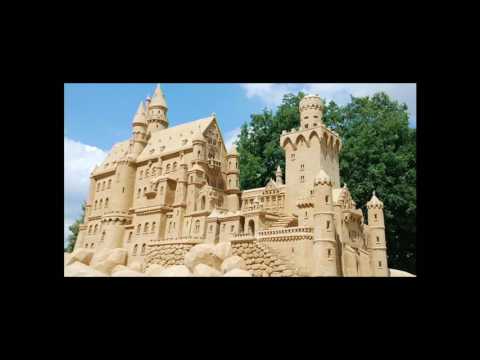
grains the sand castle
the castle our children what what
is that a sand castle is not
nothing but grains of sand that
have been stuck together by
little beautiful feydeau called
capillary deposition capillarity
that’s what makes your hair what
so it seems to you when you go
with apec with water it’s but
this capillarity it works well
if there is water but if we do not have too much
we asked ourselves questions
scholar commanding the volume of purchases
sand rate these grains yours
what is needed for them to
hold longer and what is
we can add for that so we go there
add clay
so this serves us as the first model
the first model of our childhood but
it illustrates pretty well what I want
say
the second obviously nature does
we did not wait
you have here a model of a
termitiere as we recalled them
meeting in Central Africa
these they can do whatever
thing like 6 humans to raise
Termite termites have them
made by mixing their slime their
saliva the grains of earth the grains of
sand and the sun having dried out
ferrand real welding
will consolidate its grains and they will
to make rooms they will make
corridors
they will do aeration
ventilation these countries are wet and
eschau and this is a bit of a model
of construction do not know if
humanity has used its models in
East Africa but in any case there
these constructions served here this city
of Etaples and often the Manhattan of the
desert and j ban to yemen chibane you
have buildings that need 30 meters
back fast floors built before the
pre-Islamic period so it’s not
of yesterday and that continues to exist quest
World Heritage of Humanity
but that’s only very, very
many examples of the hut
up to very evolved houses
up to mosques of use
of this particular material in
Africa
but does this construction make
truly part of the past the
answer is no
they are part of today you
have two billion people on
land that live in a habitat in
grains in matter here what I you
shows her breasts laureates
sir rifle charm of a prize
is called tera watt is given to
best construction architects
model it is a village in China
destroyed in 2008 by a tremor
land the Chinese peasants road and
trained to make earthen habitat
will have built their habitat locally
and this being fabulously
important why because they
do not use cement the cement is
one is a producer of carbon dioxide
fabulous
pass carbon notation sir diop
send you co2 there is no choice
if you use materials that are un
so-called vernacular construction
that local resources use
well obviously you do any
this transport economy this
saving the use of cement
so I believe that there is truly
for the future of quite modest
the use of this construction in
earth and ecologically
extraordinarily important
you will find in tera watt others
actually building examples
of all kinds who actually you
know we went from our models
initials of the bag of marbles to
more advanced models so as to
actually avoid these structures
degrades by the effect of moisture and
it’s my last darling and I had the
chance to work in there
these are the high concretes
Performance is said many evil
beto but these concretes could be
improved
created in Rome as much of the pantheon
first centuries of our era
rediscovered in France in the 19th
century the great big projects
progress will be made in the twentieth
century is here for a few years
for a few decades we have
discovered these high concretes
performance and working in these
projects I could understand we could
understand how we could improve
these materials by adding to big
grain from small to small to
fine to very small grains
hombourg the material as long as one can
until that is very little emptiness
in doing so, we significantly strengthen
the material if in addition to that there is
add fibers it becomes concrete
very buoyant let’s go to win over there
again we save more we have
something hard – use cement
less to co2 products but at the same
time we produce more structures
light
that’s the fishnet that you can
see from within the mucem of this
modern museum of marseille
do you guess behind this is
a bridge that goes up to the
fortress a kind the other side of the
old port and this bridge at 4 cm
thick of which you are above
it’s like you’re on a metal
elastic
so we realized the
lightness
we achieved elegance
in a material that obviously is not
at the start is not very appetizing
here are a few examples that
I wanted to develop by showing
how our research to make this
grain engineering had joined a
extremely important tradition
so I wanted to finish telling you
as well as scientist who headed
a school that were concerned about
literary humanities and
social
well we found a lot
applications in science
social sciences the humanities of this
matter to gain imagine that here there is
a small fire that goes off
enough to trigger for
actually make people leave
by the only emergency exit
what exactly will happen
as if you try to
to make chickens in a rice funnel
basmati of the real they block there passes
no people do not pass it must
much more time in case of panic
to evacuate worlds only if you
have if you’re like sade in a
normal output and we made models
which is a granular model we have
interested the problems
congestion
we were interested in two problems
traffic jams we addressed a
parking blame and then in addition to
meaning and interest in the fact that
grains finally individual grief
it is an individual of whom we put them
together socializes they make groups
how do we go from the individual to
group how are these organized
exchanges anyway so here is
it’s a little bit what I wanted
to say just one last word because
that I had the chance to lead the pace
and the discovery is that I was able to
really involve young people who
discovered he discovered as
school the solid state the liquid state
the gaseous state
a material that was once solid
liquid defect of x games had times
everything else
sometimes not and that I could
coach these young people to make them admire
make them love to walk them on the
sand I hope it’s a little
walk on the sand with me who does not
we will not be too good after more
midday
[Applause]
”
Be First to Comment