
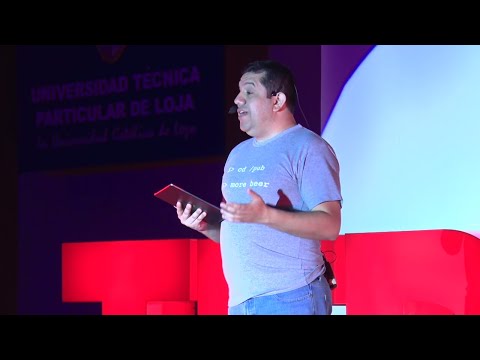
The border between Peru and Ecuador is a
myth and make an argument of this
affirmation
using a story that through
weather
you will see that we have a
much closer relationship than what
we would have thought and I will start more
or less from year zero to year
2000 what we are right now the
cultures of our peoples of ecuador
and Peru were very close
for example the case of the vicus culture
a culture that started more or less
one hundred years before Christ until near
400 years after Christ
they were sharing a space
binational and the area of what now
we know as the north of Peru and south
of the equator did super things
cool is how these ceramics that
right now we are seeing worked
goldsmiths developed many
abilities
after that time another culture came
very interesting culture carve the
north of Peru were a culture that
they were in love with the sea
they lived in the sea had a relationship
very close with her when they go to
catacaos to ten minutes or so of
visit the empire narihualá that
it was the capital of the tallanes also
they worked on ceramic subjects and
develop a very important culture
in the north of Peru, in fact
right now in the stream and we are
Seeing in the north of Peru
many of the compatriots there
also in this same area or in this
the same period of time were the
famous faults the culture that loja
he always remembers him working
petroglyphs developing trade
It is said that the Incas we never could
conquer were a time line
very similar to the tallanes after
that came the conquest by the
Incas to these cultures that were
scattered throughout this great space
I what now corresponds the north of
Chile
much of the peru bolivia ecuador and
the south of colombia
after this of the conquest
Inca pine what today just
we celebrate sting this foundation of the
City of Piura
we have a nice old map where
represents the river that divides this
city
I think it gets really rough when the
the city forgets it and in that way
reminds the Piurans that it is
present that is alive
how can you see that city right now?
had four foundations in fact it
founded before loja and then came the
foundation of loja together with other
cities of the great space for Peruvian
it was not founded as a resting place
a tambo a strategic site for
conquests of the lands of the east
Between Quito and Lima
and despite the fact that we have always been told
that the flea market was the founder of
loja that was a bit relegated in the
history the figure of Juan de Salinas and
loyola a Spanish Basque captain who
he was the first to make an epic
in the conquests of the lands of
Orient in the search for the mythical
Dorado is the Spanish captain in 1557
a masterful trip took almost a
year in and founding cities around
valladolid loyola
santiago de los caballeros de santa
Maria de Nieva a very nice place very
little boy and was the first to go through
the mythical I put of manseriche in
Quichua Pongo is a door a narrow
where a river that crosses a
cordillera in this case the cordillera
of the campanil keys and from there the
river cashew becomes navigable
In fact, it tells the story that Juan de
Sabine almost loses his life when crossing
that I put the famous pongo de manseriche
remember that in fact in that
then we did not have the facilities
that we have now we do not have the
technology and then perform all that
crossing
it really was interesting and it’s worth
highlight the story I’m doing
right now in these last two thousand
years
there we have the congo of manseriche and
going through
As the Campanile Range said
kiss about eight or ten years ago
I was lucky even to go through
that same I put as that entry to the
eastern lands
after that apparently Juan de
Salinas is the first to realize in
that can be connected to the river network
of the amazons with the sea in the ocean
pacific is the first to realize
at least of what history
documenta asks for an appointment with the king of
Spain to tell you that journey that
mackerel 0
it seems that the king took a little longer
obviously there was no water sarney mail
electronic at that time then the
even bigger bureaucracy so
the king decided to receive juan de
Salinas does not understand well what
try this journey but still you
he says look at that city of loja to that very
noble and very loyal city of loja
let’s give her a shield in that
shield is represented to the cities
walled that is very common in Europe
with a door that closes in the
nights to protect the attacks and the
day opens so that there is a fluency
of those of the people
that custom we did not have it in
Latin America and in that way the king
give to Juan de Salinas
this shield or some knights coming out
through a door to the conquest of the
Eastern lands is the replica that
we have in this city where there
the city started and you enter
it’s not a castle it ‘s a replica of the
shield also the king says a lot
more talked a lot about this area that is
very interesting and 1,571 the king him
delivery to Juan de Salinas the title of
advance or governor of the region of
jaguar zongo locating cities very
important as you see right now being
loja the political and strategic capital
of the entire region
alfonso aguirre talks about how Juan de
salinas is a visionary forward to
many other people from that time
to try to connect the cities of the
sierra with the east or the jungle
amazonian then
fortunately salinas so dies
in the fort in the misfortune that no
your proposal is understood
in fact falls prisoner is betrayed his
son happens he assumes the roles of
governor of the zongo region and passes
to history as the first to be
account but we do not achieve does not achieve the
transmit that concept to the rest of the
people
following with the weather map another
interesting point
in that era of conquest when
loja is declared a federated state in
a critical time in ecuador where
the country fell to pieces
loja decides to separate and name manuel
pinzano carrion as one of the
executors of this project
then when the country again
things came together again to
normality what was again integrated
the rest of the country is a date that
we always celebrate it in the southern area of
Ecuador
following with the time they begin to
raise the first proposals of the
interoceanic way
what we know now as that route
to connect these two points
the Pacific Ocean with the river network
from the amazonas and he spied for me one of
the first to raise this thesis
even the classroom of a railroad that
will unite the provinces of gold loja and
zamora begin to trace the first
routes of this interoceanic route and
they begin to create some organisms one
of them is pressure that starts at
deconcentrate the power that was in
I remove to bring it here loja
although in 1974 this body was created
it is not until 1979 that a person
surely I knew for you decide
bring that puts the furniture
desks the chairs of that bureaucracy
Quito
It gives us a sun that you are one day
Friday and Monday starts to attend
from loja is a form of
centralization a bit rude but
also valid and in 1979 he starts to see
projects that begin to link this
area of the south
for like the north of Peru the stage
criticism comes after this as a
war a war between these two
countries that was the blackest story
between our brother peoples
but at the same time came the signature of the
peace in 1998 we are October 26
we are commemorating the 19 years this
signature of peace and begin to see new
voices to resume this project of a
Peruvian macro region
one of those voices is this journalist
deceased peruvian recently john vicente
I require in your book the path of loja
I recommend it
start talking about the macroregion
Peruvian equa and do first in minting
this phrase the macro Peruvian region that
somehow plasma some of the
myths that we are living in the
border
we are two countries very close as
that each one in the southern area of the equator
we see a lot towards the north is not bad
see quito a guayaquil but the same
It happens in the north of Peru
they look a lot at Lima the students in
the colleges when they are already titled when
already graduate they want to go to study at
I remove the entrepreneurs want to open
market in guayaquil
the same thing happens in chiclayo the same
happens in trujillo the entrepreneurs of
They look for markets in Lima
the problem is that we end up giving ourselves
the backs mutually because the south
from the equator looks north and north of
Peru
look south this problem of having these
back the people that we live in
this area has led us to one of a
distancing that is what I
would like to talk now just what
contrary that I wish these people in
turn realize they are more
close to what it seems but that
we seem that we are and that we begin to
give us a hand in a Peruvian region a
a question what do you think is
closer to the oj and now guayaquil
obviously is closer to Piura
however we continue to see north and
to the agent from Piura who is not now
following by streaming
if we ask what is closer
loja or trujillo
many are going to say trujillo is not
closer loja but unfortunately
in Piura you buy products and services
of Lima and do not buy products or
services to loja cuenca machala people
of basin of zamora or of machala buy
services to quito and do not buy us from
sullana de chiclayo piura the border
between Ecuador and Peru and Ecuador is a myth
and that myth is what I wanted to talk about
in this space of time because in addition
of these from this myth what we have to
also rescue are the famous
intermediate cities that I’m going to
leave it right now I will convey what
first if we could make a
classification of most
cities that we have depending on the
population
first we have the 3,000 villages
5,000 or up to 10 thousand inhabitants that
it costs a lot to have a quantity of
quality basic services
On the other hand, we have the
big capitals where you live three or
three hours a day by car one hour and
mean due to another hour and a half return
where insecurity pollution and
other characteristics of the
capital cities make it invisible , or
at least with a very quality of life
low
what is the proposal cities like
Piura as loja intermediate cities
where they can have lunch every day
with your family where you have good
universities like this where you have
good medical services a good cinema
a good airport to connect with
Capital cities
that concept of intermediate cities is
that we could start weaving between
all this area that the sale of its
services to basin that machala can
link with chiclayo that zamora can
understand yourself more closely with your
target in such a way that we can run
we can continue to build this fabric
a ‘cluster’ a network of cities
interlaced between those regions
forming a strip throughout this area
a national innovation and innovation corridor
entrepreneurship
besides that in order to build this
Entrepreneurship and innovation zone
let’s keep the famous triple
helix where we link local government
regional and national
we link the academy the universities
and private efforts through the
private company also a space
where all these areas are linked
that we are good seeing right now
where innovation and entrepreneurship
be part of the day-to-day experience
a city like loja that may already be
example for this whole area where from
the house we are classifying
trash we know
where you have to put the garbage in
function of the color of the baskets of
garbage where for us the garbage does not
it’s a problem it ‘s a business where
we have the highest wind farm in
world
we have a market with large
electrical the floor shines and the lady
who sells us tomatoes has a
mail says good if it’s very nice
welcome where we have the park
automotive the second largest of
Latin America with electric taxis and
instead of charging gas
We have electric stations where today I
I want the presentation of salamis no
I had to be here sorry where I
we have a proposal for social networks
to push proposals for
citizen participation in the past
municipality where we have a city
cozy and when are parties of Peru
raise the flag along with the flag
of the equator and there are settlements in the
peru who are taking example of loja
the band of shilcayo a peculiar man
a city of about 30,000 inhabitants
whose mayor raised a contest
environmental protection for citizens and
prize was coming to loja to know this
city model to carry those those
ideas to his people
at the close of this report it became known
that will soon announce the
modality of the contest between the prizes
apart from cash there is a
internship to the city of loja ecuador
[Music]
indeed there you have the
winners of this internship taking the
Loja development model
note that according to some sources
during the last three years we have
had a visit of more than 15,000
people from the north of Peru ecuador no
only for tourism but through
internships to know the model of
development of loja internships
mayors aldermen or governors already
We are working in this area
on this map that looks clear now
same the presentation with a
business incubator e
innovation that is founded in the south
of Peru that is called carving knicks and
which are we managing these
projects in partnership with the incubator
of the utpl prendo the best player of the
country and the greatest g
the idea that these two players
can build this great space
entrepreneurship innovation and that every
Once again we the people of loja
let’s say that the world does not end in the
villonaco there is much more space
there’s a lot more world there’s a lot more there
much more graphy and therefore I wanted
go closing this concept with which
start the border between our two
countries is a myth
today here in the ted utpl that said be
on the way
we seem to review people the third and
kalu changes the mine because the end
you can not see anything I risked leaving it
because somehow it gives us a
vision of all this space of time
that we have had between our two
countries what I wanted to finish saying
to the people of Peru, let’s see more
south of the equator and the agent of the equator
also tell you let’s see more north of the
Peru and that between both countries we can
go building this macroregion 45
Peruvian and tell each of you
rovati
dream
[Applause]
[Applause]
”
Be First to Comment