
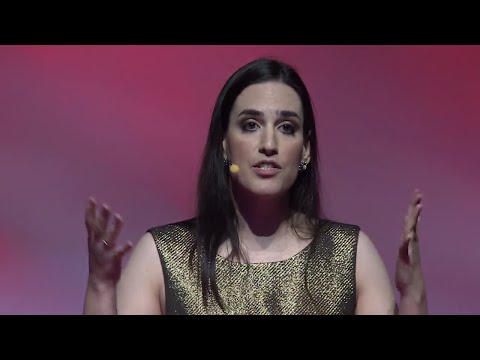
(Flute music)
(Music ends)
Syrinx, by Debussy, the piece you have just heard,
has always held a special significance to me.
With its rich colors and freedom for interpretation, it represents
the quintessence of the flute and of artistry in general to me.
It is also a piece that reminds me
that the fragile melodies of success are built on notes of resilience.
On a sunny afternoon in 2011, October,
I had the music of Debussy in my bag when I arrived in New York
to fulfill a long-standing dream of mine.
At the airport, I quickly hopped in a cab,
and we took our way towards downtown Manhattan.
My heart was pounding as we approached Carnegie Hall,
it is an auditorium that played a pivotal role
in the careers of so many outstanding musicians.
A true Mecca of classical music.
Let me just tell you one rumor about Carnegie Hall.
The legendary violinist Jasha Heifetz was once asked on the streets of Manhattan,
“How to get to Carnegie Hall?”
and he answered, “Practice.”
Well, as we arrived, the driver looked at me and he said,
“You have arrived.”
Yes, in many ways, I did arrive.
Coming to New York and playing in Carnegie Hall
was definitely a milestone in my career.
It was actually a childhood dream of mine
that I had worked towards since my early flute lessons;
something that drove me for so many years.
So, the story I am telling you began a lifetime before.
I was only in my twenties,
and I had already played the flute for over twenty years,
I completed my studies in Budapest, Vienna, Munich,
was concertizing across Europe
playing in the Vienna State Opera Orchestra
alongside the musicians of the Vienna Philharmonic Orchestra
and teaching at the Royal Northern College of Music.
So you would think that in this moment when I arrived in New York,
I felt all around glorious and proud of years of commitment
and absolutely happy, right?
But as Bob Dylan once said, life has always had too many heads.
This momentous event of my life was actually very complex.
It was part of a very painful transformation,
and living it through was a difficult task.
Let me tell you what happened.
A few weeks before my arrival in New York,
I was diagnosed with a dental cyst under my lower front tooth.
The inflammation was so large
that it required immediate intervention and within days,
I was assigned for an operation.
And as a flutist, I knew the risks,
I knew that the operation would involve removing the frontal tooth
as well as creating a large scar
right on the part of the gum where I place my flute.
Yet, there was no way around it.
So the operation was done , and before I realized, I was in New York,
about to step on the stage of my dreams,
my first public performance after the operation.
I couldn’t believe the tumult of unrealistic feelings I was experiencing.
On the one hand, there was the eager audience
waiting under the glimmering chandeliers of Carnegie Hall.
On the other hand, there I was in my beautiful evening dress,
checking my wobbly replacement tooth every second
and trying to place the flute on my chin all the time as carefully as possible.
And I just asked myself how I will survive,
and whether I will be in enough for this situation.
Standing on stage and playing that day, feeling so utterly insecure
took all my concentration and psychological resilience,
yet I was very happy and relieved
when I heard the enthusiastic clapping of the audience.
And I came home and filled my days practicing,
trying to strengthen the muscles,
and I hoped and believed that things would get better, day by day,
as I learned to deal with the new situation.
But I was hanging on to false hope.
I couldn’t not notice that things weren’t improving.
On the contrary, because of the pain,
I began to slowly compensate with my lip position when playing the flute.
Which has resulted in me causing a lot of extra pain in my lips,
pushing me to my extremes throughout every single performance.
So one day it all became absolutely unbearable,
and I have decided to call my former professor in Vienna,
Barbara Gisler-Haase,
and told her in tears
that I have no idea anymore how to play my instrument.
We had agreed that I would move to Vienna and see her for lessons
and begin to learn the flute from ground zero again.
News traveled fast and students heard that I arrived in Vienna,
assuming that I came to polish a difficult piece before a performance,
and they found me standing in front of a mirror,
holding long notes in order to strengthen muscles,
while tears were running down my cheek.
I felt absolutely lost, devastated and uncertain.
Would I ever be able to come back to where I was
and continue building my career?
Would I ever play naturally again, without hesitation?
And most of all, how did I get so lost after decades of playing my instrument?
But this was actually just the tip of the iceberg.
I needed to find answers to much sharper and more fundamental questions
in order to learn to deal with the situation I was in.
And also to start to stand up from where I was.
I needed to see who I am
and what my principles are without the instrument,
without the music and without all the stardust.
Day by day, my perspective shifted.
I began to understand that being successful or influential
doesn’t mean that devastating things never happen to me,
it doesn’t mean perfection at all times.
On the contrary,
Churchill’s words began to sound more and more powerful to me.
As he once said:
“Success is not final, failure is not fatal,
it is the courage to stand up that counts.”
I realized that to me, being a true human being
means facing these difficult challenges and standing up from them,
and letting them shape me and guide me to somewhere unknown.
So these thoughts gave me the urge not to give up.
I began to practice less but observe more,
did little sessions followed by lots of analysis,
and began to see every single performance
as one building block towards a new building that was taking shape.
I forgot to count days but looked ahead and saw years,
and slowly …
my world began to expand and I could see a horizon again.
Instead of the tightening fear of opportunities narrowing down,
I started to breathe more openly
and experience new physical feelings while playing.
New sounds were evolving
as I understood more deeply how things are interrelated
between the muscles and the sounds being produced.
And most of all, I began to enjoy the taste of challenge and of growth,
and understood how much further I can come in life with my new attitude.
And today, I stand here on this amazing stage,
amongst inspiring personalities,
and I am very happy and proud to speak openly
about the difficulties I have overcome.
I not only [haven’t] lost my voice,
I actually feel, I have found myself as an artist.
Music to me is communication;
it is connection between humans;
it is something that encompasses emotions and destiny.
So through my melodies, I thrive to grasp our ideals,
our potentials, and behind them the struggles that lead up to them.
Because the fragile melodies of success are built on notes of resilience.
After having listened to my story today,
I wonder if the music will sound any different to you.
(Music starts)
(Music ends)
(Applause)
”
Be First to Comment