
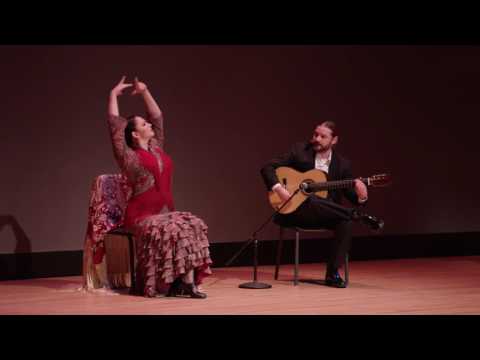
[Music] hey flamenco is a coded language between
hey flamenco is a coded language between
hey flamenco is a coded language between the song the guitar and the dance the
the song the guitar and the dance the
the song the guitar and the dance the evolution of this artform began over a
evolution of this artform began over a
evolution of this artform began over a thousand years ago and was spearheaded
thousand years ago and was spearheaded
thousand years ago and was spearheaded by a nomadic group called los veteranos
by a nomadic group called los veteranos
by a nomadic group called los veteranos they began their journey from northern
they began their journey from northern
they began their journey from northern India and traveled through the Middle
India and traveled through the Middle
India and traveled through the Middle East through parts of Europe and parts
East through parts of Europe and parts
East through parts of Europe and parts of Africa and settled in Andalusia Spain
of Africa and settled in Andalusia Spain
of Africa and settled in Andalusia Spain also known as lacunae or the cradle
also known as lacunae or the cradle
also known as lacunae or the cradle there they met Moorish judeo-christian
there they met Moorish judeo-christian
there they met Moorish judeo-christian influences and Andalusia Spanish culture
influences and Andalusia Spanish culture
influences and Andalusia Spanish culture and folk music that influenced their
and folk music that influenced their
and folk music that influenced their form of musical expression and the
form of musical expression and the
form of musical expression and the creation of this art form the evolution
creation of this art form the evolution
creation of this art form the evolution or the product of this evolution is
or the product of this evolution is
or the product of this evolution is flamenco so the key to this coded
flamenco so the key to this coded
flamenco so the key to this coded language is the song or the Conte and
language is the song or the Conte and
language is the song or the Conte and Conte existed hundreds of years before
Conte existed hundreds of years before
Conte existed hundreds of years before the guitar even found its way into
the guitar even found its way into
the guitar even found its way into flamenco and before the biele or the
flamenco and before the biele or the
flamenco and before the biele or the dance as we know it today was seen so
dance as we know it today was seen so
dance as we know it today was seen so we’ve got over 50 different song forms
we’ve got over 50 different song forms
we’ve got over 50 different song forms in flamenco now the melodies of the song
in flamenco now the melodies of the song
in flamenco now the melodies of the song influence how the rhythm should be
influence how the rhythm should be
influence how the rhythm should be played the harmonic accompaniment of the
played the harmonic accompaniment of the
played the harmonic accompaniment of the guitar and also provide rhythmic
guitar and also provide rhythmic
guitar and also provide rhythmic structures that can inform the dance of
structures that can inform the dance of
structures that can inform the dance of how they should be dancing or how they
how they should be dancing or how they
how they should be dancing or how they can interpret these song forms so we’re
can interpret these song forms so we’re
can interpret these song forms so we’re going to share one of these song forms
going to share one of these song forms
going to share one of these song forms with you this one is called tangles not
with you this one is called tangles not
with you this one is called tangles not to be confused with Argentinian tangos
to be confused with Argentinian tangos
to be confused with Argentinian tangos and within the tangos there’s many
and within the tangos there’s many
and within the tangos there’s many thousands of different of melodies and
thousands of different of melodies and
thousands of different of melodies and different styles of playing it so we’re
different styles of playing it so we’re
different styles of playing it so we’re going to share one with you and the
going to share one with you and the
going to share one with you and the rhythm of this is in 4/4 mmm two three
rhythm of this is in 4/4 mmm two three
rhythm of this is in 4/4 mmm two three four one two three four and uses the
four one two three four and uses the
four one two three four and uses the Phrygian scale or a Greek scale
Phrygian scale or a Greek scale
Phrygian scale or a Greek scale [Music]
[Music]
[Music] so here’s a little a gotcha
so we heard in this Tong goes this
so we heard in this Tong goes this melodic influence we heard varying
melodic influence we heard varying
melodic influence we heard varying rhythms which we talked about we’re in
rhythms which we talked about we’re in
rhythms which we talked about we’re in 4/4 and now all these things inform me
4/4 and now all these things inform me
4/4 and now all these things inform me as the player how I should be playing
as the player how I should be playing
as the player how I should be playing following the song form as well as the
following the song form as well as the
following the song form as well as the dancer so now let’s take a look at this
dancer so now let’s take a look at this
dancer so now let’s take a look at this so within this coded language there’s
so within this coded language there’s
so within this coded language there’s vocabulary the dancer and she can use
vocabulary the dancer and she can use
vocabulary the dancer and she can use beautiful floral our hand movement
beautiful floral our hand movement
beautiful floral our hand movement but I sail beautiful squeezing our
but I sail beautiful squeezing our
but I sail beautiful squeezing our movement she can use marca hey to
movement she can use marca hey to
movement she can use marca hey to outline the phrasing in the rhythm the
outline the phrasing in the rhythm the
outline the phrasing in the rhythm the melodies of the constant and she can use
melodies of the constant and she can use
melodies of the constant and she can use fire returns or vuelta’s to also accent
fire returns or vuelta’s to also accent
fire returns or vuelta’s to also accent rhythm and now she can also use fiery
rhythm and now she can also use fiery
rhythm and now she can also use fiery foot workers of path Giotto now there’s
foot workers of path Giotto now there’s
foot workers of path Giotto now there’s one thing that she could use to call in
one thing that she could use to call in
one thing that she could use to call in the singing or call in I’m a lot of
the singing or call in I’m a lot of
the singing or call in I’m a lot of phrase from the guitar or to change the
phrase from the guitar or to change the
phrase from the guitar or to change the speed of what we’re doing and these are
speed of what we’re doing and these are
speed of what we’re doing and these are called Yamada’s Ola so these calls can
called Yamada’s Ola so these calls can
called Yamada’s Ola so these calls can be used to influence went like I said
be used to influence went like I said
be used to influence went like I said when the melody comes in of the song and
when the melody comes in of the song and
when the melody comes in of the song and various rhythms so Julia what would you
various rhythms so Julia what would you
various rhythms so Julia what would you like to dance for them so Julia would
like to dance for them so Julia would
like to dance for them so Julia would like to do solely aqua buleria okay this
like to do solely aqua buleria okay this
like to do solely aqua buleria okay this is a song form that has a 12 count
is a song form that has a 12 count
is a song form that has a 12 count rhythm 12 1 2 3 4 5 6 7 8 9 10 11 12 1 2
rhythm 12 1 2 3 4 5 6 7 8 9 10 11 12 1 2
rhythm 12 1 2 3 4 5 6 7 8 9 10 11 12 1 2 3 5 6 7 8 9 10 just like if you looked
3 5 6 7 8 9 10 just like if you looked
3 5 6 7 8 9 10 just like if you looked at the face of a clock 12 3 6 8 and 10
at the face of a clock 12 3 6 8 and 10
at the face of a clock 12 3 6 8 and 10 okay now it also uses the Phrygian scale
okay now it also uses the Phrygian scale
okay now it also uses the Phrygian scale [Music]
[Music]
[Music] this is solely off of Olivia lovely
this is solely off of Olivia lovely
this is solely off of Olivia lovely dancer will be a chalk on
dancer will be a chalk on
dancer will be a chalk on [Music]
[Music]
[Music] Wamba PhRMA no wanna do me anime know
Wamba PhRMA no wanna do me anime know
Wamba PhRMA no wanna do me anime know there are Kalia become a cold aisle in
there are Kalia become a cold aisle in
there are Kalia become a cold aisle in freedom da lolly Ibuka hey promotion
freedom da lolly Ibuka hey promotion
freedom da lolly Ibuka hey promotion I’ll link rain on Elaine yeah
so you see that is what it’s still
so you see that is what it’s still wonderful about this art form of
wonderful about this art form of
wonderful about this art form of flamenco we can take this coded language
flamenco we can take this coded language
flamenco we can take this coded language and communicate with each other and
and communicate with each other and
and communicate with each other and create something spontaneous in the
create something spontaneous in the
create something spontaneous in the moment without having to have a
moment without having to have a
moment without having to have a preconception of how the event should
preconception of how the event should
preconception of how the event should unfold also we can travel any of the
unfold also we can travel any of the
unfold also we can travel any of the world and meet other flamenco’s and use
world and meet other flamenco’s and use
world and meet other flamenco’s and use this language to communicate with each
this language to communicate with each
this language to communicate with each other and it’s just such a wonderful
other and it’s just such a wonderful
other and it’s just such a wonderful thing about this coded language of
thing about this coded language of
thing about this coded language of flamenco thank
”
Be First to Comment