
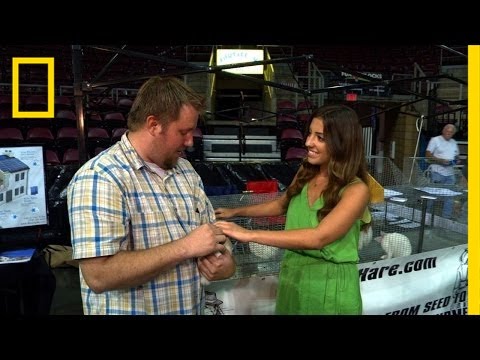
I’m Brooklyn Bagwell casting director for doomsday preppers on National
for doomsday preppers on National
for doomsday preppers on National Geographic I’m at the survivalist and
Geographic I’m at the survivalist and
Geographic I’m at the survivalist and prepper Expo in Prescott Valley Arizona
prepper Expo in Prescott Valley Arizona
prepper Expo in Prescott Valley Arizona this Expo has everything including the
this Expo has everything including the
this Expo has everything including the crown jewel of sustainable food
crown jewel of sustainable food
crown jewel of sustainable food aquaponics I’m here today with Chad
aquaponics I’m here today with Chad
aquaponics I’m here today with Chad Hudspeth from season three of doomsday
Hudspeth from season three of doomsday
Hudspeth from season three of doomsday preppers Chad introduced us to his
preppers Chad introduced us to his
preppers Chad introduced us to his aquaponic system where he can grow over
aquaponic system where he can grow over
aquaponic system where he can grow over 70 pounds of fish a year and a 300
70 pounds of fish a year and a 300
70 pounds of fish a year and a 300 gallon tank which provides a food source
gallon tank which provides a food source
gallon tank which provides a food source for himself and all the plants in his
for himself and all the plants in his
for himself and all the plants in his greenhouse today he’s showing me how it
greenhouse today he’s showing me how it
greenhouse today he’s showing me how it works on a smaller scale yes what we
works on a smaller scale yes what we
works on a smaller scale yes what we have here is a fish power garden
have here is a fish power garden
have here is a fish power garden actually and so there’s fish that live
actually and so there’s fish that live
actually and so there’s fish that live in the bottom of the tank and they do
in the bottom of the tank and they do
in the bottom of the tank and they do their thing in the water and it a pump
their thing in the water and it a pump
their thing in the water and it a pump brings that up and there’s bacteria that
brings that up and there’s bacteria that
brings that up and there’s bacteria that live in here that convert that over to
live in here that convert that over to
live in here that convert that over to plant food you know really you could
plant food you know really you could
plant food you know really you could grow anything you want you could have a
grow anything you want you could have a
grow anything you want you could have a cucumber or watermelon or cantaloupe or
cucumber or watermelon or cantaloupe or
cucumber or watermelon or cantaloupe or just about really anything it’s a
just about really anything it’s a
just about really anything it’s a self-cleaning system you never have to
self-cleaning system you never have to
self-cleaning system you never have to clean the water and all the nutrients
clean the water and all the nutrients
clean the water and all the nutrients for the plants were taken care of from
for the plants were taken care of from
for the plants were taken care of from the fish waste this is really small I
the fish waste this is really small I
the fish waste this is really small I feel like I can have this in my
feel like I can have this in my
feel like I can have this in my apartment in New York
apartment in New York
apartment in New York aquaponics is one way to feed yourself
aquaponics is one way to feed yourself
aquaponics is one way to feed yourself after the apocalypse and this next booth
after the apocalypse and this next booth
after the apocalypse and this next booth puts a different spin on creating a
puts a different spin on creating a
puts a different spin on creating a self-sustaining nutrient cycle this is
self-sustaining nutrient cycle this is
self-sustaining nutrient cycle this is part of a nutrient recycling system I
part of a nutrient recycling system I
part of a nutrient recycling system I call it an aeroponic system basically
call it an aeroponic system basically
call it an aeroponic system basically all the ways from the rabbits gets
all the ways from the rabbits gets
all the ways from the rabbits gets recycled into composters and biofilters
recycled into composters and biofilters
recycled into composters and biofilters they convert it into something the
they convert it into something the
they convert it into something the plants can easily absorb do you name
plants can easily absorb do you name
plants can easily absorb do you name them yes
them yes
them yes breakfast lunch and dinner you see when
breakfast lunch and dinner you see when
breakfast lunch and dinner you see when this guy hits five pounds he also is
this guy hits five pounds he also is
this guy hits five pounds he also is part of the nutrient cycling so we’re
part of the nutrient cycling so we’re
part of the nutrient cycling so we’re gonna eat him these rabbits have
gonna eat him these rabbits have
gonna eat him these rabbits have efficiency higher than cattle so for
efficiency higher than cattle so for
efficiency higher than cattle so for every pound that that you can produce a
every pound that that you can produce a
every pound that that you can produce a thief I can produce six pounds of rabbit
thief I can produce six pounds of rabbit
thief I can produce six pounds of rabbit off the same amount of feed because
off the same amount of feed because
off the same amount of feed because they’re small and they don’t require as
they’re small and they don’t require as
they’re small and they don’t require as much energy to move they’re able to
much energy to move they’re able to
much energy to move they’re able to convert it into high protein meat better
convert it into high protein meat better
convert it into high protein meat better than Katherine can you can it you can
than Katherine can you can it you can
than Katherine can you can it you can you can can it just like you can chicken
you can can it just like you can chicken
you can can it just like you can chicken you can can you’re looking at eight
you can can you’re looking at eight
you can can you’re looking at eight weeks from birth to butcher so the nice
weeks from birth to butcher so the nice
weeks from birth to butcher so the nice and tender you get them before any of
and tender you get them before any of
and tender you get them before any of the hormones are produce that’s what’s
the hormones are produce that’s what’s
the hormones are produce that’s what’s great about this system is there’s no
great about this system is there’s no
great about this system is there’s no added hormones there’s no added
added hormones there’s no added
added hormones there’s no added antibiotics and I use non-genetically
antibiotics and I use non-genetically
antibiotics and I use non-genetically modified feed so you can control what
modified feed so you can control what
modified feed so you can control what you eat received in me maintaining a
you eat received in me maintaining a
you eat received in me maintaining a sustainable food source is important for
sustainable food source is important for
sustainable food source is important for a long-term survival but when it comes
a long-term survival but when it comes
a long-term survival but when it comes down to a life-or-death situation
down to a life-or-death situation
down to a life-or-death situation there’s one thing you just can’t live
there’s one thing you just can’t live
there’s one thing you just can’t live without so we take it for granted that
without so we take it for granted that
without so we take it for granted that clean water is always going to come out
clean water is always going to come out
clean water is always going to come out of that tap and one day it may not
”
Be First to Comment