
cities in which we live these ipanema in
rio de janeiro in brazil one of the
more exclusive neighborhoods not only in
South America but in the world
this is a photo of baltimore harbor
in United States
this is a photo of the financial center
from melbourne in australia one of the
cities with higher quality of life
according to the economist magazine and
one of the financial centers of the
city of quito ecuador a city icon
of Latinamerica
these photos should be pretty
family for you
particularly the last photo for me
It’s pretty well known every time someone
ask where I ‘m from I say quito and
of Ecuador is one of the first
images that google google
however these images show
only part of the story
the other part of the story is the part
that we usually do not like to show
how are the favelas in rio de janeiro
this is a photo in the favela of rocinha
which has approximately 150 thousand
inhabitants and is one of the thousand favelas
what’s in this city or the camps
informals along route 40 in
the city of baltimore one of the
cities with more inequality within
U.S
we also have the singers or
artists who are often informal
on his street cane in the city of
melbourne and we also have the
informal transport systems in the
suburbs and neighborhoods
vulnerable from the city of Quito
this part of the story that
we usually do not like to tell is what
that I call the informal city and today
I want to share with you why
we do not like to show this part of the
history and he because I think he is
this part in which we have to
focus
the informal city is the city in the
that we live is in various parts of the
world and has different manifestations
manifests through housing
informal with informal camps this
It’s a photo in Bangkok in Thailand and
this is the consequence of many times
the lack of housing solutions to the
sectors that have less income
economic is also manifested with
ventures
the photo that we have above is taken in
the city of mexico outside of a
metro station and many times these
ventures grew in such a way that
they become trading nodes
informal like the picture we have below
in a city of Indiana it manifests
also with con with demonstrations
spontaneous public space
the photo we have above is the same in
one of the javeiro river favelas and
shows people’s efforts to
have a space for children
can go out and play and interact and the
photo below is in a city in india
same in parana without and there we see that the
the congregation of people and
users
trying to appropriate the spaces
that we inhabit is also manifested to
through various systems of
informal transport in this case to
through three-wheeled trolleys
that transport people from a site to
another without any regulation or
control and all these manifestations
of people are known as
informal economies the definition
official of informal economies we
says that these are hidden activities
that they do not have any kind of
regulation that evade taxes
and that they do not have any kind of control
administrative
they are often associated with a
developing country with economies
emerging and with poverty
however informality is not
exclusive of poverty since in the
context in which we live many times
Formal companies adopt practices
informal
one of the examples is the practices and
formal that they are adopted several times
in drug companies in Russia or
simply when a formal company does not
declares all its activities and
transactions when declaring
taxes and these examples demonstrate
that informality is practically
throughout the world and that the various
actors of society we participate in
one way or another and probably
we participate more than we
we imagine and it is important to understand that
informality plays an essential role
at the time of contribution to the
generation of work income from
Development according to Robert de Gullit
two thirds of the workers of the
world belong to the informal sector the
which contribute 10 trillion
dollars a year what the exhibition
would do if we make a sum of the
economic contribution of the sector
informal income to the gross domestic product of
world would position it as the second
strongest economy in the world after
of the united states and given the
projections could become the
first in the next 50 years
these data show us that the
informality is not an error the
informality is a reality and is a
very powerful system
at the time of marking the lines that
define the development of our
cities and should be seen as such with
the goal of understanding a little more
these systems emerged a
research with australia and with
united states and we take as an example the
case of transport systems
informal in the peripheral neighborhoods of
The city of Quito Quito is a city
in which a large percentage of your
population uses transportation
public formal transportation but
it is also a city that has a great
percentage of population that has little
No access or access to transportation
public and that as a consequence
created these connectivity systems
informals that transports them from the
periphery to the center without any kind of
regulation so to break the
dichotomy between the formal and the informal
we decided to see and study these systems
of informal transportation with new ones
lenses from a new vision and the
first step we had for this was
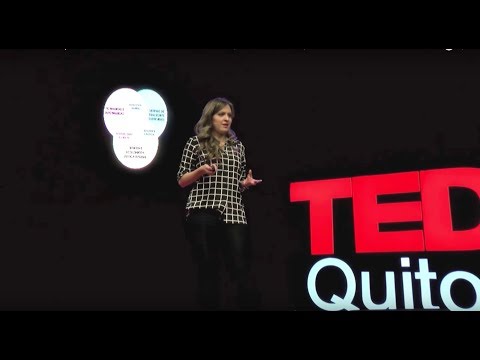
make an analysis of the theoretical framework
that there is of these issues and we gave ourselves
account that this investigation is based
at the intersection of three areas of
study
the first one that includes the literature that
speaks of formality and
informality that tells us that the
informality are are are phenomena that
are growing that are generally a
space for most populations
vulnerable who do not have how
connect with the opportunities
formal city that is difficult to
quantify and that is very difficult to
measure since in the context that we live
many times the formal companies
adopt informal practices and
specifically when we study the
informal transport
we found that the literature says that
informal transport can have a
benefit that is to fill the gaps that
the official infrastructure can not
do but you have many
implications and negative consequences
that are greater than the benefit that can
have and that these implications and
include contribution to
pollution contribution to
congestion that are systems that are not
insurance that many times promote
practices of labor abuse among others
and we realized that the definition of
informal transportation today is the
does through a comparison with
formal transportation and we ask ourselves
why we just define the
informal transport when compared to a
system that does not work 100% either
we know that our context the
formal transport also contributes to
pollution also contributes to
congestion often has
practices that are unsafe among others
implications and that they remove has no longer
passed at some point in his life by
a bus like this
to evaluate this informal system
we wanted to study or independently
without comparing it with anyone we wanted
know what is good and what has
of bad the informal transport itself and
we go to the second part of the
literature to see how they are evaluated
transport systems as we know
If the system is sustainable or if
works well or not
and we found enough material that we
says that to know if a system is
sustainable is essential to analyze the
ability to adapt the system
that is to say the residence and you have to
also measure both the measures of
system performance as well as the
social economic and environmental impact
communities have this
complemented with a literature that
talk about injustice transportation that
affirms that poverty is directly
related to lack of access to
transport than the physical barriers that
we have in the city they are generally
those that create social barriers like
is the urban segregation that the
transportation provision is
directly linked to the provision of
justice and the question also arose
because it’s end removed almost all the
investment in public transportation is
do neighborhoods that good or bad already
they have a service and because we have
forgotten of the most vulnerable neighborhoods
and finally we complement with
literature that talks about wellness
economic and spatial justice theories
of harvey soy and this is the part the mayor
in this part of the literature is the one
helped us to support the importance of
our study since we understood that
historically the development of
our cities has been given for
facilitate the flow of capital and not for
solve social problems
We know that construction is a
sector that moves the economy that many
Sometimes it works as an anti-cyclical measure
when there is recession in the countries and
that when we promote construction
We usually do it to promote
capital flows to promote
investment
many times to appease crisis
more policies not to improve the
quality of life of the people who live in
the cities
and that if we want to see results
different from what we have now
we have to start building cities
for the people and that to do this a
important thing is to recognize what they are
the physical roots of our
cities that generate the problems
social that generate these these issues
of urban segregation and that these
systems that emerge from citizenship
are the result of segregation
physical and social segregation that suffer
the cities in which we live and that
they are systems that are worth being
studied as a second step to
validate a little is these theories that
we had in 2014 with the university
from melbourne
We decided to investigate what is the impact
and significance of informal transport
in a peripheral community of the
city team we focus on the
community of mirador is a community
which is north-west of the city and
we wanted to measure in a concrete way
what transportation has meant
informal in this community and after
a qualitative and quantitative study
We found that thanks to transportation
informal the people and the population of the
community of mirador increased in a
80 percent his ability to
get a job at 55% for
attend school school programs
university and 42% to attend
professional training programs
1 increased 88% safety for
work overtime and I’ll work hours
later and increased in form
significant many other capabilities
additional that we believe contribute
to the quality of life and this we
shows that this informal system that
it came from the people and it grew by itself
only the quality of life is improving
of these people in a drastic way and
this is something that the efforts
national and local authorities until now
have been able to do
later in 2016 in a project
with virginia tech
we wanted to analyze what are the
characteristics of these systems
transport reported
this is a project that we started in the
2016
it’s still ongoing but so far
we know that most of the
informal transport in Quito connects the
peripheral neighborhoods of the city with the
center of the city we always
focus city and not in the district
that is a bit like that the limits of
study and this shows us that these
systems are filling the gap that
the formal system you can not say
these systems today fulfills a
very important role in the development
of the city and we wanted to analyze
also what are the
resilience characteristics in
terms of adaptation to shocks
externalities such as floods and
unexpected changes in demand
we know that one of the problems of
I take away from the heavy rains that
we have and for the infrastructure that
we have are the floods
It is not uncommon to see a case of a bus that
was stuck by the
floods and that their users do not
They could arrive in time to their sites
destination
the interesting thing about this is that
we found that the transportation system
informal has developed a system of
communication so recent that
cases like this one or in cases where the
where the demand changes unexpectedly
for road closures due to protests
policies or other issues achieve
communicate between drivers and
users to change routes if they do
that all users reach their
destinations on time so this we
shows that these systems
despite all the externalities
negative they have also have
positive characteristics
Of course we believe in the
organized city and in the city
neat but we think we need
create hybrid systems and take what
best of each system so as not to lose
positive characteristics of
efforts of citizenship and this we
it shows that we have a lot to learn
of informality
this is a short example of transportation
informal in a community in a city
from Latin America but we have
very many cases around the world
whole
on issues of informal housing
informal consolidation trade
spontaneous public and formal space and
All these initiatives must be
taken into account
it is important to recognize that we live in
cities with physical manifestations of
urban segregation and that all
efforts to generate inclusion are
valid
this includes the efforts of
national and local governments
the contributions that come out of the guilds
academic contributions that come out of the
professional associations and the
contributions from the communities of the people and
of citizens and these proposals for
people should be not only recognized
but also studied and taken in
account when making city since
is this one
are these proposals and this
recognition is that finally we’re going
to help build a real scenario
of the cities in which we live for
that as Freixe says we can understand
what are the lines of development
what are happening despite our
intention and that we may have an idea
clearer of what our
options and finally to understand that
While we do not work with all
pieces of the puzzle
we will never solve this problem my
name is vanessa war
thank you very much
to
”
Be First to Comment