
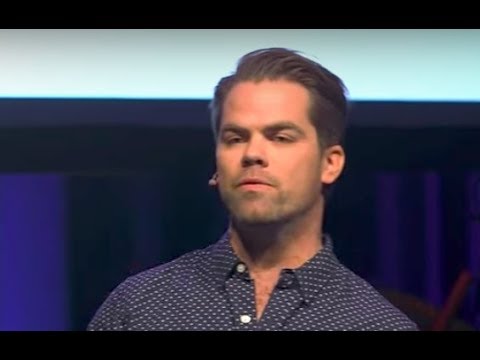
A few years ago, my wife and I moved to Portland
to pursue an adventure.
You could even say that we were pursuing a calling.
Now, I know, “calling”… who talks like this these days?
People with voices in their heads, maybe feeling in their guts.
But that’s who we are.
My wife is an incredible leader in education equity.
She’s also an amazing mom.
Our little boy, Desmond, turned three months today –
yeah.
And I –
I’m a pastor.
Now, I’ve been involved in Christian ministry for nearly two decades,
whether it was working in campus ministry, mission to the continent of Africa,
social justice advocacy in Washington DC, or local parish work in congregations.
I always felt a sense of belonging and purpose.
You see, I was one of those guys that my denomination put on posters
to celebrate the future of the church.
I know. Straight white guys, right?
That’s the problem, that’s the problem.
I was literally a poster boy, until I wasn’t.
We moved to Portland and started this church in our living room.
We gathered around a table, with hummus and wine,
and we talked about simple things,
simple things like God and the Universe
and also the things that we thought that Jesus might want us to talk about
in the 21st century,
things like race, the environment, gentrification.
And we were starting a church,
starting a church in one of the least religious cities in the country.
I mean,
nothing is easier than that, right?
A few months later,
I posted a flier on one of the busiest streets here in town,
advertising our first Sunday gathering.
It had a red chair and an invitation for everyone,
yes, everyone,
to come and join us in worship.
A couple of days later, I started getting phone calls.
I got phone calls from denominational leaders asking me,
“Are you going to let them serve in the children’s nursery?”
Not really knowing what they were talking about,
I said, “Yes, do you have any recommendations?
We could use some help.
They will go through the same background checks that any of our volunteers would.”
He then said, “Would you let them, sir, play in the band?
Would you let them be on the leadership team?
Would you let them help with communion?”
Ah…
“them.”
I said to the denominational leader,
“Who are you talking about when you mean them?”
He said, “Well, gay people, of course.”
It turns out that not all religious leaders agree.
Everyone is not welcome to our faith communities.
We started getting emails and harassing phone calls
because I kept saying, “Yes, everyone is welcome.”
One of my closest friends shared with me his story of exclusion,
his story of thinking about committing suicide,
and I just couldn’t keep silent any longer.
People knew my position, I just wasn’t very vocal about it.
“Yes, everyone can come.
Yes, everyone. Wink-wink nudge-nudge.”
I went to a religious conference,
and the denominational leader came
and made a big deal about embracing me in front of all these other pastors.
He came across and he reached out his arms to hug me
and, when he drew me in, he whispered in my ear:
“You know the family has decided on this,
and you are out.”
I’m out.
A couple of weeks later, I got an email telling us the news.
We lost everything:
our funding, mentors, friends,
I even lost my pension.
It was all elaborated in an email that said, “Sent from my iPad.”
It was hard, it was hard.
Some other friends took us in.
We gathered in a church downtown and we began to repair ourselves
and think about what it’d look like for us to be a church without any money,
without any faith family, without any friends, without any help.
And the best thing I could think of to do was join the Pride Parade.
(Laughter)
So, I walked in that Pride Parade with my wife, Sarah.
We took that photo in the Park Blocks right before we marched,
and the sign says that, “I am sorry
for all the things that people have done in the name of God.”
It was an incredible day:
so many tears, so many stories, so much dancing.
It was awesome.
I didn’t think that we had a chance anymore.
I posted that photo online thinking,
“Well, at least we went out with a good party.
(Laughter)
We’re done.”
I thought we were dead, but in fact, we were just getting started.
People started sharing their stories from as far away as Australia,
South Africa, India.
Ashton Kutcher and Martina Navratilova even tweeted out our story.
I knew we had made it because my mom sent me and emoji with a smiley face on it
saying, “Good job.”
(Laughter)
We were starting over, we were being born anew.
You see, the thing about inclusion is that it’s not a new idea.
I actually think it’s one of the most original ideas,
it’s an ancient idea that just might save us.
There was an early follower of Jesus named Paul,
and he wrote a number of letters to the earliest communities,
small house groups kind of like our own, not that much bigger than ours,
helping them feel encouraged,
pushing them forward, inviting them to keep moving,
because he felt called as well,
he had this mysterious word, this voice in his head or in his gut,
saying, “Tell everybody the good news that everyone is included in this story.”
He got into a lot of trouble for it. He even went to jail for this story.
And he wrote to a church in Ephesus –
we call it “Ephesians” in our bibles today.
He says, “This is why I, Paul, am in jail for Christ,
having taken up the cause of you outsiders, so-called.
I take it that you’re familiar with the part I was given in God’s plan
for including everybody.
I got the inside story on this from God himself,
as I just wrote you in brief.”
Again, inclusion is not a new idea.
It’s an ancient idea that just might save us.
It’s hidden there in plain sight in our scriptures if we have eyes to see.
And the thing about it is it’s not even in my tradition.
It’s embedded in so many of our global traditions
throughout space and time.
It was there at the fight against the apartheid in South Africa.
Nelson Mandela and Desmond Tutu and so many others,
women and men of faith and no particular faith,
worked to end racial injustice.
The archbishop Desmond Tutu said,
“We call it Ubuntu, ‘I am because we are.’
It is to say my humanity is inextricably bound up in yours.
We belong in a bundle of life.”
We belong in a bundle of life together.
It’s been said this is called the perennial tradition,
the way of love, light, joy and justice.
We’re all included in if we have eyes to see and ears to hear
and sleeves to roll up and feet to walk and move
and do and be.
We find ourselves in peculiar times,
we find ourselves in disruptive times,
where so many people are saying
that so many of us need to be left out, excluded,
but we’re being reminded time and time again, in plain sight,
of the call to inclusion.
Our moms, our sisters, our neighbors, our friends
are reminding us that in the streets when they march.
We’re reminded of that by people of no particular faith
but a belief in science –
raise your hand if you believe in science –
that we need to include mystery and reason together
in thinking through these big ideas and these problems and these challenges –
science, gender, religion.
Our friends of color are reminding us this too
when they say their lives matter, “Black Lives Matter.”
It’s a reminder of inclusion,
the ancient idea that just might save us,
not a new idea.
And even our nation of immigrants is standing in the streets again
and it’s daring us to dream out loud again to include everyone,
no matter if we have the right papers or not.
So, what are we going to do about it in these days?
The thing about my story is that I didn’t realize the need for inclusion
until I was excluded.
Me, a straight, white, evangelical pastor.
It was a humbling experience,
but it was the beginning of, you could say, another birth for me.
And in the trial and the trauma and the loss of so much,
I began to realize that it was with my new friends,
the new people, the new tribe that was gathering around us
to create an open, active and inclusive community here in Portland,
that’s where I belonged, that’s where my purpose was,
for God’s glory and neighbors’ good.
And so, the next year at Pride, we had more people join us,
and we danced in the streets, and we said that “all” means “all,”
and we began to invite people anew.
Whether you had faith or no faith,
no matter who you sleep with,
no matter where you come from, no matter if you have the right papers,
you’re included in this beautiful, daring, cosmic story
for love, light, joy and justice.
I think that this is not a new idea.
I think it’s maybe, perhaps, the most original idea,
that each of us are included in this beautiful dream
to mold the world into a better place
for justice,
for peace,
for joy,
for dancing.
So the question is: how will we respond?
Well,
to my white sisters and brothers, and especially my brothers,
it’s time for us to realize we need to let go,
we need to let go of our fear, we need to let go of our power,
and we need to sit down and let other people lead;
that we get to do this with people of all walks of life,
and that, those of us in power,
it’s time to include and let go and stand down.
And then, for those of us in this room
and anywhere we find ourselves in the four corners of this beautiful Earth,
we get to say, “Show us the way,”
we get to walk together,
we get to dream out loud this vision of inclusion
that’s embedded in all of our traditions,
that’s the story of being on the right side of history,
no matter our faith, no matter our race, no matter our gender expression,
no matter if we have the right papers or not,
because we each are inextricably bound together in this thing called life,
and we get to live it out loud together.
We’re trying to build that community here in Portland
and we’re trying to be an inspiration of that for other people.
And again, we’re just getting started.
So, no matter where you find yourself on the spectrum of life’s way,
you know what, no matter if you believe or don’t believe,
consider counting yourself in.
Join in,
help us include,
so that we might pursue a better tomorrow.
Thank you.
(Applause)
”
Be First to Comment