
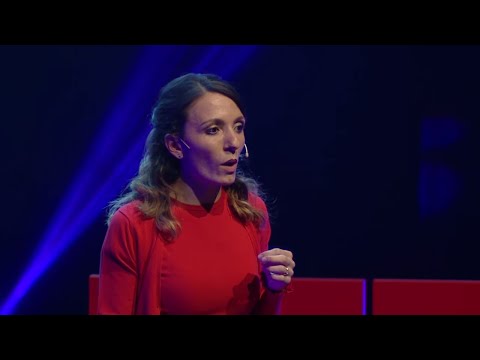
I have been dealing with water since 2008 since the day
in which my sister gives me a book
beautiful and that changes my life
the water wars of vandana shiva
today I’m here to talk to you about the
relationship between water and food a relationship
complex problematic too often
underrated but before doing this
I have to take a step back from the 1950s
we entered the antrum of peace, nor the era
geological characterized by
transformation by massive intervention
of the man on the planet that is standing
altering at the territorial level
atmospheric and hydrological profoundly
some of the changes taking place in the
anthropocene are irreversible before between
all climate change that does not
it is only an environmental phenomenon but
which has very strong social implications
economic policies change
climate has been connected in fact to the
the emergence of conflicts to migrations
of whole populations
and also to phenomena like that of the
large-scale land acquisitions
a phenomenon that when it happens in
denial of human right takes the
name of land grabbing ie of
land grabbing the planet is
literally covered with water but only
0.001 percent of this water that
covers the planet is available for
human use
in fact the rest is salt water or yes
find it in the solid state or it is not
water is also directly accessible
distributed in a pan
extremely unequal
we find in fact that almost 70 per
one hundred of the fresh water reserves are
concentrated and only in 13 countries of
world water problems have roots
on one side we find a kind of
scarcity that to its root in the
lack of water in a territory
this kind of scarcity affects one
one in five people on the planet and precisely
occurs when the amount of water
in an area can not meet i
needs of the population that live there
generally this kind of scarcity yes
find in countries that are widely
dependent on food imports and
soon we will find out why there is one
other kind of scarcity a kind of
scarcity much more worrying than the
previous because it happens in contexts
of poverty and affecting a person
out of four on the planet
this kind of scarcity and rooted
in economic and social conditions
institutions that preclude access
to the water part of the population
because it’s worrying why not
have the right to access to water
to water denied a right what
it should be that it is a human right
means not being able to get out of the
poverty trap
that’s why he has to worry about it again
more agriculture is the heart of the
problem
the elephant in the room this because
70 percent of the fresh water that
we take is dedicated to the
production of food and agricultural goods in
general this percentage goes up a lot
in dry or semi-arid countries up to
reach over 90 percent
agriculture is also a sector
important also from the point of view
in fact, the impact of emissions is
the second sector that puts more
so it is greenhouse gases in the atmosphere
right here we have to go to
analyze and understand the problem but
because agriculture feeds us and here that
we must also go looking for them
solutions
in the last 100 years the population is
grown exponentially but still
more water consumption has increased
at a rate that is equal to more than
double that of the growth of the
population
this because we have modified
deeply the way we live in
we have modified our own
consumption of food and to change the
Our eating habits our
we have expanded our diet
water footprint per capita level
individual we need indeed to
about 2 liters to quench your thirst with water
between 30 and 50 for domestic use but
every day every one of us needs
at least 2,000 liters of water to eat
this is because water is an input of
production is essential in the
food production at all stages
of the supply chain in particular in the first
the phase in the field the cultivation e
this is the intuition that had tones to the
professor of king’s college and mine
doctorate supervisor in calling
this virtual water water because
a water no longer visible inside
of food but that actually was
used to produce it to types of
different foods match imprints
different water we need indeed
of about a cubic meter of water for
produce 1,000 calories of vegetables but
we need five cubic meters of
water to produce 1,000 animal calories
but stop and look at the breadth
the water footprint is not enough
because what determines the
sustainability of a product is not
only the volume of water contained in
virtual way inside but it is the
respect for the vocation of a
territory
respect
of sustainable agricultural practices
context in which it happened and this that
goes to determine sustainability or
less than the product we carry on
our tables
what you see was the lake of aral un
lake between Kazakhstan Uzbekistan that in the
we have almost thirty years
entirely dried up to produce the
rice and cotton for export
this lake has doubled his
saline concentration
in the last 30 years the
volume of her from here to around 15
meters
the trade the agricultural trade the
food trade in particular
establishes a relationship a relationship
between me that I eat is the country where the
agricultural production took place
this trade this link
invisible also makes me vulnerable to
crisis books that can affect i
apparently distant countries but that
they can go to influence mine
food supply then mine
ability to eat certain types
of food for example in Europe on the 40th
percent of our water footprint
food comes from countries
extra-European and some of these are
extremely vulnerable countries from the point
of water sight jeopardizing
whole supply chains, for example that of
soy or cotton rice in the face of
this scenario as it appears on the
future
this is the answer I gave myself
if we do not change things, do not
they will indeed change, because they will change
in 30 years we will be 10 billion up
this planet
eight out of ten people will live in the city
living in the city means detaching oneself
progressively from food to live one
sort of alienation from those who have it
produced by how it was produced by
seasonality from the vocation of a
territory because we have a
available all at any time
of the year
and it is then from here that we must
restart
I believe in building a different future
first of all it is important to rethink
agriculture
agriculture of the future must produce
better then with more efficiency and with
less with less resources and important from the
political point of view give the
tools to invest in farmers
in their training in giving access
to technologies because indeed
can help us to move towards
more sustainable production methods
in particular small farmers from
our security depends on
food politicians also have a
another great duty is to quit
to subsidize agricultural productions that
they are harmful to the environment and that often
they do not even go in the direction of the
public health goals and we are
what we eat
so it is important that they take
this commitment to those who do research
the commitment not only to continue to
work to improve knowledge but
also to promote understanding
trying not to be afraid of occasions
beautiful and exciting like today’s
thus favoring the understanding of
people of people who like citizens
and as consumers , consumers of food
the power of
influence who food produces it
asking for traceability by asking
transparency demanding responsibility
social and environmental
before leaving you I want to tell you
one last thing there is a theory that
he speculates that between two people in
any point on the planet exists one
chain of no more than six intermediaries
what I ask you is to share
the ideas you heard today and about
ask your network to do
just because in this way me
you have helped transform the
knowledge in awareness that I believe
either to the weapon of mass construction or
more powerful than we have thanks
[Applause]
[Music]
”
Be First to Comment