
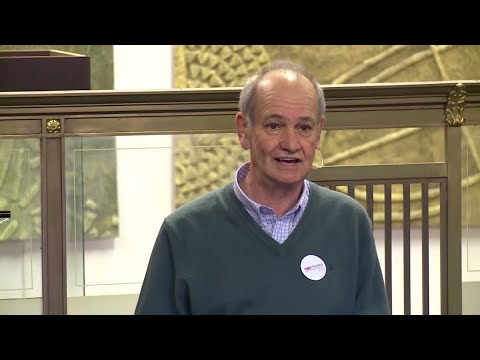
the title of the presentation that is the
earth a global garden is taken from
an event that I participate this year that
was made in Switzerland a meeting of
biodynamic agriculture and the term
harlin in English comes from letting it is
fence because that moment the places of
Cultivation protected themselves from nature
as something wild as something that was
outside and today man has transformed
so glad that nature that
and take care of her need to return to
restore it and good and the theme of the
food has a lot to do with that is not
true I ‘m not me I started with this topic
in the years at the end of the 80s a
heavy with a phrase of beer mollison
bill mollison is one of the creators of
one of the schools of agriculture
ecological that permaculture is a
architect talking about agriculture
as something permanent that introduces into the
agriculture within design of the
cities and good and he tells us that the
current problem of agriculture is that
is not oriented we are talking about
industrial agriculture that is the one
domina is the one that gives us at this moment
here the soybean that the currencies give us
to live but an agriculture and
sustainable and that the objective of that
agriculture is to produce money and not
food when I started with others
colleagues this idea with this idea a
little I’m going to tell
the last part the truth because he cast
30 years ago I have been working in the
theme 30 years for the release of a
person are many but for the
development of an idea are not so many
I’m going to tell the story from the
crisis
year 2002 that we started with what
that today is called agriculture area
urban and a bit the challenge of that
good moment many who are here
I was very young I was living a
moment
a lot of sadness a lot of hope
and a little the idea was to excite
motivate generate conditions to start
to produce food especially in the
places that we wanted
work that was with people
unemployed and in the settlements
irregular the shantytowns
we take back at that moment a
previous story because rosary was coming
already working on the word theme with
family gardens school gardens
orchards for self-consumption and
crisis in the crisis of 2002
the idea was just to re-sprout
bloom towel previous experience
resignify it and create something new because
until that moment all the garden and everything
what was produced was for consumption
familiar or for the didactic was not
for the sale and the first stage of that
story that goes from 2002 to 2005 that the
we can call the orchards in the crisis
and in the emergency it was generated here in
Rosario participated in that moment almost
10 thousand families of experience had
more than seven hundred orchards in small
spaces that lent the land for
this topic were vacant lots that
us together with the people who
they were unoccupied
we take them and at that stage
we had to convince first to
the people who were unemployed that
could be transformed into
huerteros in workers of the land to
the authorities that it was possible to do
this and that also generated general
I’m going to retake the first fair or
that for the first time the rosarinos
they were able to consume free vegetables
agro-toxic organic vegetables
produced by people from the
irregular settlements
us that’s why this experience in
the year 2004
we won one of the national awards
united as one of the top 10 best
world programs in him by topic
environmental and the issue of working for
try to beat poverty and went to
perform a second stage of this
let’s say this story and the second stage
runs from 2005 to the present stage and
some way
in this stage , throughout the stage
previous conditions were generated
to be able to generate something permanent
because good agriculture is taken
we are talking about the true
agriculture is not true agriculture
that provides us with food is taken
as something old as something from the past
like something old and what I am not
for the first time here in rosario we have
different spaces of agriculture
as a permanent activity one of the
new spaces that we have here in
rosario that are the orchard parks that
they are new
a new form of public space
where the productive is combined the social
and also the landscaping a way of
generate something like landscapes
edibles are places too
didactic because good in these places
we also offer courses and
demonstration that you can
transform the landscape was all these
places are very degraded places
when the huerteros began to
work and a great job of
soil recovery to be able
transform it into what they are today that are
true edible gardens
in addition to what one of the
most novel things that rosary has
we for this subject we are example
good in latin america and they are also
a reference for other countries of the
world also emerged another kind of
orchards that are the vegetable gardens that we have
in hospitals orchards of plants
medicinal where you work let’s say
recovering all the capabilities of
people who come to come from
rosary as migrants who have a
great knowledge of relationship with
medicinal and aromatic plants
We also work with kitchen gardens in
places you have today and I do not know if all
they know but we have in the plaza psoe
be a demonstration garden and good the
idea is to continue occupying the spaces
public with this type of production
to rank it and revalue the eu
we not only work with the idea of
agroecology that poses work in
simultaneously the social thing what
economic and environmental
we of the West have a
unidirectional vision where everything
is as separate and agroecology
takes a little bit the idea of our
original peoples and cultures
integrals where I say the oriental
where you see more than anything the issue of
integrality and we acaip
we develop on the one hand within this
thematic
we have the fairs that after we go to
develop a little more than they are
spaces where production takes place is
sells the products of the garden are
products of high biological value
produced with artisanal techniques be
a direct encounter between the
what it produces and what it consumes
we also work with what is called
process technologies since the
farmers have the possibility of
produce their fertilizers their seeds
and they are high products
quality and as I said before all the
places were recovered were places
they remain garbage dumps and somehow they
He healed that environment
Bogota is the image of one of the
spaces all the spaces that we
we worry are spaces to build you not
habitable this one of the park
orchard that are the southern area in access
sur y gutiérrez and is on the side of
of southern access just from the team and
the other in this state with images of
Orchard white mill is at
side of the brook saladillo and good and one
of the objectives as I said before
was to improve these spaces
these places were that it was very
degraded were changed improved to
from the work of the same
people and in a very short time because
well the oldest orchard park has
a shame
89 years those places that were dumps
they have been transformed and today there are species
for example of birds and birds of
butterflies that there was not in the city be
that very little time with work
human and with ecological techniques
places of degree can be transformed or
be that we can all collaborate
to make this kind of transformation
make the female you see how this place
it was an uned dump it went
transforming and today is a good place
that everything can go to visit very beautiful and
also as I said before we have
orchards in different spaces we have the
there is the garden the sweden square where
we use a technique that
they also created the brothers of Cuba
when they are left without the support of
the Soviet Union and they did it before
hydroponics and they create this technology that
is to use in different containers in
different quarry that can be made
with different recyclable materials
using fertilizers are called organ
political because they have a high
percentage of compost and one
mixed with earth and occurs between
two three and four times
so if we cultivate in the
land is not a very suitable crop
to do it in small spaces in
the schools institutions and and in very
well but in small space one can
get to produce a lot of
foods
we also work with all
Clean technologies
these are some of the things that
we have developed together with the
college
one is the module of vegetables that are
white mill that has a wall made
double with ice bottles and also
has a water harvest form of
rain
although it is more than anything with a
device the subject of harvest water
rain is not enough to supply
irrigation but it is a way to raise awareness
that we have in a lot of
excess moment of rainwater and that
it can be accumulated and made available
for the moments that we need
besides that the rainwater for the
much more positive crops much more
efficient than water than any other
type of water that either land or
we use tap water is not true
the other drying sun a solar dryer
that was done with the faculty of physics
which is very simple together bor de 200
liters painted and with trays and is very
efficient because in a while in full
summer
one can dry for example tomato that
an organic tomato can be dried in
a while is painted black so that
be more efficient
good and one of the greatest achievements
also ours was the theme of the
fairs
we in Argentina do not have a
fair culture
all countries both of
Latin America as well as the European
there at the fair are a constant thing
the most similar country almost made me
us that is uruguay is a great
fair
well we did the first
fairs in the year 2002 which was a
great challenge and the fair are spaces
very important because there is a
link between the people of the village
misery that are considered as
untidy or vague people who do not
can produce with the people of
center and often also for the
people from the villages decent people
someone good that non or who does not
can interact and in these spaces it
It has already been ten years since
they are more than 10 years old
running a link a knowledge
new ties between him because
produces and the one that consumes
also good are all products of
high quality produced within the
rosary beads
today there is a worldwide trend to what
it’s called short circuits all over the
environmental issue and good we have
the luck that they occur here
in rosario vegetables of high quality
and they are available for all
Rosario
we work with a vision of
social certification where when giving
a link between the one that produces that
consume people to be local
people can visit the places
and see how it occurs and we do not need
of a third party certification
the certification would only be necessary
If one wants to export or go to others
places of the country
we not only work with the concept of
social and good certification and
also the subject of what we call the
way of the food that technically
it would be the traceability is that this
term we also take a friend
of a Brazilian colleague
today we in the whole market of
consumption is anonymous, that is, we do not know
where the things that we consume come from
who produces it how did I get here in
intermediate and this to have the fair of
commutes to be able to know it but to be able
know where the food comes from who
it is produced by a meeting
between the person who is
producing is already producing at
better with desire for that person
will consume is a very important thing
that we have to rescue and we can
make it good we also all
the years we make different events one
of the events in the week of the
agriculture where somehow
we show the rest of the citizenship that
he does not know the series of advantages
emotionally when you start a
march through the center but not for
protest but to show and share
all the advantages it offers in providing
the huerteros all the services more
environmental benefits they provide to society
urban agriculture and on the other hand
we work agriculture
ecological the subject of the seed is a
fundamental issue we not only participate
of a global network of free seeds
that takes an idea of gandhi that says
civil resistance to unjust laws
In recent years,
multinationals have appropriated
all the seeds that in each place
the peoples have cultivated and improved
and they only add a gene when a
plant has a lot to generate a thing
very complex and they privatize it and they
are the owners to services not only
we work with the idea that the seed
it has to be in the hands of those who
cultivate and in that framework we do
every year twice a year in
spring and in autumn what is called
godmotherhood and seed sponsorship
because we have a lot of
seeds of rare species that we have
brought that we have cultivated that have
brought some of the huerteros their
places of origin and we give them to
people to then return to the
bank we have a seed bank that
it is called ñanderoga that in guaraní
does it mean our house our home
that they are returned to the seed bank
to be able to have the seeds too
alive because it is also lost having
every time a uniformity
in addition to food, every time they have
lost any number of species
because in recent years
there is a man homogeinization of the
culture and then they are consumed by
example of potatoes to give an example
there are hundreds of varieties and the two that
the two that are grown in Argentina there
two standards that are then cultivated good
now there is a rescue of the papines and
all of us with this bank the idea
is that in addition to keeping the seed
keep all the knowledge of how
is used that is to sessa plan k as because
some plants are for uses
other medicinal purposes
certain food for sweet
ornamental
so if you do not lose all that is the
recognition that is behind
castilla for these are some of the
results
we here rosario we have 25
hectares that are producing with
that were rescued and that are
producing organic vegetables we have
huerteros that are producing with
family gardens because it is very
worked a lot with the subject back in
house there is a lot of vegetables
that we produce a year and there are linked to
program 400 consumers and
but good one of the interests and the
My idea was also we live
in a very schizophrenic society
because agriculture can give us everything
can give us first what food
what do we need to live after
can you give us the medicinal plants
to be healthy
You can also give us the fibers for
get dressed can give us the materials
for habitat but agriculture
it is considered as the lowest
within the social scale and is
disappearing not only to Argentina
but not everyone in the whole world
then we have to
resignify agriculture not like the
agriculture the past but as a
agriculture of the future agriculture
ecological told his school has a
possibility not only to provide us
all this but how I said to the
principle of restoring the landscapes that
today they are degraded to restore the
habitat to rebuild better
spaces to live and each one of
we in our places can
contribute with our grain of sand
to do this is a bit the idea is
how we fall in love with young people
because it is seen as I said
before as an old thing old with
a technology let’s say also
also old obsolete and also remains
busy
the agriculture that we propose
it’s an agriculture that takes all the
history of previous cultures but
that the network means and also all
Take all modern technologies and
there are techniques for us to say with little
relatively little effort
one can have good results is
well a little the final reflection was
as we can love the
young people we can have many more
farmers because it’s a demand from
moment and how to fall in love with
building the craft of agriculture
ecological that I believe is a trade
that comes from the future that sends us
to the future
Thank you
[Applause]
”
Be First to Comment