
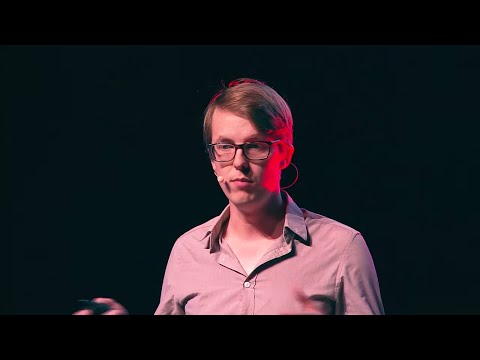
What if false beliefs make us happy?
We all know that the truth can sometimes be uncomfortable,
or hurtful or disruptive.
Want to say that
that we should choose to believe in a number of comforting lies,
if we therefore feel better?
I want to make a plea for the truth today,
for the cold and unadulterated truth.
I want to try to convince you
that, whatever happens, the truth is always better.
Of course I realize that you
that in many ways already believe.
We love the truth.
So we are very angry about the spread of ‘fake news’,
about the popularity of conspiracy theories.
We support the concept of ‘alternative facts’
because of course we realize that there is only one truth.
And we become angry
when politicians try to tell us blatant lies.
The word ‘post-truth’ was elected Word of the Year
by Oxford Dictionaries,
and this shows that many people value truth
want to give back her rightful place in society –
which is of course a good thing, and I welcome it.
But do we really cherish the truth in our daily lives?
Or do we live in our own post-truth world,
our own post-truth universe?
Sometimes when I give lectures on this subject,
I do a sample, by way of a show of hands.
I will not do that today, because it is surprising to this
that, regardless of the age and background of the audience,
I always get more or less the same results.
It is therefore easy to predict.
I explain this dilemma to people:
do you think we all need illusions to be able to handle life?
That we all need illusions to be happy?
Or do you think that the truth is always better anyway?
And that’s how it turns out
a large majority of people, but not an overwhelming majority,
believes that we need illusions to be able to handle life.
That we, to be happy, all of them
what little follies need to gild reality,
because the reality in its full weight is just unbearable.
People have a kind of pragmatic attitude towards the truth.
Of course, they say,
his true convictions are often useful to achieve goals in life,
but why do we have to insist on the truth?
What is actually so great about reality?
And if it is true that the truth can sometimes hurt,
why would we want to puncture the illusions of other people?
Why would we want to spoil it for them?
This concerns me personally
because I am involved in the skeptical movement
here in Flanders.
Skeptics investigate all kinds of irrational and strange beliefs,
pseudoscience, conspiracy theories, etc.
I even wrote a book about it with my supervisor,
where we play the role of Unbelieving Thomas
and demand proof for all kinds of views.
We come to the conclusion every time
that there is really no good scientific evidence for all these beliefs,
and I mention a few:
creationism, telepathy, conspiracy theories,
homeopathy, belief in the hereafter.
Now, even if we are right,
that these beliefs are irrational,
we should not stop to think about it
whether people may not benefit from these illusions?
If that is true,
it was not a reckless and rowdy act on our part
to take these illusions away from them?
Are we not a kind of fun beggars?
Good…
I did some conscience research when I realized
that we might have done harm
by depriving people of their illusions.
I found solace in the wisdom of playwright George Bernard Shaw.
He wrote: “The fact that a believer is happier than a skeptic
does not matter more
than the fact that a drunken man is happier than a sober one. “
Practice!
Well that was it. We can go home.
Everything is fine.
So I do not have to worry
about taking away illusions.
Well, not so quickly.
So we make it a bit too easy with this short turn.
Of course I think it is important that drunken people are happy.
But this is not the only thing we have to take into account
when we talk about alcohol.
We know that alcohol has both advantages and disadvantages,
or as the great philosopher Homer Simpson once put it:
“On alcohol!
The cause of – and the solution for – all problems of life! “
I think we should apply the same kind of utility calculations
on positive illusions, on favorable misconceptions.
So, is the truth always better?
You can get the word truth here
in the broadest possible sense.
It can be about the truth that the universe is expanding
and that everything goes to the sharks,
or that we are all mortal
and so will ever die;
or about very simple personal truths about our personal lives.
Now, if you ask people –
the group of people who are convinced
that we all need some illusions to survive and be happy –
if you ask them which beliefs can be beneficial,
although they are false,
then you get this kind of answers:
Believe in God?
May, for example, illuminate our existential fears.
Or what about the belief in reincarnation?
Maybe that works even better than belief in ‘ordinary’ life after death.
Or perhaps the belief in a communist utopia.
That could also make us happy or good for society.
Not that sure.
The belief in homeopathy?
It can be completely pseudo-scientific and false,
but maybe you have some of the placebo effects,
if you think it works.
Or believe in yourself?
The so-called ‘positive illusions’.
I am going to concentrate on those positive illusions
because I think they are the best and most likely candidate
for what we are looking for, namely beneficent illusions.
There is a lot of good, solid scientific evidence
for the claim that positive illusions are favorable.
Psychologists have discovered
that we are all susceptible to self-overestimation.
We all overestimate our own skills and talents.
Up to 90% of people think for example
that they drive better than average.
In my field at the university it is even worse.
The full 94% of professors think
that they are better teachers than their average colleagues.
And as a blow, a quarter of the population thinks
that when it comes to social skills, they belong to the very top,
in the top 1%.
Everyone is above average.
Is not that great?
Of course, it is also statistically very unlikely.
Now I do not doubt that these beliefs
to give you a good feeling.
Who does not want to believe now
that you are smarter, funnier, and much more talented
than the average person?
And also modest.
The problem, of course, is that convictions are not innocent.
They have consequences.
They branch into our world view and can have consequences later on.
And these effects can be unexpected.
Unexpectedly, you may have false beliefs about reality
sooner or later collide with the world.
Now, applied to positive illusions:
if the self-esteem in bottles was for sale,
then probably this kind of warning should be:
‘Ensures a good feeling.
Attention: unexpected side effects are possible. ‘
A question: have you ever texted while driving?
You do not have to confess.
Think about it for a moment.
If you have done this, it can come about through hubris,
apparently.
And this is a true, real scientific fact.
People who are overconfident about their driving skills –
think of the 90% people
from there –
take greater risks.
They will be texting while driving or even driving under the influence
because they think:
“A less good driver may not be able to handle this,
but of course I do.
No problem.”
This can endanger your own life and the lives of other people.
One of the most impressive examples
of the havoc brought about by positive illusions
is the First World War.
On the eve of it in 1914 nobody expected a world war.
Everyone was convinced that everything would last only a few weeks,
everyone would be back home by Christmas.
And of course everyone believed that they would win.
There was a very complacent belief
in the superiority of every nation and country.
The result was the terrible trench warfare,
now described in our history books.
Turns out that overconfident CEOs close worse deals
and actually lower the value of their business.
If you work for a company and your CEO is elected CEO of the year,
be careful,
because that is the moment when things will start to go downhill,
because then the CEO will develop a too big neck.
The financial crisis was largely caused by positive illusions,
by the false sense of security
with which those financial experts had lulled us to sleep.
That idea that you do not have to worry about anything:
“All risks are under control
because we have advanced mathematical tools, etc.
Do not worry.”
And of course the king of self-confidence,
that everyone knows to outdo
when it comes to a bloated sense of self-worth,
the man who inaugurated the post-truth era:
Donald Trump.
Do not get me wrong, I’m not against positive thinking,
I am not against your mind
on a positive outcome and making the best of your life.
Of course I am not against optimism either.
I would not give TEDx Talk here if I was against optimism.
Sometimes there are very good and rational reasons to be optimistic,
but I think positive illusions, so-called ‘positive’ illusions,
can actually stand in the way of our success.
So, not only can we do without false beliefs,
but they can even be harmful.
To conclude, I really think the truth is always better,
because illusions are potentially dangerous.
Although they seem innocent at first,
they can sooner or later collide with reality.
Positive illusions naturally feel fine;
Who does not want the self-esteem of Donald Trump now?
Of course that must be great.
But illusions will inevitably lead to disappointment sooner or later
because reality does not attract a ball
of our wishes, desires and illusions.
Worse, positive illusions
can encourage us to reckless behavior.
So I believe that the truth is your best friend,
and I can not say it better
then with the words of Gloria Steinem:
“The truth will set you free,
but first she will make you pissed off. “
Thank you.
(Applause)
”
Be First to Comment