
I have been traversed by many patient stories
over the six years of Medical School.
The story that struck me most was what I heard from my oncology professor,
and it is the story of Joana, a woman who has always lived in the interior
and noticed a lump, a lump, in the breast.
She had never seen it
and went to seek help from Luiza, who was her neighbor.
Luiza looked and said that it was very simple to solve,
it was enough for Joana to pass her own saliva over the pit
every morning, that he would recover.
After a while, the core grew, Joana did not understand
and returned to Luiza.
That said the problem was Joana’s saliva that was not good.
And the solution?
It was Joana, every day, going to Luiza’s house.
for Luiza to pass her saliva, which was good, on top of the lump.
After a while of the ritual,
what was a lump turned into an orange.
And then Luiza concluded that the problem
it was Joanna’s blood that was not good, it was weak.
And that she had to go to the health clinic.
It took her until she went to the station,
When she arrived the doctor sent her to the hospital.
and when she got there, her breasts already covered a good part of her belly.
Shortly thereafter, Joana died of breast cancer.
As soon as the story ended, my teacher asked
the reason why Luiza said to put saliva on top of the lump.
No one could find an answer.
And he said that there are many animals inside.
And when they have a wound, they lick to heal.
This was what Luiza understood about treating diseases.
It is very clear from this story that if you do not understand health,
your world and your ability to be healthy is very limited.
The name of this difficulty of understanding health
is illiteracy in health, of the English “health illiteracy”.
It is common to find people who think that taking a medicine every eight hours
is to take eight in the morning and eight in the evening.
Or that taking it every six hours is taken twice a day.
We may think that this problem is only in low-income classes,
What is not true.
In the United States, which has better educational rates than Brazil,
one-third, one third of people are illiterate in health to an important degree
and most are native and white.
So I prefer to call it low understanding in health
rather than illiteracy in health.
In Brazil, the situation is also complicated,
because 54 million people are functionally illiterate
that is, he has difficulty reading and understanding what he has read.
It is possible to imagine that many more have low understanding in health.
But this fact is only in the imagination,
because Brazil does not study this topic effectively,
despite the importance it has.
In health are five vital signs:
pressure, temperature, heart rate, breathing and pain.
Many researchers consider the understanding in health
as the sixth vital sign, equating the other five.
And what makes this matter even more important
is that the health system is complicated to use.
It is difficult to navigate the system,
know where to go and understand all the information and forms.
It turns out that there are two problems:
one is that many people do not fully understand the health system;
the other is that it is difficult to be understood.
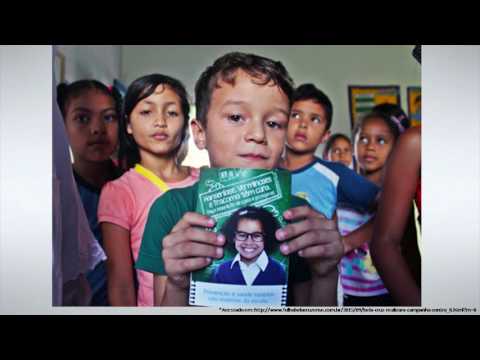
I saw this poster on the walls of a health post.
Above we read:
“Leprosy, verminoses and trachoma have a cure.
Do this homework and protect yourself. “
This is a national campaign.
which seeks and treats cases of these diseases in children.
But whoever looks at this poster can be confused.
What good is knowing that these three diseases have a cure,
if you do not know how to identify what they are?
Leprosy is a skin disease,
Trachoma is an inflammation of the eye caused by bacteria
and that can lead to blindness,
and verminoses are the worms that mainly cause diarrhea.
The prevention of each of these diseases is different.
Why put all this together into one thing?
And what is this homework to be done?
And below it has:
“Prevention and health are also school subjects.”
Who’s reading this poster?
really know what the word prevention means?
It’s a lot of information and no purpose.
And when the patient is going to make a treatment,
also has difficulties.
Especially those who have chronic illness,
which are diseases that have no cure, only control over time,
such as people who have diabetes or who have had a stroke or stroke.
Many have to take at least five pills a day
and make changes in lifestyle,
which are quit smoking and drinking, eat healthier,
practicing exercise, in addition to taking blood regularly,
stay at the doctor, pick up the medicine at the pharmacy and organize.
It’s a lot to apply in the routine!
A fellow doctor once said:
“I tell everything to my patient, there’s no way he can come out with any questions.”
And he’s not wrong, it’s what we doctors have learned is the right thing to do:
explain everything.
But it’s no use explaining everything at once!
It often seems that the patient leaves the consultation with a game box
Full of pieces, letters, dice
and he has to play this game alone, that the goal is to be healthy.
But he only heard the rules once, inside the office.
And even if he leaves the office with these rules in hand,
they are not simple to understand.
I saw this stuff in a doctor’s office where we can read:
“Tips for Controlling Blood Glucose Levels:
do not consume honey;
controlling mass consumption;
include fibers; fractionate the diet.
Exercise regularly. “
These are vague guidelines that are not
and with difficult language.
For the professional who elaborated,
this material is suitable for the patient.
But what happens is that the professionals overestimate
which the patient can assimilate, as some studies show.
It is essential that the patient believes that he or she can
for it to be well done.
And for him to believe, he has to know the answer of two questions:
because I have to do this
and why this is important.
Know why it is transforming!
The problem is that it is difficult to access this why.
How the professionals will take into account the understanding of the patient
and explain everything in the best way, if you do not have the time and apparatus for it?
There are many patients to be seen in a short time.
Because the important thing is the numbers.
Our system is organized by quantity.
The more patients consulted, the better my income.
The more hospitals built, the better my country’s health will be.
It is not?
The correct one, in fact, is a system driven mainly by quality.
The better the patient’s performance, within what is possible for him,
It’s better the health I do.
Health plans in other countries have begun to remunerate professionals
performance of patients.
Because I have how to evaluate the impact that a treatment had,
with exams and sensors.
While our current system of quantity,
is focused on professional performance,
this new, quality, is focused on the performance of the patient, the person.
And this causes a transfer of power from the professional to the patient.
And at the same time that all this is happening,
people today seek what they understand,
that they can relate to.
The 21st century is the century of understanding, not information.
But the health of our century, it is very informative.
It turns out that people do not understand, do not engage,
complicate their illnesses, lose working days and die.
This costs billions to the public and private services each year.
Health has to change!
People do not need and should not
strive so hard to understand and make your treatments.
One of the things to change is the prescription,
which is the same for more than 100 years.
Who here thinks in bad letter when it is spoken in prescription?
Because it is so obvious, we focus on the recipe problem in handwriting.
But there are other important points as well.
One is that the revenue is organized
how the patient should use the medicine.
This by mouth every 12 hours,
this one 8 out of 8, this one after lunch, at bedtime and so on.
But when the person is going to take the pills, he organizes them by the time she takes them.
And it is not so simple to organize,
even because many people take at least five pills a day.
Another point is the terms used in the recipes.
Continuous use, external use, topical use.
And they may even see acronyms, like YOU,
which is oral.
You can feel that the prescription is made by the doctor pro pharmacist understand.
It does not take into account the patient’s understanding of health.
It was from this insight that the unease arose to create a new recipe,
patient-centered.
And make it quick and easy to do.
The result is this computer program that I have idealized.
The professional inserts the medicines quickly and simply,
and automatically, based on the routine of the patient,
a new prescription model is generated.
This new revenue model is organized into schedules,
comes with an easy language such as:
take by mouth, every day.
And it comes with pictograms, images, which show when, as
and what to drink.
Pictograms are nothing more than images
who pass an instruction or a concept.
Several studies
that they increase the patient’s understanding of the material.
And some until they increase the correct intake of the drug
significantly.
Pictograms and this recipe format
were created and tested with Brazilian patients,
just as the program was, with professionals in a hospital.
And by putting these pictograms together with this change of format,
this new model is up to five times more understandable.
And the understanding of what is being passed on
is the basis, the first step, for a person to engage in a treatment.
But engagement is a complex issue.
Other steps have to be taken.
Forty-seven percent of people in a study
They said they’d rather take the garbage out of the house.
than taking the medication.
Taking treatment every day is difficult,
even without continuous support.
The average range from one query to another
varies from 90 to 180 days.
Now imagine
if health is reorganized with the technology available today,
and centered on the experience of the patient, the human being,
and one who has a poor ability to understand health.
The care would be continued,
where I can evaluate closely and together with the patient
what’s happening.
The treatment would be adapted to the needs of each one.
With the information being passed in a simple and fractional way.
More understandable information is that
which motivates an action, which has an impact.
People would join more and complicate
and would die less of their diseases.
In fact, people would not adhere more and complicate less.
They go.
Why this is the mission:
change all communication and health care
to give people more quality of life, more power.
Everyone has the right to quality health,
is there in Article 25
of the Universal Declaration of Human Rights.
But you only have quality health,
if you understand what is being said.
Making health easier is to guarantee a basic human right,
is a form of empathy.
By the way, I want us to take this concept of making it easier
not only for health,
but in the company, at work, in college, in life.
Let’s uncomplicate, let go of the unconstitutional ones.
To speak beautiful is not to speak difficult, farfetched.
To speak beautiful is to speak in tune of who is listening and what is necessary,
this brings understanding.
The limit of your world is the limit of your understanding.
Today, society’s ability to be healthy
is limited.
But only for now.
Thank you.
(Applause)
”
Be First to Comment