
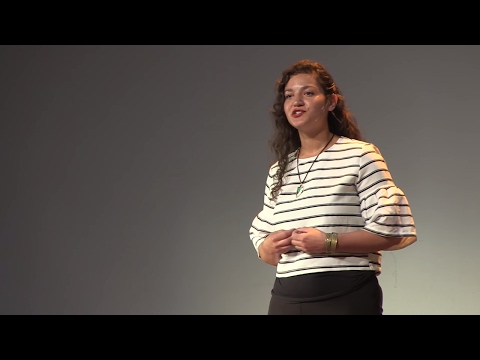
While giving a speech in Atlanta Georgia
to a Southern Christian Leadership Conference on August 16, 1967,
Martin Luther King delved into questions of economic justice.
He told the congregation that one day, we must ask the question:
“Why are there 40 million poor people in America?”
And when you begin to ask that question,
you’re raising questions about the economic system,
about a broader distribution of wealth.
When you ask that question,
you begin to question the capitalistic economy,
and I’m simply saying that more and more,
we’ve got to begin to ask questions about the whole society.
The power of economics, as framed by Aristotle,
was to develop a relationship between economy and society as a whole.
For years, we’ve regarded the dollar as a driving force of global economics.
When talking of an economy, it’s a logical assumption.
We’re thinking of monetary exchange.
To imagine the stock market or numerical wealth,
this is certainly one way to think of the relationship
between the economy and a society,
but how is the progression of society
changing the relationship with the economy?
Currently, there’s a shift in global markets,
from a market economy to a sharing economy.
A research team that I had the privilege to be a part of
sought to detail the evolution, in a societal relationship,
between the sharing economy and mankind,
the effects and outcomes of this shift,
and the potential for future transformation
and the further development of a progressive global society.
I’m humbled to join this conversation with you today
about the future of our world.
First, I’d like to take you on a journey through our current global economy,
the shift we are seeing and most importantly,
how we can utilize this new relationship.
To understand where we are,
we need to understand how we became.
I’d like to start back at the forging of the United States.
Now, some may think slavery in the U.S. started
when the first African American was kidnapped from his home
and forcibly brought here in shackles.
Unfortunately, that’s just one narrative of our collective story.
The questions highlighted by Martin Luther King
didn’t analyze the pages,
the begged questions of the binding of the novel.
Dr. King was asking us to think of the larger structure of the world,
and how it is being constructed.
Our global human story has been marred by genocide,
war in cataclysmic greed and destruction.
Frances Harper, African American abolitionist,
suffragist, poet and author,
suggests this nation was built upon the slave auction.
Indentured servants were brought here from Europe.
African Americans were brought here in shackles.
Indigenous people were slaughtered and held in captivity.
Each one of these narratives has a common thread:
the theme of the human relationship with the economy.
This was the creation of the market.
The controlled labor of millions of people
has been linked directly and indirectly
to the rise of European industrialization,
capitalism,
the Scientific Revolution,
rapid population growth,
huge migrations,
and changing social roles for men, women, and children.
According to Ronald Pelias, a communication scholar,
everything and everybody is judged in a market economy.
Whether it’s from the corporate executive dictates,
the academic scrutiny
or grandparents’ gentle reminder,
no one escapes appraisal.
Everything and everybody is given a price, an established worth.
In the current market, everything is on the auctioning block.
We put on clothing that signifies to others our socio-economic class.
Our style describes who we are.
We mar our body and thus our identity with these markers.
We sell ourselves, in this market,
to our job, our friends and our colleagues.
Pelias detailed how everyone is caught in the same critical grind,
giving out and taking in comments
designed to say how we’re positioned,
rated and ranked.
In the current market, everyone is labeled,
appraised,
and given a worth.
In the current market, we are all for sale.
It happens, for example, in academia when we’re given a grade,
or as Pelias called it “the academic scrutiny.”
We show our children that education – the seeking of knowledge –
is simply a maze of memorized information in regurgitated goals.
We say, “Your future is bright,” as a bright piece of paper.
We are taught to derive our worth from things like a grade point average.
We’re told our value through our clothing size,
our numerical age,
weight,
or bank account.
I’ve listened to my colleagues,
high schoolers,
my six-year-old nephew,
talking about their education,
and everyone can seem so defeated,
especially, when society is constantly telling you
who you are and how to exist.
We live in a time of human commodification,
a time where corporations have as much bodily autonomy as people do.
This is the market,
and we are the chattel of this economy.
Martin Luther King left us with wise words on economic justice when he said,
“We must rapidly begin the shift from a thing oriented society
to a person oriented society.”
Don’t fear my friends.
For years, humanity has been seeking ways
out of the shackles of this economic death trap.
For years, economic justice has been evolving to seek out new ways
to bring together the global world and fight for equality and equitability.
You may be asking yourself “How?”
“How can we change?”
“How do we begin the shift from a thing oriented society
to a person oriented one?”
The sharing economy,
the phenomena of the sharing economy
emerged from a number of technological developments,
namely: the Internet.
Humanistic feats of intelligence brought to us the Internet.
This piece of technology has unequivocally changed how humans function
by changing our communicative patterns
and shaping a new relationship with the economy.
Through the stroke of our fingers, we’re connected to a world
vaster than the farthest depths of our wondrous imaginations.
We have access to an unparalleled amount of information
at every moment of every day.
Sites like Facebook, Google, YouTube are called “open content websites.”
These open content websites function based on the equal participation
and open sharing of ideas and information
that communities, cultures and societies
participate in, and create together and for each other.
Social media sites would not function
if we were not for the open free sharing by all participants.
Over a billion people participate in free sharing on Facebook,
every day.
We use these sites not only as platforms to voice our opinions,
mold our thoughts and refine our ideas,
but to hear the voices of our peers and the world around us.
The best most recent example
of the connection between social media and social change
was the Arab Spring.
A study published by the George Washington University,
Elliott School of International Affairs,
found that the connection between the social media and networks
was critical in performing two overlapping functions:
organizing protests and disseminating information.
We share with others on these platforms
to include our voices in the ideas of the world
and to include others voices in the shaping of our world.
And 2012, Facebook tested a sharing button for when you become an organ donor.
By engaging the sharing of personal experiences and stories –
the knowledge of how one donor saves eight lives –
and a button on Facebook,
organ donorship increased 23 fold over 44 states.
So, because of the sharing economy,
organ donorship increased
230% over 44 states.
One donor saves eight lives.
Social movements like Black Lives Matter
share information about police brutality,
their experiences through the intersections of their lives,
and resources for understanding in action.
We can build a world that values knowledge through shared experiences,
instead of deriving value from information and personal assessment.
The value comes in the open and equal access to knowledge
instead of coming from a rubric or official market value.
What fundamental difference is there
between the market economy and a sharing economy?
Their relationship:
the market dictates wealth,
and in the sharing economy, we create wealth together.
We all have valuable knowledge to share
and an important story to add to the collective global narrative.
When we focus on the structure of the overall systems
instead of the individual value of the problems we each face,
we start to break down these systems of oppression.
We shift the value being derived from the goods of the market,
to defining value and experiences being shared.
When we share our voice with our peers through tweets,
dialogue, stories,
we participate in the further growth of the sharing economy.
Because when we value our contrived wealth
over the humanity of others,
there will always be room to trade in the stock of our brothers.
We have to value one life over one dollar
to be released from our debt and the bankers’ caller.
We must recognize that we cannot solve our problems now,
until there’s a radical redistribution of economic and political power.
This means a revolution of values and other things,
the whole structure of American life must be changed.
Keep the words of Dr. King and let us change our relationship with the economy.
Thank you.
(Applause) (Cheers)
”
Be First to Comment